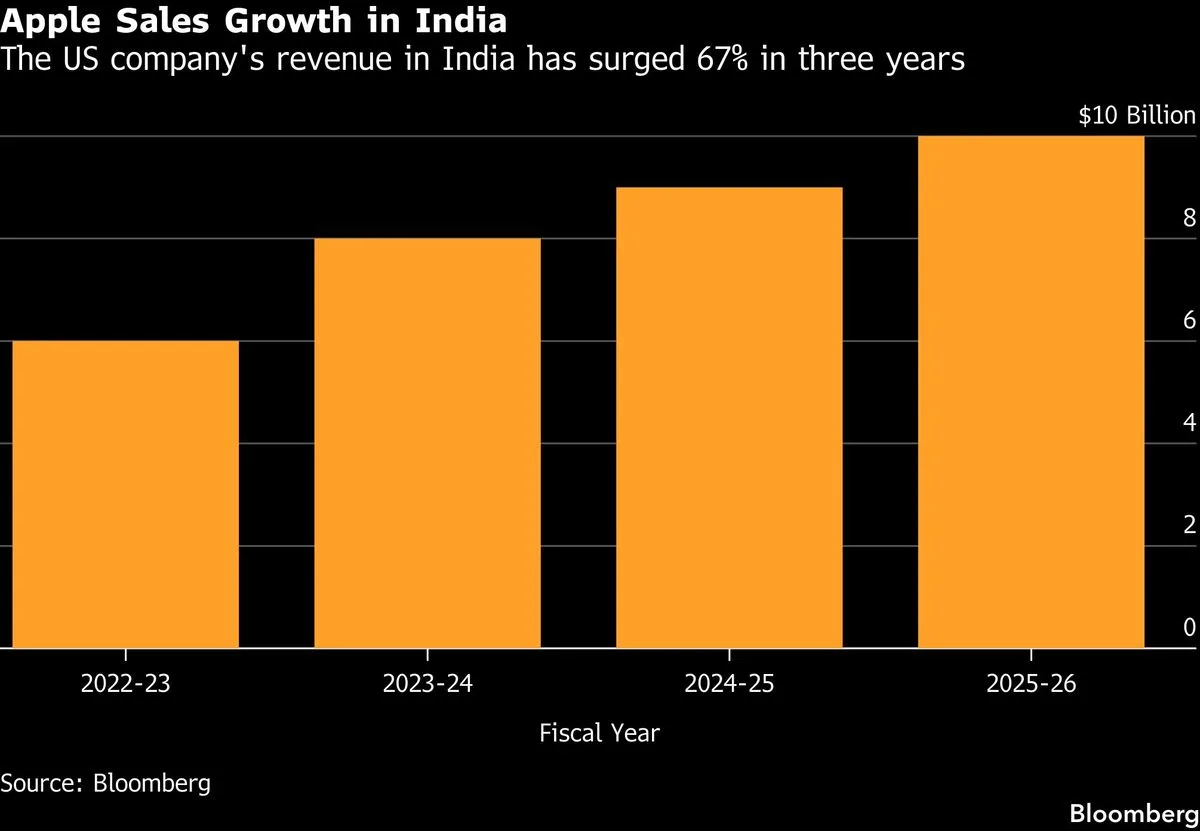
Apple’s annual sales in India surpassed US$10 billion in the fiscal year ending March 2026, up from about US$9 billion the previous year, marking a new revenue milestone for the company in the market [1, 2, 3, 4]. The growth was largely driven by strong demand for iPhones, which constitute a significant majority of Apple’s sales in India, alongside increasing interest in iPads and MacBooks [1, 3].
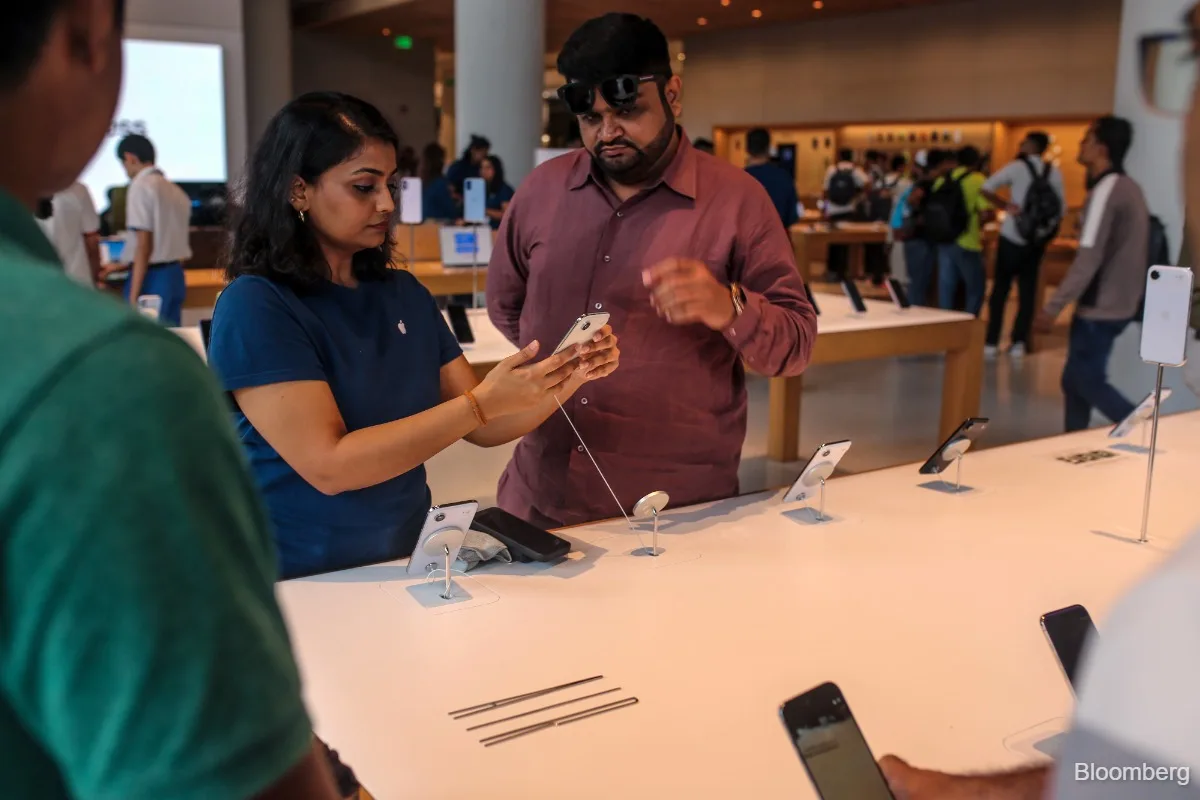
In February 2026, Apple expanded its retail footprint by opening a new store in Mumbai, bringing the total number of official Apple stores in India to six [1]. This retail expansion follows Apple’s initial entry with two stores inaugurated by CEO Tim Cook in Mumbai and New Delhi in 2023, as well as the launch of its Indian online store in 2020 after easing local sourcing policies [1].
India remains a small but rapidly growing market for Apple, positioned after its largest markets in the US and China. The company has increased assembly and production within India, targeting the country’s large population and expanding middle class for long-term sales growth [4]. However, relatively high local taxes keep device prices elevated compared to the US — for example, the entry-level iPhone 17 costs about 82,900 rupees (approximately US$870) in India, versus US$799 in the US [1].
Currency movements also affect reported sales figures. The Indian rupee has depreciated roughly 10% against the US dollar since early 2025, which reduces the converted dollar value of sales despite robust local demand [1]. Despite the sales milestone in India, Apple’s overall stock price recently declined amid broader market concerns including competition in artificial intelligence [4].