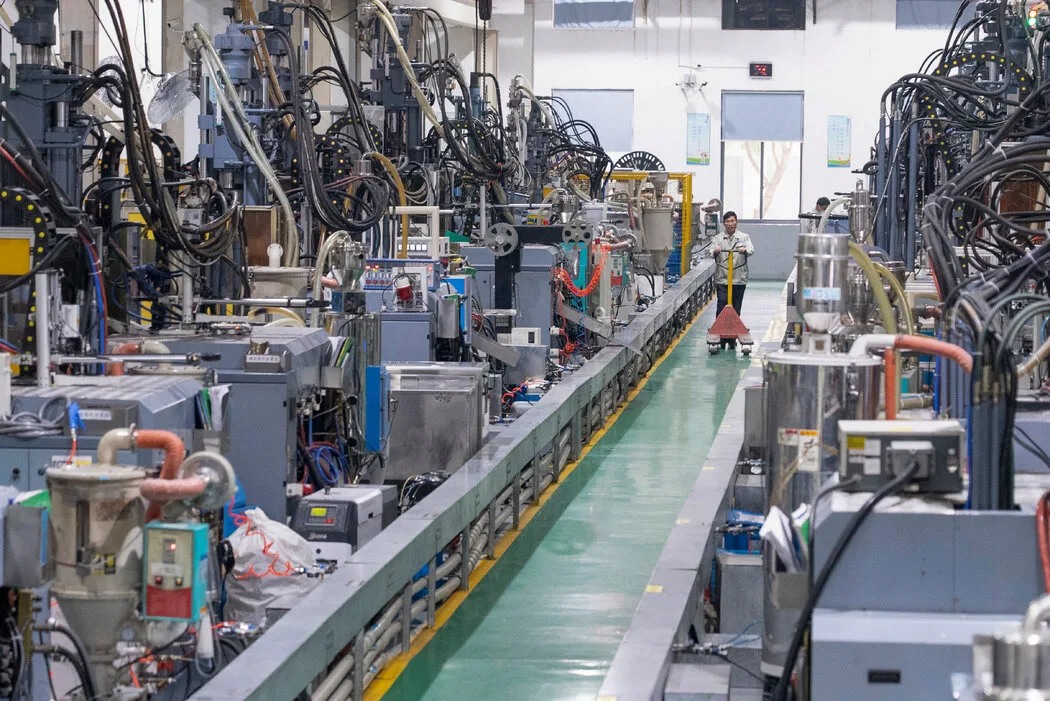
Kunshan, a major electronics manufacturing hub in China, has seen widespread job losses among low-skilled workers due to rapid automation and adoption of advanced technologies [1, 2, 3]. Once responsible for producing one-third of the world’s laptops and ranked China's most economically developed county, Kunshan now prioritizes AI and high-tech industries supported by generous local government subsidies [1, 2, 3].
Traditional factories in Kunshan facing uncertain demand from trade tensions have cut wages and jobs as robots take over routine manual tasks [1, 2]. Former assembly line workers have been hit hardest. Hu Xinbing, a 31-year-old ex-assembly worker from Henan province, used to earn up to 6,000 yuan monthly during peak seasons working for companies like Pegatron and Inventec. Since robots fully automated screw-driving and similar jobs by 2024, Hu and many others have struggled to find stable work [1, 2]. "It’s all robots driving screws. They don’t need people to do it anymore," Hu said [1].
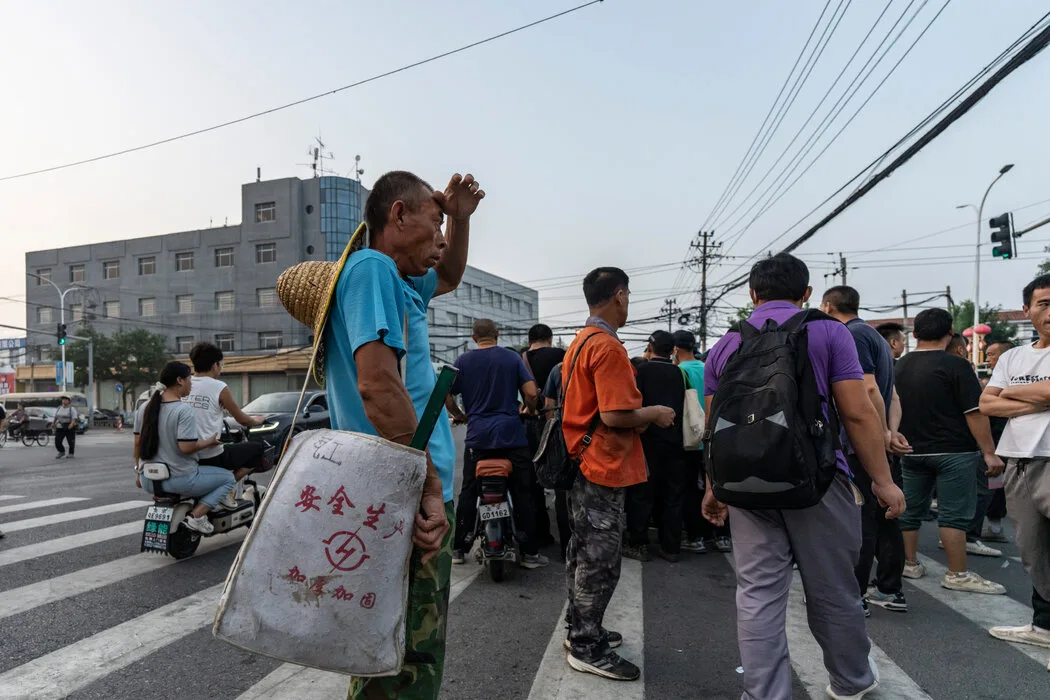
The factory workforce in Kunshan has been cut to roughly half its previous size, with only some machine auxiliary roles still performed by humans [2]. Displaced workers frequently take gig jobs with daily pay, often in security or short-term factory shifts, facing poor pay and conditions. Hu, for example, earned 60 to 120 yuan a day as a security guard by May 2026 [2]. On one occasion in July, he secured a 120-yuan per day security job at a Pokemon carnival in Shanghai, roughly 30 miles (or 50 km) from Kunshan [1, 2, 3].
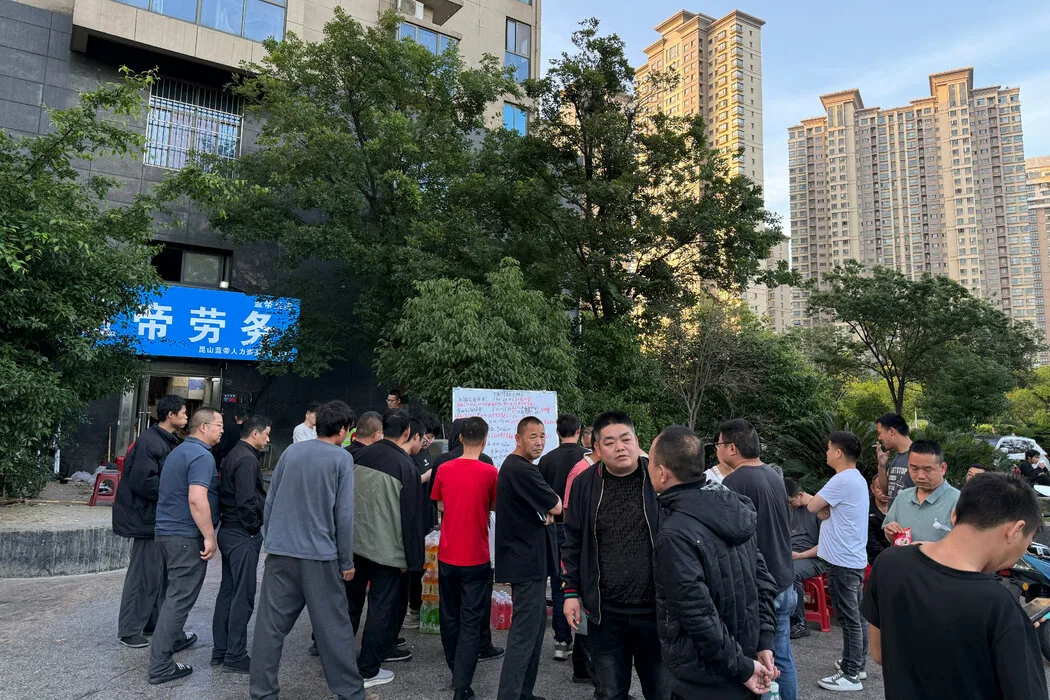
Public spaces like Zhenchuan Haoren Park have become meeting points for jobless workers, who sleep outdoors while searching for daily gigs [1, 2, 3]. Beijing University professor Zhang Dandan estimates 40 million gig workers now populate China’s manufacturing sector, with up to 80% of some factory workforces engaged as gig labor [2]. Zhang warns the gig workforce will grow further as China deepens smart manufacturing, urging more labor protections and retraining efforts [2].
Despite pride in China’s robotics progress, displaced workers like Hu face anxiety over their future job prospects and admit, "If you haven’t been educated, it’s not easy to learn these skills" needed for new industries [2].
On a recent morning in July 2026, Hu and other unemployed workers rested in Zhenchuan Haoren Park before Hu found his security job in Shanghai the next day [1, 2, 3].