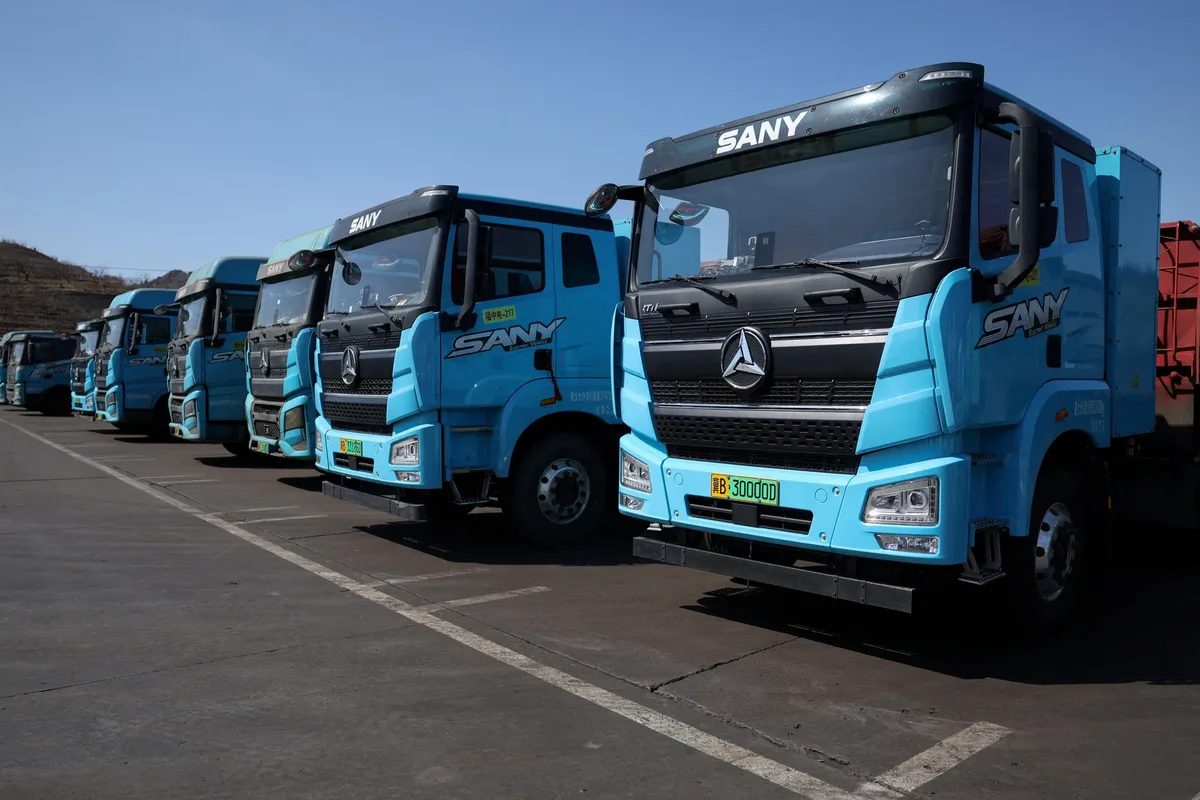
China's Ministry of Transport announced that by 2030, electric vehicles will account for 40% of new heavy truck sales and 20% of the total heavy truck fleet, amounting to 1.6 million electric trucks nationwide [1, 2]. Some short-haul routes around Beijing have an even more ambitious target, aiming for 80% of heavy trucks to be electric by that year [1, 2].
In 2025, nearly one-third of new heavy truck sales in China were electric, a rapid increase propelled by subsidies and expanded charging infrastructure [1, 2]. The new 2030 targets exceed previous industry forecasts. A September 2025 Rystad Energy report had predicted only 9% of China's heavy truck fleet would be electric by 2030 [1, 2].
The plan also calls for building 3,000 charging and battery swap stations by 2030 under a "zero-carbon highway" initiative to support electrification [1, 2]. EV battery producer CATL forecasted that up to half of China’s heavy truck sales could be electric by 2028, signaling a potential acceleration beyond government goals [1, 2].
China will prioritize electric heavy trucks in trade-in subsidy programs to replace older trucks, following a similar approach that previously boosted LNG truck adoption [1, 2]. Domestic truck manufacturers stand to benefit from the push, many of which already export trucks overseas.
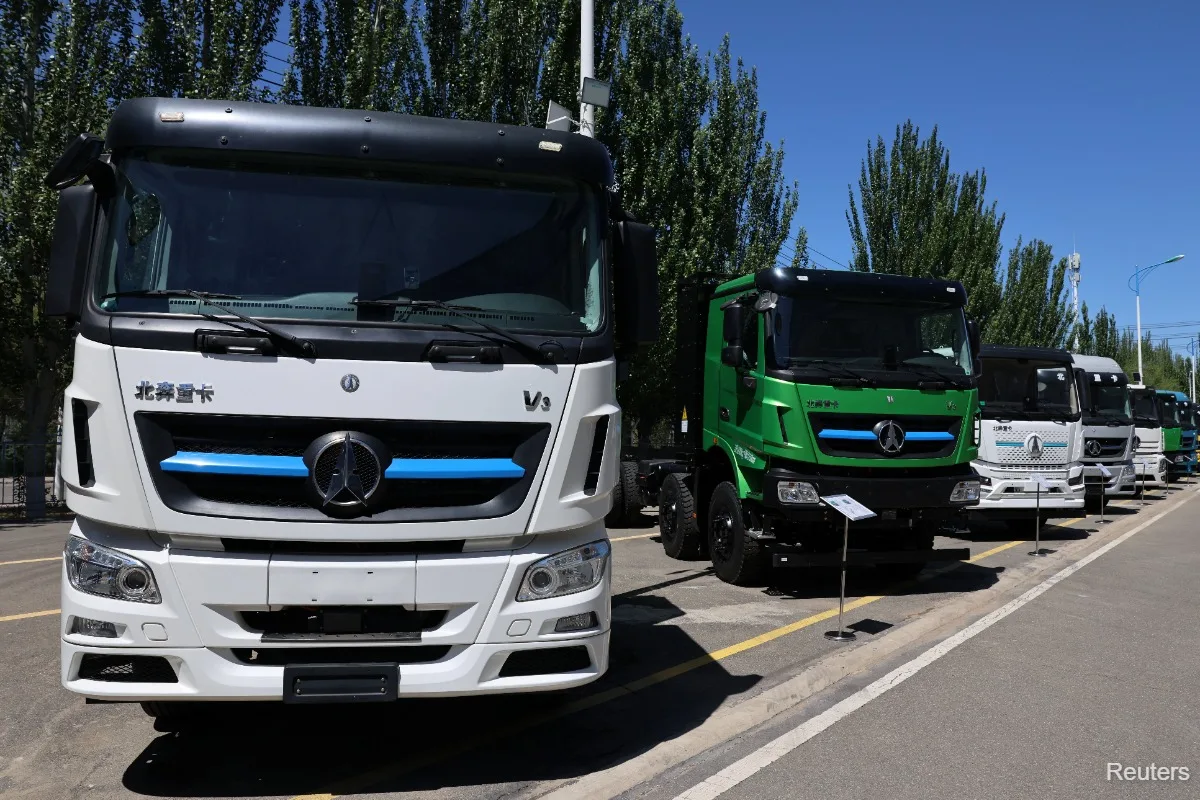
Beiben Trucks Group showcased a new electric dump truck model with a 200-250 km battery range that can be charged in 22 minutes using EVE Energy batteries during a state-sponsored tour in Inner Mongolia in June 2026 [1, 2]. Bai Xiaolong, senior specialist at Beiben Trucks Group, said, "China is the company's main market given the limited charging infrastructure elsewhere, but it is exporting about a fifth of its trucks" [1]. Beiben exports about 20% of its vehicles.
The Ministry of Transport released the heavy truck electrification targets and policy framework on June 12, 2026 [2]. The following day, Beiben Trucks presented its new electric model to officials and industry observers [1, 2].