The US Environmental Protection Agency (EPA) on August 31 announced 1.76 billion renewable fuel credits, equivalent to 17.6 billion renewable identification numbers (RINs), as exemptions for small refineries under the 2025 biofuel compliance year. This marks the largest exemption volume since 2017 and significantly exceeds the EPA's earlier estimate of 9.9 billion RINs [1, 2, 3].
The move reduces the amount of renewable fuels that small refineries must blend, easing their compliance costs while potentially dampening immediate biofuel demand [1, 2, 3]. Small refinery units affiliated with major companies like Marathon Petroleum and Chevron benefited from the exemptions [4].
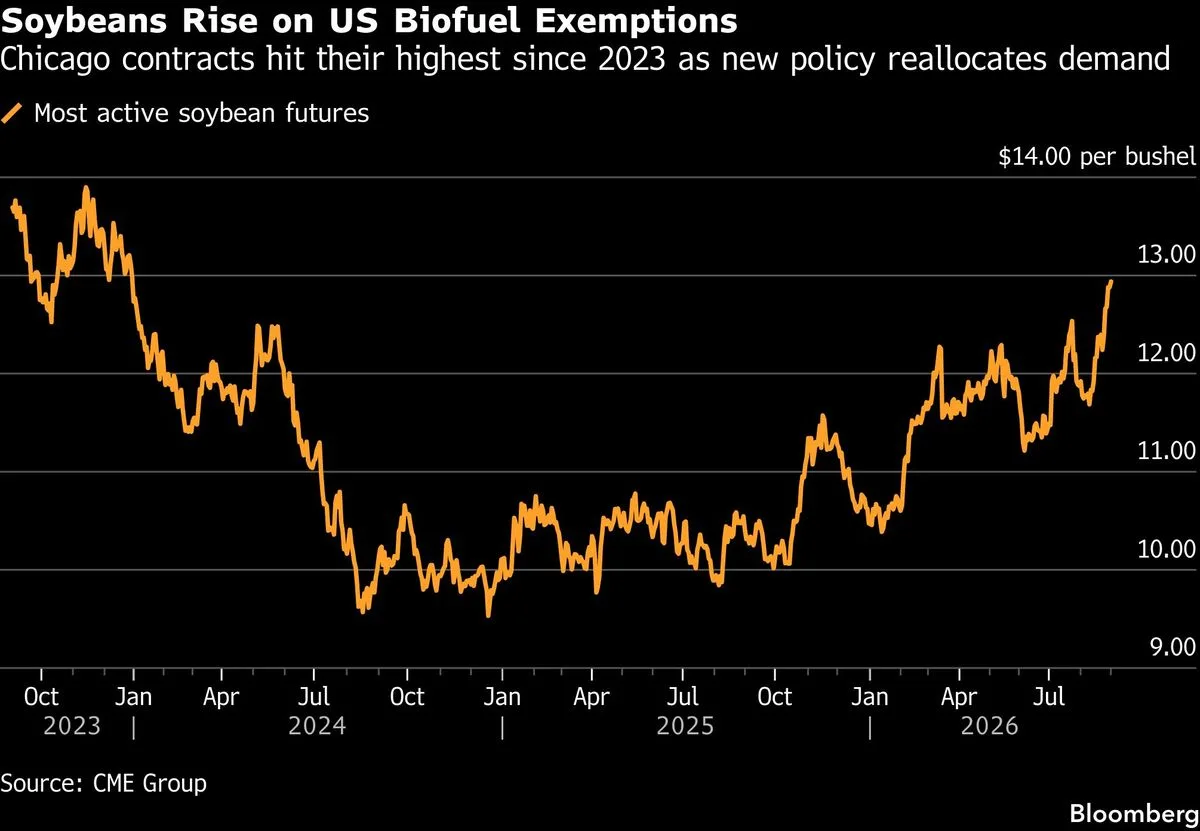
Soybean futures responded strongly to the announcement, rising nearly 1% on September 1 to their highest level since December 2023. Soybean oil prices initially jumped more than 2.4% before retreating slightly [1, 2, 3].
The Biden administration partly expanded these exemptions to help mitigate gasoline prices amid US-Iran tensions and before November midterm elections, balancing interests between oil refiners and agricultural stakeholders who hold conflicting views on biofuel mandates [4, 2, 3].
The EPA plans to reallocate the difference between projected and actual exempted volumes to the renewable fuel mandates for 2026 and 2027, effectively delaying some demand rather than eliminating it. The agency intends to propose this reallocating plan before November 2026 [1, 2, 3].
Susan Stroud, analyst and founder of No Bull Agriculture, said the net impact is limited. "What they gave back for 2025 is actually being shoved back to 2026 or 2027, so the net effect is not really that big," she said [1].
The EPA’s large 2025 exemption volumes and forthcoming proposal on reallocations will continue to draw attention from stakeholders watching the biofuel and agriculture markets into the final months of 2026.