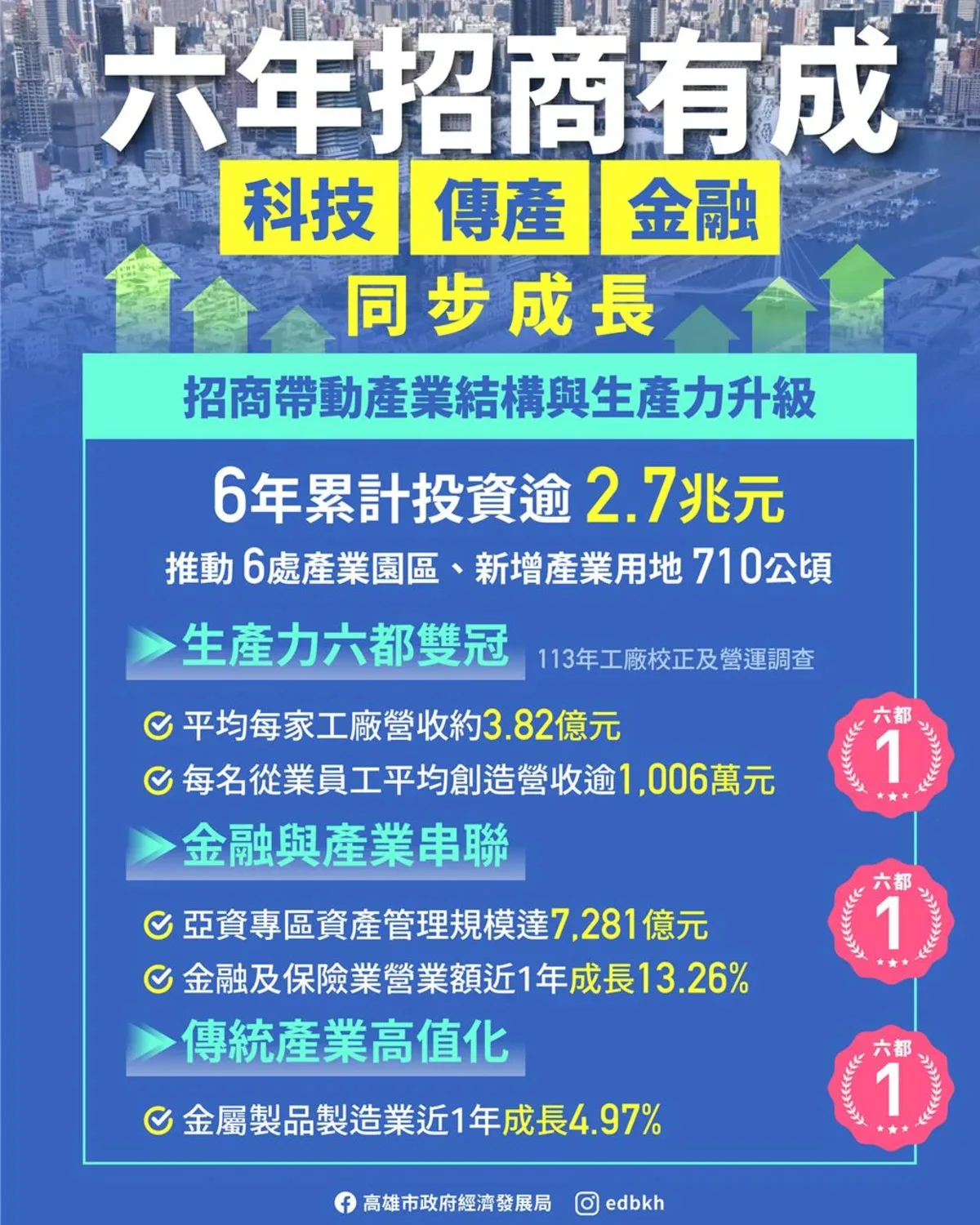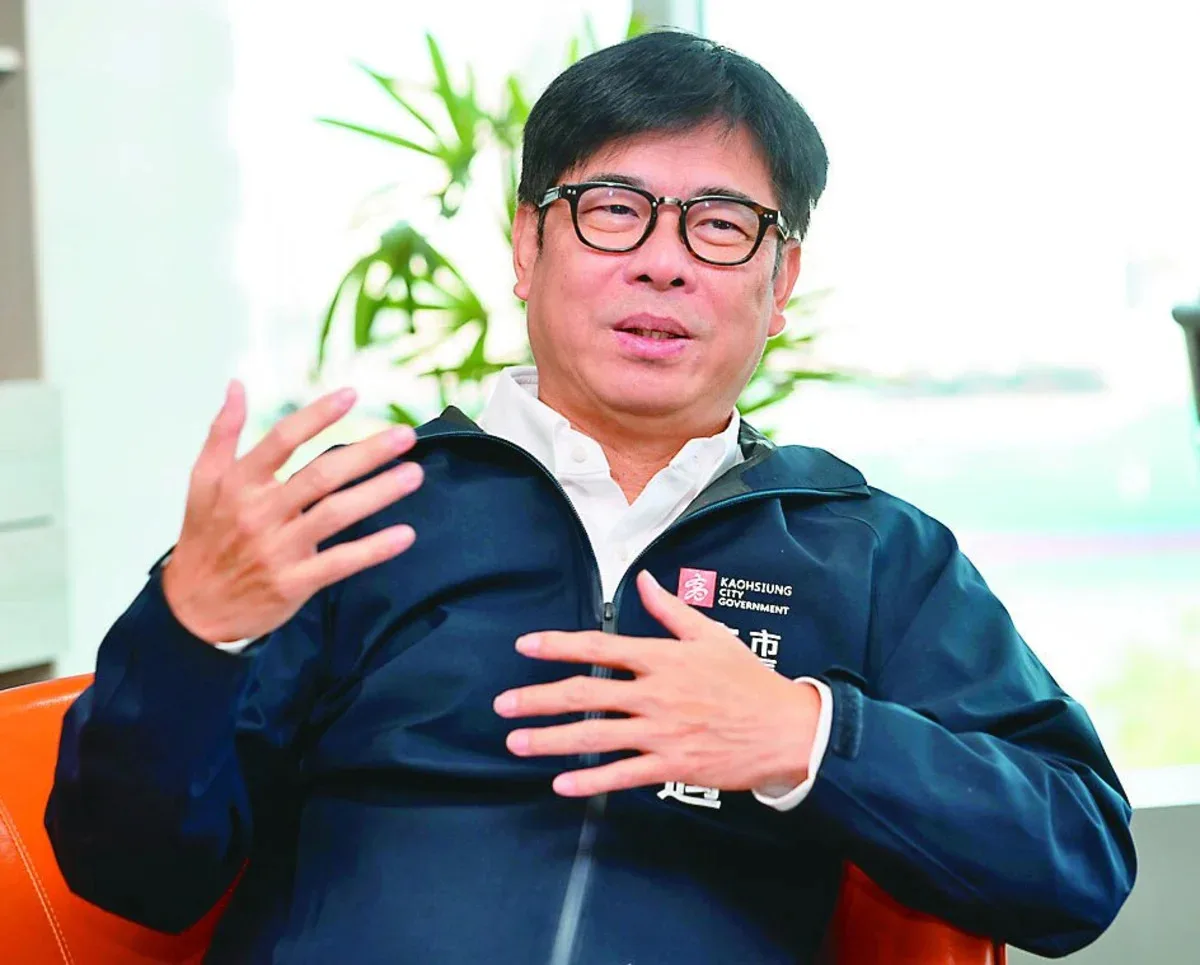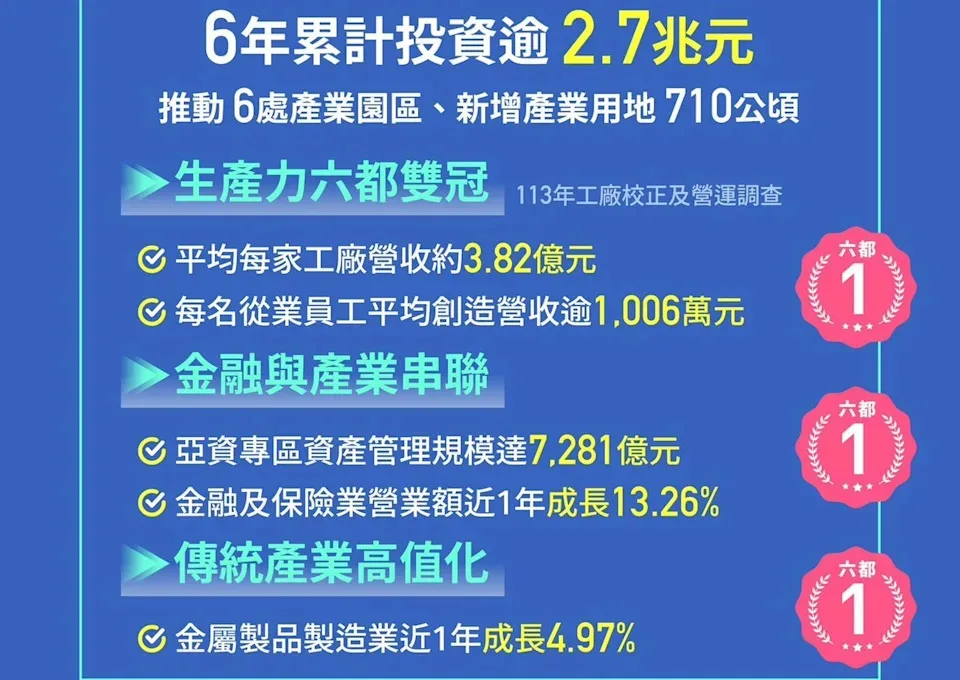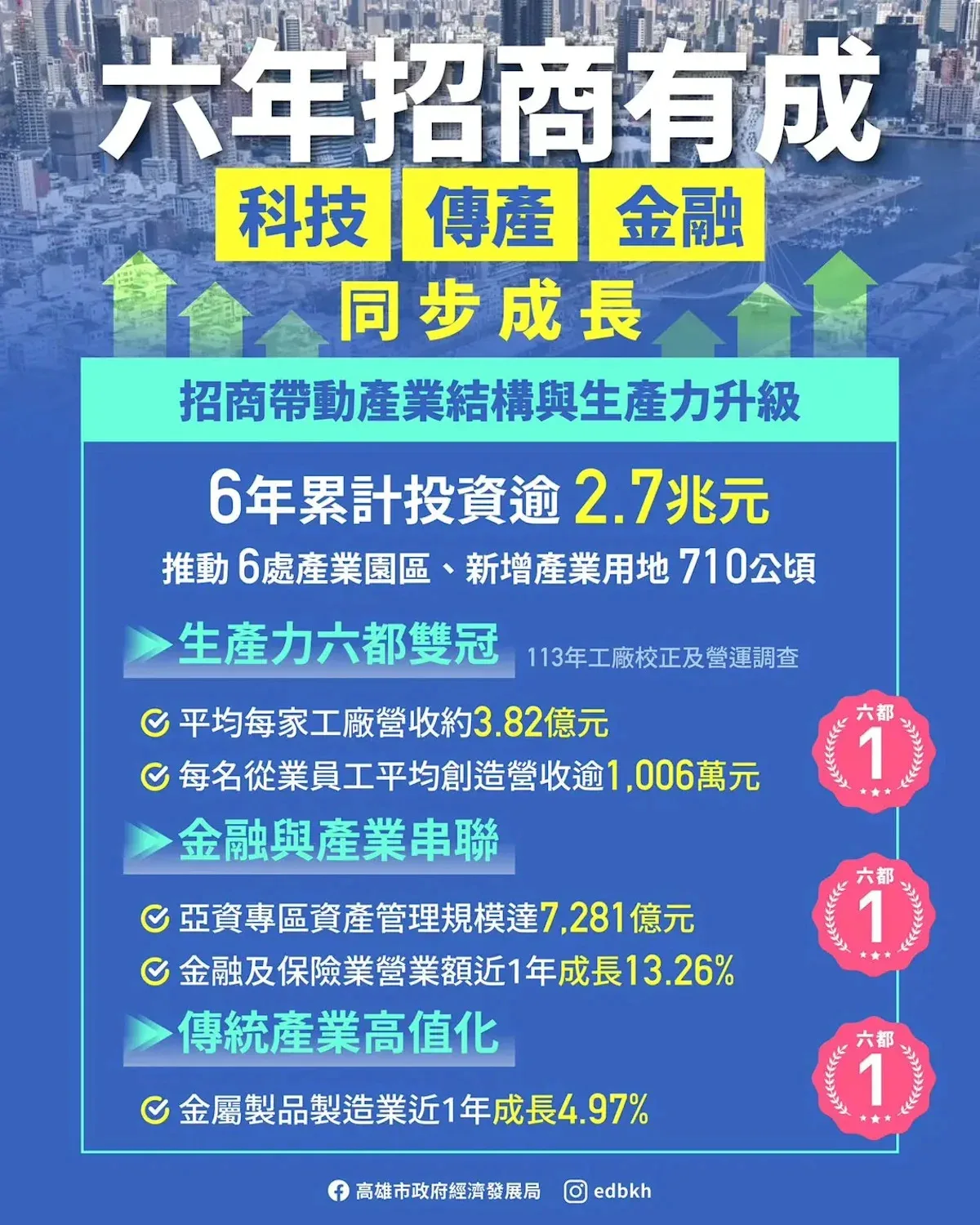
Kaohsiung has attracted more than NT$2.7 trillion in cumulative investments during the six years since Chen Chi-mai became mayor in August 2020. Under his administration, the city developed six industrial parks totaling 710 hectares of new industrial land, aiming to build an advanced manufacturing and technology hub [1, 2, 3, 4].
The city has completed a major industrial transformation, shifting from a traditional heavy industry base to a multi-sector center focused on semiconductor advanced processing, AI computing, and financial services. Chen said, "The data over six years proves Kaohsiung is on the right path, but the pace must accelerate amid global industrial competition." [1, 3]
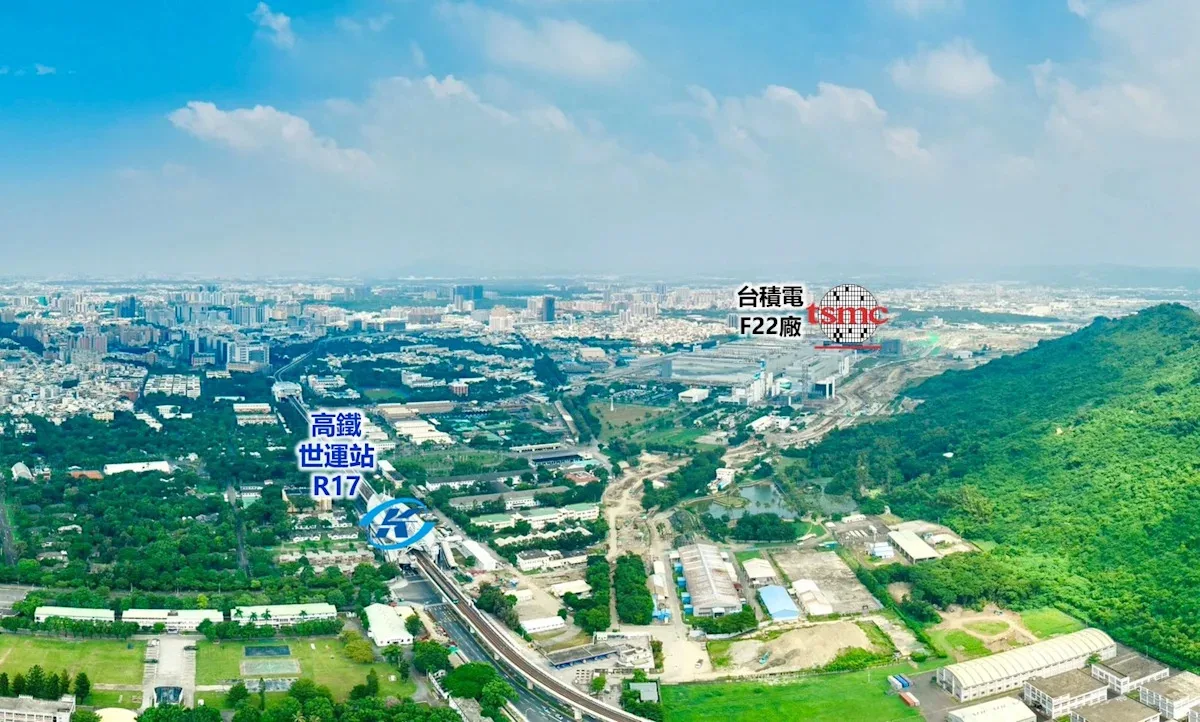
Taiwan Semiconductor Manufacturing Company (TSMC) established advanced fabrication plants in Kaohsiung, with plans for six 2-nanometer process fabs. The city's semiconductor cluster also includes international firms such as AMD, Integ, Merck, and ASE Technology, reinforcing its role in global supply chains [1, 2, 4].
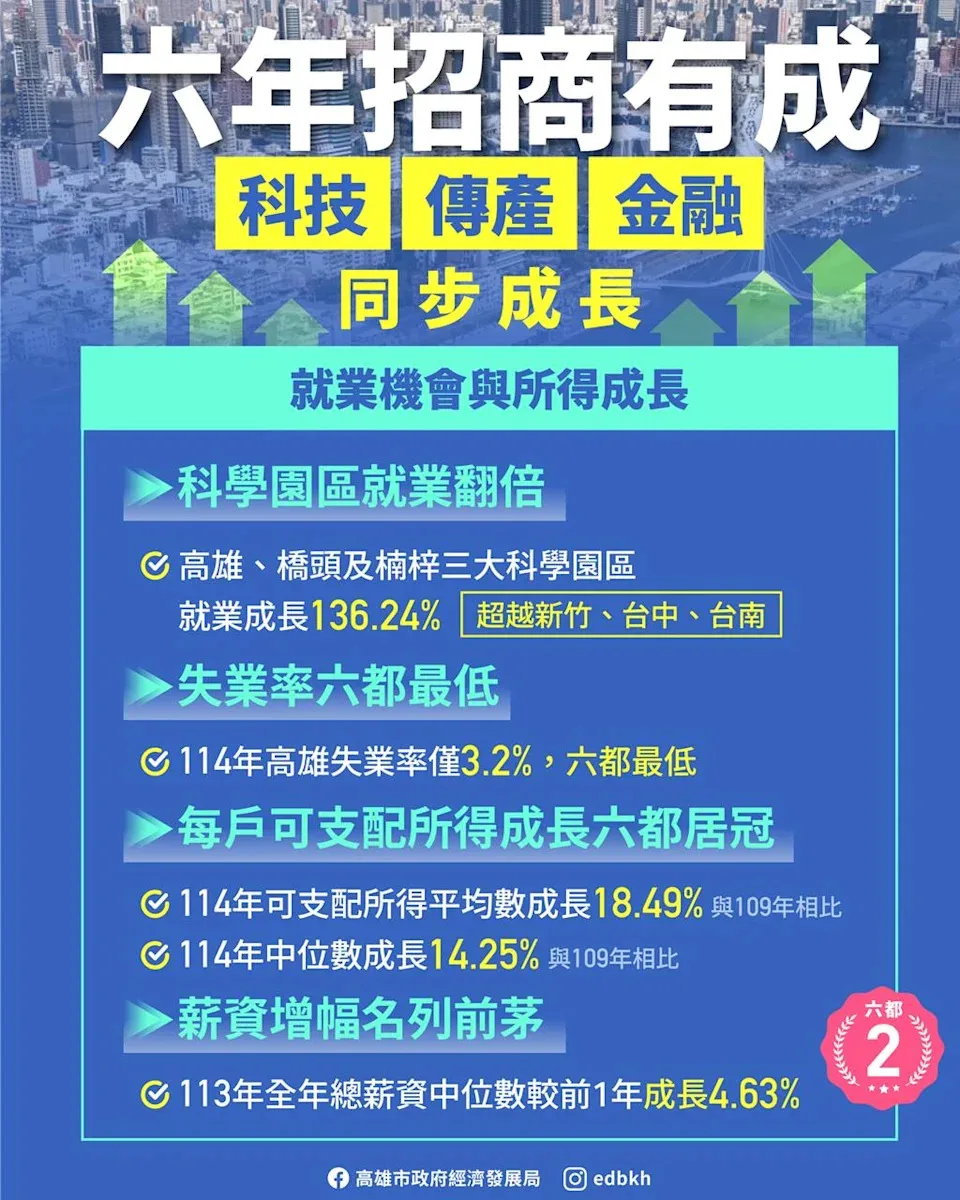
Employment in Kaohsiung's three main science parks—Kaohsiung, Qiaotou, and Nanzi—grew by 136.24%, from about 8,600 workers in 2020 to over 20,000 in 2025. Manufacturing productivity leads Taiwan's six special municipalities, with operating factories growing by more than 5% since 2020. Traditional industries like metal products manufacturing saw a 4.97% year-over-year increase in 2025, the highest growth among those municipalities [2, 3, 4, 5].
Kaohsiung is building an integrated technology supply chain linking semiconductor, AI, and traditional manufacturing sectors. Companies like Chuanhu Technology and Formosa Plastics Deshan have expanded production lines. The city also established Taiwan's first Asia Asset Management Center, overseeing NT$7,281 billion in high net worth client assets. The financial and insurance sector revenue rose by 13.26% in 2025, the top growth among Taiwan’s six special municipalities [2, 3, 4, 6].
The unemployment rate in Kaohsiung remained the lowest among the six municipalities at 3.2% in 2025. Household disposable income per capita increased by 18.49% on average and 14.25% median between 2020 and 2025, the highest growth in Taiwan’s major cities. The total annual median wage rose by 4.63% in 2024, the second highest rate among them [2, 3, 4, 7].
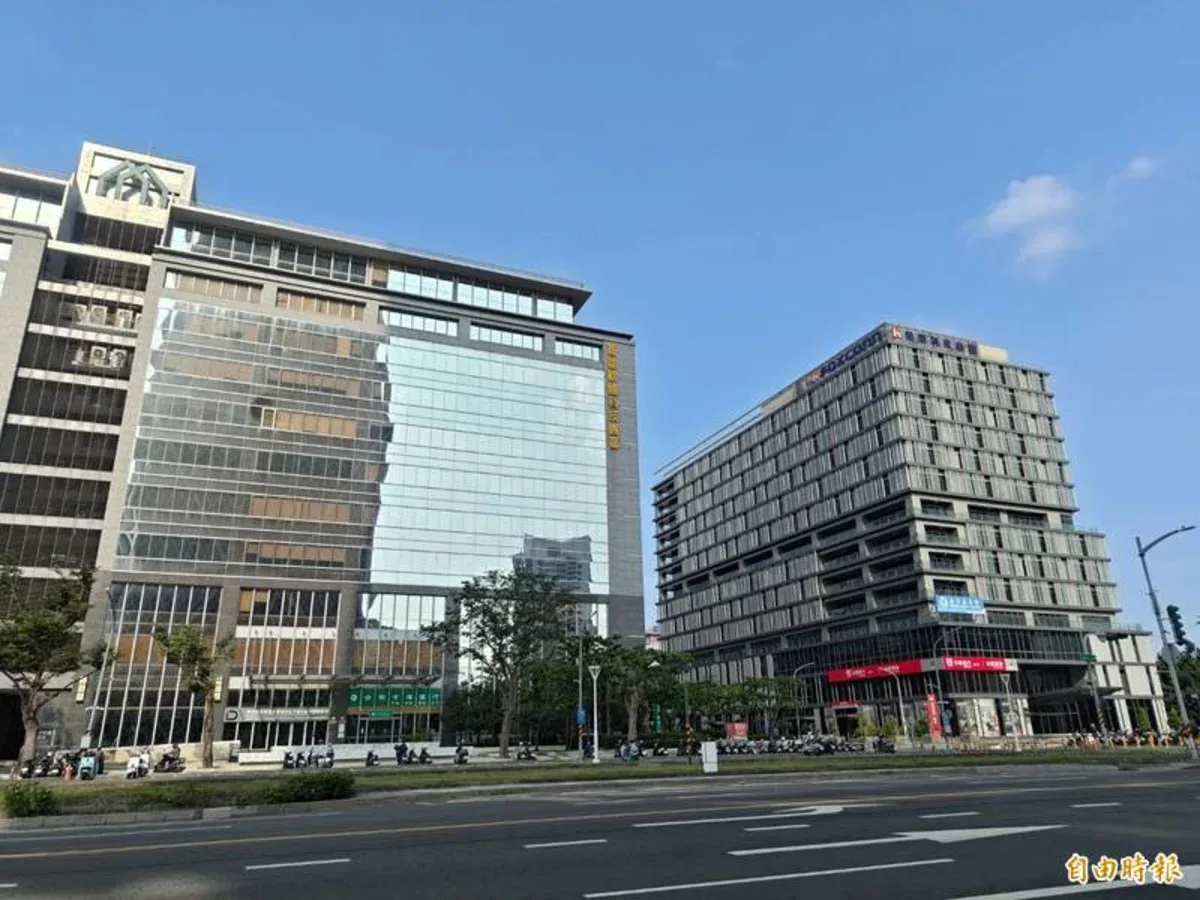
Kaohsiung has forged close collaboration with Nvidia on AI projects, including the 'Lighthouse Project' for AI-driven smart city governance. Former harbor warehouses have been transformed into research and development headquarters for major tech firms, driven by strong demand for premium office spaces with sea views. The city’s excellent nexus of high-speed rail, metro, conventional rail, and highways enhances its appeal to skilled workers and technology companies [1, 4, 7].
Leading universities such as National Tsing Hua University and National Yang Ming Chiao Tung University have established branches in Kaohsiung to nurture local talent. Commenting on Kaohsiung's progress, National Sun Yat-sen University professor Tsai Wei-che praised the systematic governance: "Mayor Chen Chi-mai has driven Kaohsiung’s transformation for six years; with TSMC and supply chains settling in and the Asia Asset Management Center’s arrival, Kaohsiung now links to the national strategic industry layout and fills a key southern financial sector gap." [4]
Mayor Chen expressed pride in the city's industrial shift but emphasized the need to quicken development in the face of global competition. The next major milestones include completion of TSMC’s 2-nanometer fabs and further expansion of the AI and semiconductor clusters to sustain growth momentum [1, 3, 8].