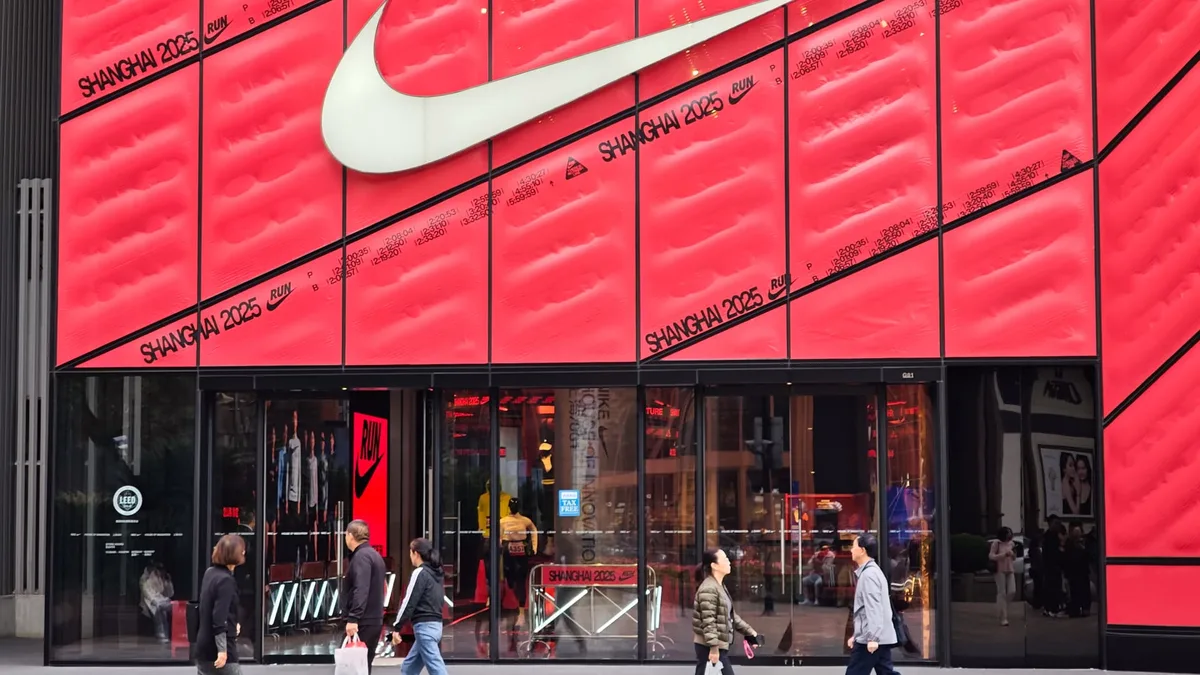
Nike announced it will terminate online sales agreements with over 1,000 distributors across China starting January 2027, directing customers to official Nike platforms on Tmall, JD.com, Douyin, Nike.com, and its mobile app [1, 2, 3].
The move aims to reduce fragmentation in the Chinese online market that Nike Vice President Cathy Sparks called "so fragmented and cluttered." She said consumers want "a premium, true to the brand, trustworthy" experience that connects digital and physical channels [1]. Sparks added that new flagship online stores will become "single, elevated destinations" offering clearer product presentation and stronger storytelling to deliver "direct, consistent, and unmistakably Nike" experiences [3].
Greater China is Nike's third-largest market but has faced sustained sales declines. Sales dropped about 17% in the most recent quarter and roughly 30% over the past five years [1]. Key sports retailers like Topsports, which derives 22% of online sales from Nike products, have been notified their online sales agreements will end next year [1, 2].
Nike CEO Elliott Hill said the company is planning "a comprehensive reset for our China operations to be more premium, more culturally connected and move at the speed of Chinese consumers" as it seeks to reverse the downward trend [2]. Alongside its digital strategy, Nike will also invest more heavily in physical retail, maintaining its network of more than 200 stores across China [2].
Analysts warn the plan may shrink Nike's revenue base in China and risk perceptions that Nike is retreating from the market, possibly delaying recovery [2, 3]. The company appears focused on regaining control and improving the customer experience by consolidating its online sales on official Nike channels.
The shift will take effect starting January 2027, marking a clear break with the current model of widespread third-party distributor sales online [1, 2, 3].