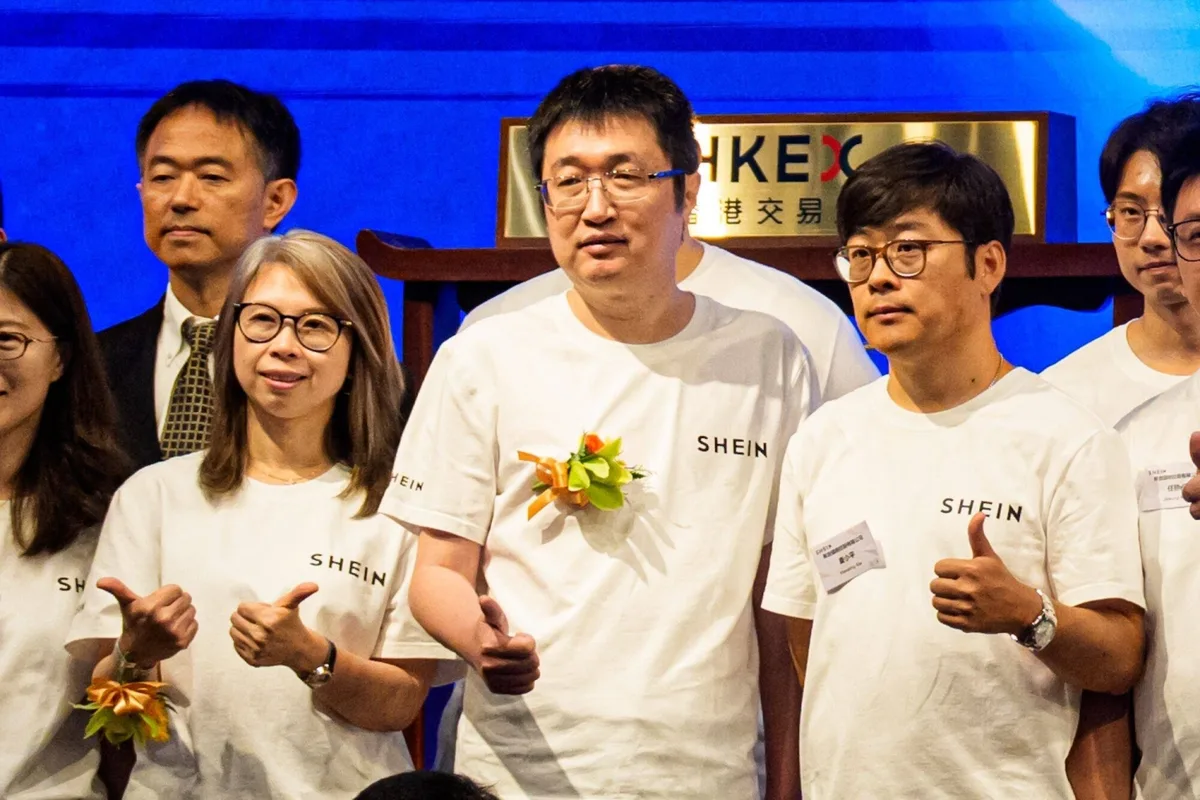
Shein Global Holdings Ltd completed its initial public offering (IPO) on the Hong Kong stock exchange on September 1, 2026, selling around 280 million shares at HK$48.56 each and raising roughly US$1.7 billion (HK$13.6 billion) [1, 2, 3, 4, 5]. The offering valued the e-commerce giant at approximately US$26 billion, a steep decline from its near US$100 billion private valuation in 2022 and US$64 billion in 2023 funding rounds [1, 2, 6, 3].
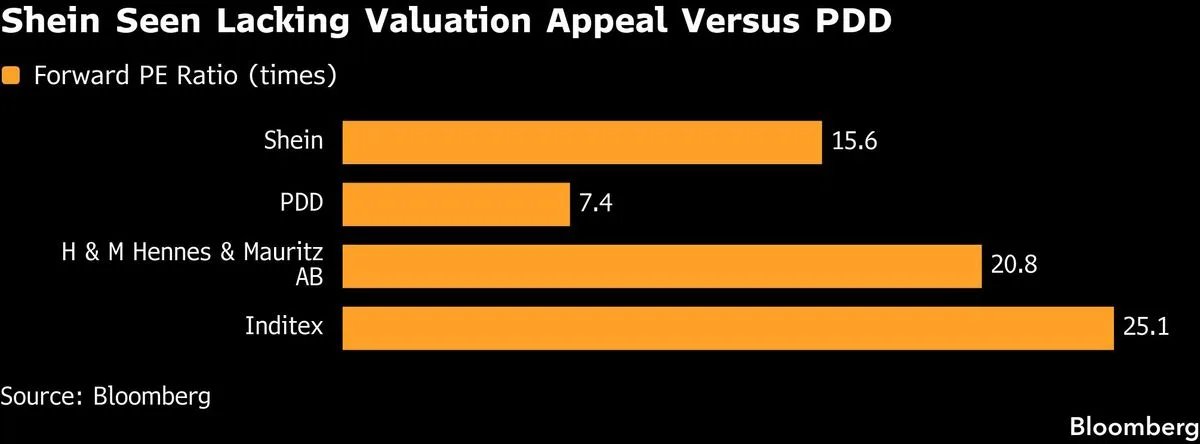
Ahead of its official listing, Shein shares plunged as much as 28% in grey market trading on August 31, dropping to about HK$40.04 amid large volumes, signaling investor skepticism [1, 2, 7]. On debut day, shares opened near the IPO price but dropped roughly 10% to around HK$43.72 before a partial midday recovery [3, 4, 8]. The company's price-to-earnings ratio stood near 15 times forward earnings, roughly double competitor PDD Holdings’ 7.4 times and above the Hang Seng Index multiple of 10.7, highlighting concerns over valuation [1, 7, 3].
Shein has struggled with a marked slowdown in growth. Sales are expected to rise only 3.4% to about US$44.3 billion in 2027, while net income has sharply declined in recent periods, estimating US$1.7 billion in 2027 [1, 7]. Experts like portfolio manager Gary Tan said the "stock is already pricing in part of a growth comeback before it has delivered one" [7]. Analysts pointed to headwinds including new tariffs, customs duties, and the end of the US de minimis exemption on imports under $800, which have increased costs and pressured margins [1, 6, 9, 5].
Shein also faces fierce competition from rivals such as Temu (PDD Holdings) and Alibaba's AliExpress, alongside regulatory scrutiny and criticism over business practices in Western markets [1, 7, 6, 3, 9, 5]. Criticisms include fake discounts, misleading sustainability claims, labor issues, and product safety [5]. According to Dickie Wong of uSMART Securities, "Revenue's not growing, and a lot of the money raised is basically going back to the earlier investors" [6]. CEO Jianggan Li called the valuation reset a reflection of tariff exposure, regulatory risks, and competition [6].
Lockup agreements for cornerstone investors cover about 20% of IPO shares, with roughly 5% of shares available for immediate trading [6]. Shein intends to allocate about 40% of the raised funds to upgrading technology infrastructure and another 40% to enhancing its global brand awareness [9, 5].
The company previously faced regulatory hurdles and failed IPO attempts in New York and London [6, 3, 4]. Analysts like Shen Meng noted Shein’s listing lacked broad appeal as it is a traditional e-commerce firm reliant on price competition, unlike favored AI and tech stocks in Hong Kong [3]. Singapore-based analyst Ke Yan added the investor preference for AI stocks has dimmed interest in Shein [9].
The listing closed September 1, 2026, with Shein shares still under pressure after debut. Investors will be watching how the company manages cost pressures, competition, and regulatory issues to deliver growth.