TSMC reported July 2026 revenue of NT$467.58 billion (US$14.5 billion), up about 45% from the same month last year, driven mainly by demand for AI hardware, the company said on August 10 [1, 2, 3]. TSMC Chairman C.C. Wei said, "AI-related demand continues to be extremely robust," highlighting the critical role of AI chips in the growth [3].
The semiconductor giant raised its capital expenditure forecast for 2026 to a record US$60 billion to US$64 billion from previous guidance, reflecting plans to expand chip manufacturing capacity [1, 2, 3]. TSMC also expects its full-year 2026 sales to grow slightly above 40% in U.S. dollar terms [1, 2, 3].
High-performance computing chips, which include AI-related products, made up 66% of TSMC's second-quarter revenues, underscoring the importance of this segment to the company's business [3]. TSMC supplies chips to major technology companies such as Nvidia, Apple, and Google [1, 3].
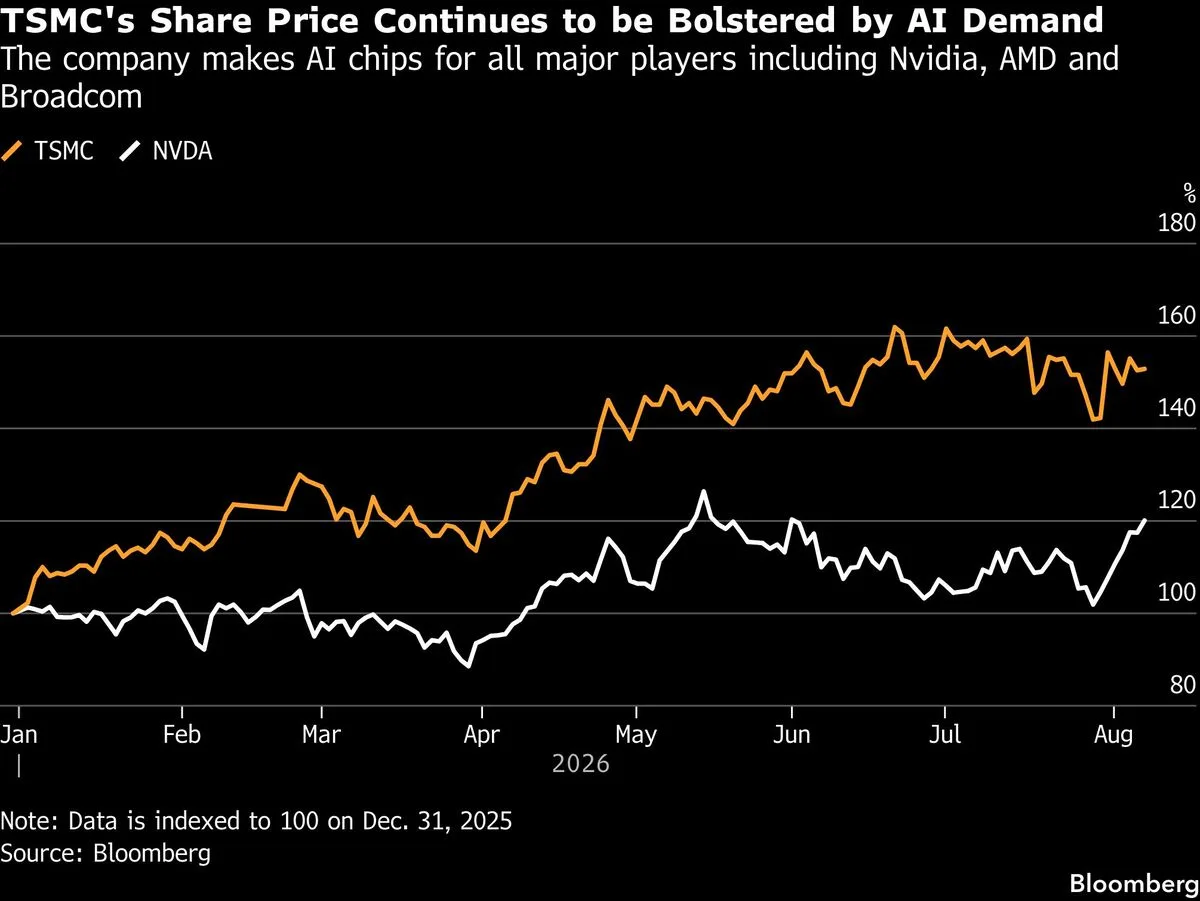
Despite the strong underlying demand, TSMC's stock fell about 5% since late June but remains up more than 50% year-to-date [1, 2, 3]. The PHLX Semiconductor index has dropped 15% from its June peak but gained 72% so far this year [3]. Some investors are cautious due to concerns about data center overcapacity and the return on investment in AI spending, which has slowed tech market valuations in July [1, 2].
Big Tech firms Alphabet, Meta, Microsoft, and Amazon have pledged nearly US$2.4 trillion for AI-related infrastructure, supporting long-term semiconductor demand [1]. Ben Barringer, head of technology research at Quilter Cheviot, said, "July's numbers put it ahead of that figure [40% growth], highlighting that for now demand is still there and takes pressure off August and September somewhat." He noted the semiconductor industry can shift quickly but praised TSMC's continued expansion and investments [3].
TSMC will report its next quarterly earnings later this year, which will offer further insight into the company's ability to sustain growth amid evolving AI hardware demand.