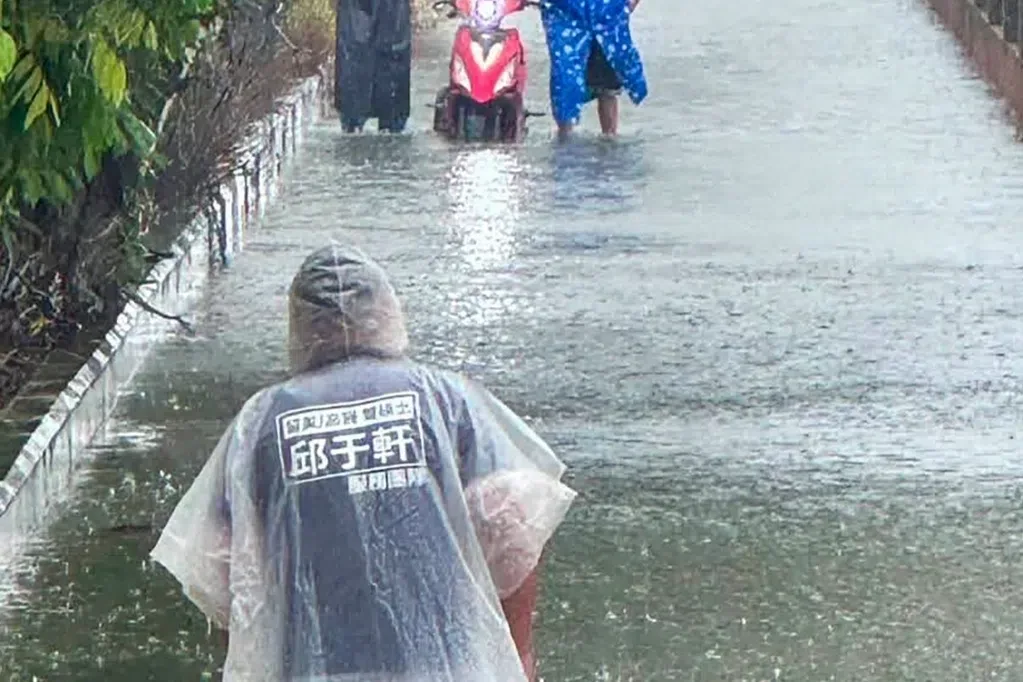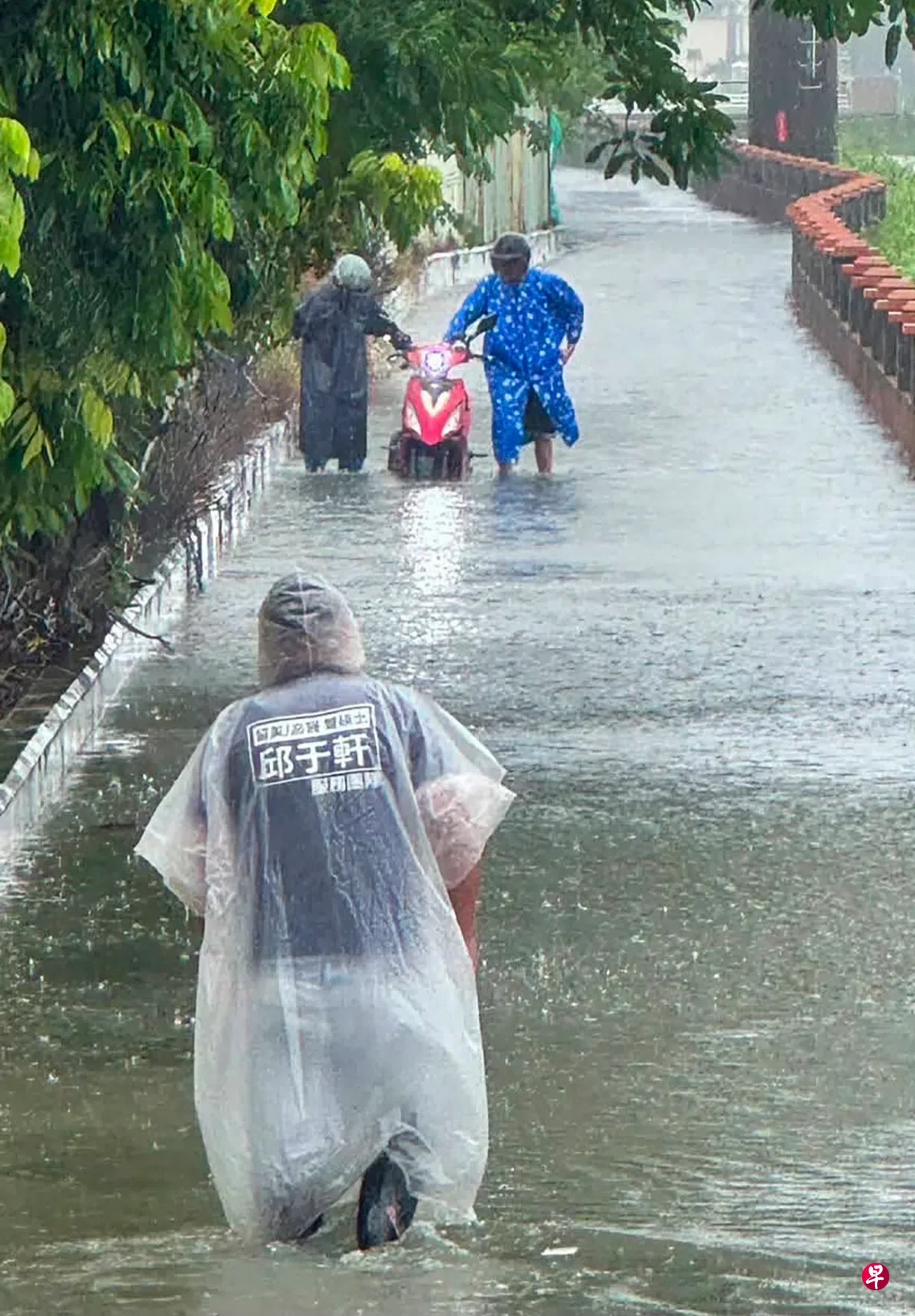
Southern Taiwan experienced continuous heavy rainfall driven by strong southwest winds and a low-pressure trough, causing 271 flooding events by August 23, 2026. Kaohsiung recorded up to 449 mm of rain from the night of August 23 to the morning of August 24, while Tainan and Pingtung saw 316.5 mm and 341 mm respectively. Taiwan’s Ministry of Economic Affairs reported 154 flooding incidents in Kaohsiung, 77 in Tainan, and 40 in Pingtung [1, 2].
Due to the heavy rains and flooding, Kaohsiung City, Tainan City, and Pingtung County suspended work and classes on August 24 [1, 2]. Taiwan Premier Chuo Jung-tai said he could only contact local governments by phone during disaster response because his disaster inspection travel budget had been cut by nearly 90% to about NT$5.53 million (~S$220,000), limiting his ability to visit disaster sites in person. He added he would try to visit affected areas when possible [3, 4]. An Executive Yuan spokesperson confirmed the budget reduction as a result of Legislative Yuan cuts, but the Kuomintang party disputed this, claiming the government budget had actually increased and accusing the ruling party of politicizing disaster response [3].
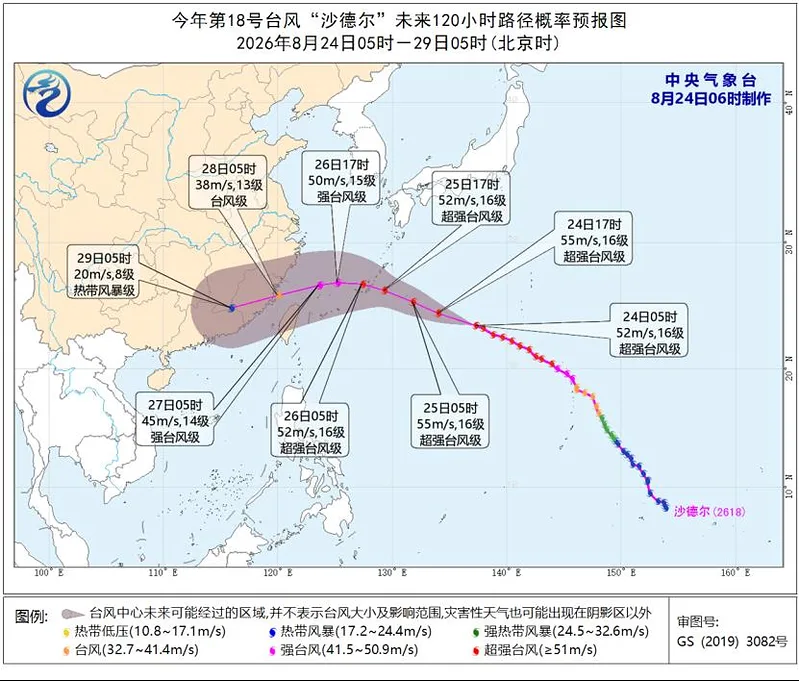
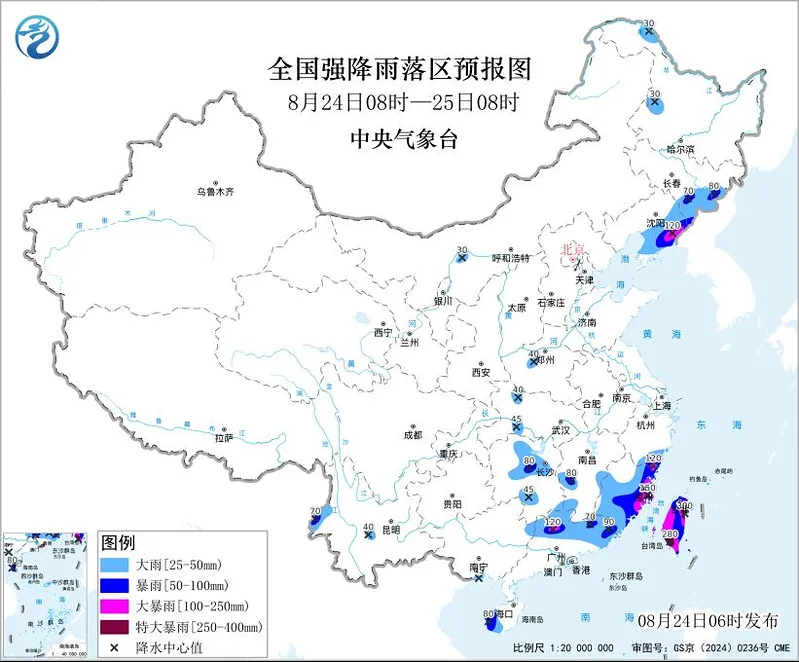
China’s Central Meteorological Observatory issued a yellow heavy rain warning on August 24 for southeastern Zhejiang, eastern Fujian, northern Guangdong, and eastern Liaoning provinces. It forecast 50-90 mm rainfall with localized peaks up to 220 mm over the following days. Typhoon Saudel, forecast on August 24 to intensify and move west-northwest near Taiwan, was expected to bring further rainfall impacts to northern Taiwan and later eastern China’s coast by August 27–28 [1, 5, 6].
Japan’s central region faced record-breaking rainfall and flooding around August 27, especially in Ishikawa and Toyama prefectures. Some areas received over 300 mm of rain in 12 hours, with Himi city (Toyama) recording 331.5 mm and Hakui city (Ishikawa) 325.5 mm in 24 hours. Authorities issued the highest-level (level 5) heavy rain special warnings for Ishikawa prefecture's cities including Hakui, Shika, Hodatsushimizu, Nakanoto, and Toyama’s Himi city. Rivers overflowed and landslides blocked roads. Schools temporarily closed, and train lines including JR Himi, Johana, and Takayama were suspended [7, 8, 9, 10]. Despite isolation caused by blocked roads and landslides, no confirmed casualties were reported by the afternoon of August 27. Rescue and evacuation operations were ongoing. Meteorological officials urged residents to move to higher ground, citing imminent danger to life [9].
On September 7, Japan’s Kanto region, including Tokyo and Fukushima prefecture, suffered record rainfall and flooding. Niijima Island recorded 445 mm in 24 hours, the highest since local records began, prompting the Japan Meteorological Agency to issue its highest-level landslide alert (level 5). In Fukushima, a person was rescued unconscious from a flooded vehicle [11]. Japan’s Meteorological Agency forecast the rainy period would extend through the end of August in western Japan, with renewed rainfall from August 30–31 near Honshu [10].