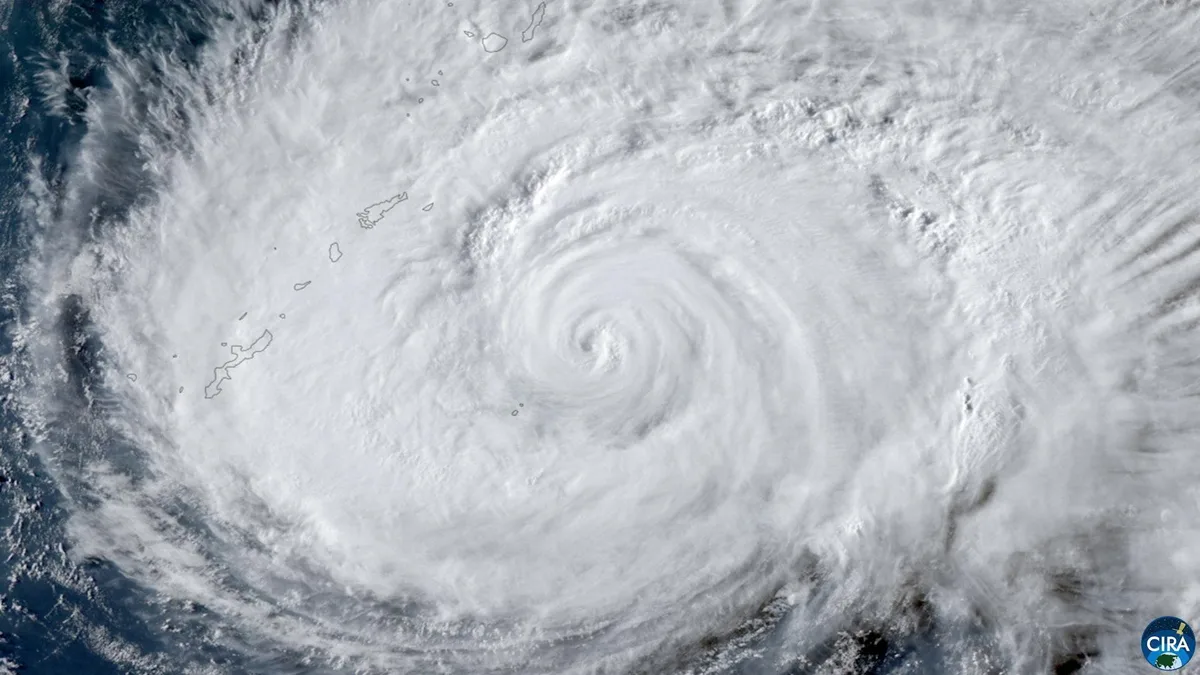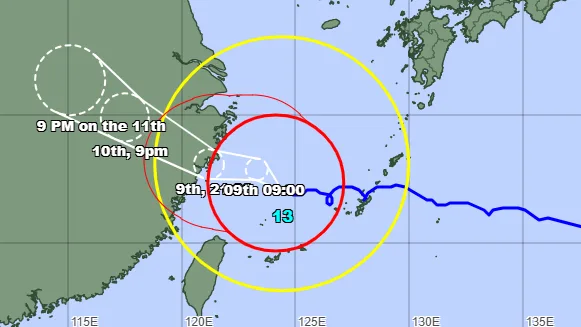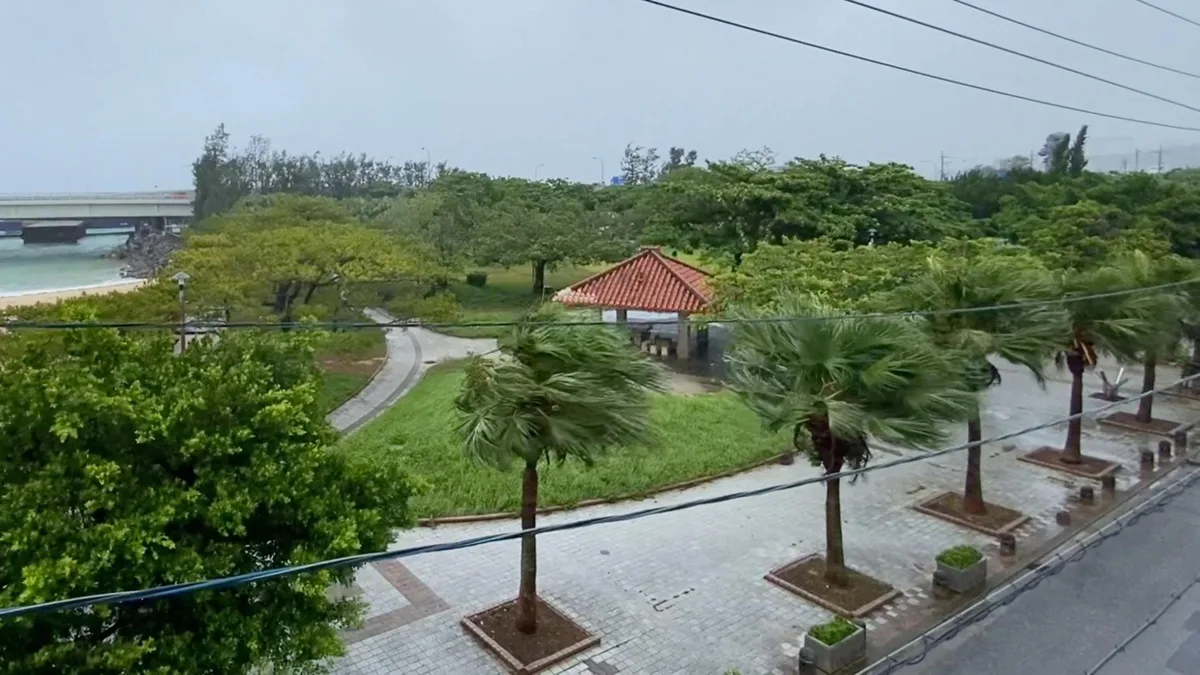
Typhoon Dolphin struck Japan's Okinawa island on Saturday, causing power outages affecting at least 44,000 buildings and injuring five to six people, mostly elderly with non-life-threatening wounds [1, 2, 3, 4]. The storm moved northwest with sustained winds near Okinawa reaching 162 km/h (101 mph) and gusts up to 216 km/h as it passed over the islands [1, 2, 4].
Airlines including ANA and Japan Airlines canceled all flights to and from Okinawa's Naha International Airport as well as other regional airports [1, 2, 4]. Power disruptions hit Okinawa and nearby Kagoshima Prefecture, though reports on the number of affected buildings vary from 14,000 to over 50,000 depending on the source [1, 2, 4].
Typhoon Dolphin moved on to the Chinese coast, where authorities raised coastal typhoon alerts to the highest levels for Zhejiang province and suspended port operations, ferry routes, and flights ahead of landfall [1, 2, 4]. The storm made landfall near Yuhuan City in Zhejiang province Sunday evening at approximately 5:30 p.m. local time, with sustained winds reported between 151 km/h (94 mph) and 162 km/h (101 mph), equivalent to a Category 1 or 2 hurricane depending on the source [5, 6, 2, 7].
Chinese authorities evacuated over 1 million people across eastern China, including more than 900,000 in Wenzhou city and nearly 100,000 residents in Fujian province, to mitigate flooding and landslide risks [5]. Heavy rainfall of 250-500 mm (10-20 inches) is forecast through August 10-12 across Zhejiang, Shanghai, northern Fujian, Jiangxi, Anhui, and Jiangsu provinces, prompting flood warnings and emergency response activations at Level III or IV [3, 5, 4].
Wang Haiping, chief forecaster at China's National Meteorological Centre, said, "Dolphin is forecast to track westward before slowing over central and south-western China and gradually losing strength, which could prolong heavy rain and increase the risk of flooding and landslides, especially in mountainous areas and along smaller rivers" [5].
Taiwan canceled 63 international flights due to heavy rain but did not order evacuations, while China mandated ships in the Taiwan Strait follow traffic controls, a move Taipei criticized as unjustified [4]. A traveler in Shanghai described the typhoon as routine, saying, "To us Guangdong people, this typhoon is as ordinary as having a meal and feeling the wind. It’s just part of everyday life" [5].
With the storm ongoing, more than 1,000 flight cancellations in China have been reported due to the typhoon [5, 6]. The heavy rain and flooding warnings remain in effect through August 12 across multiple eastern provinces.