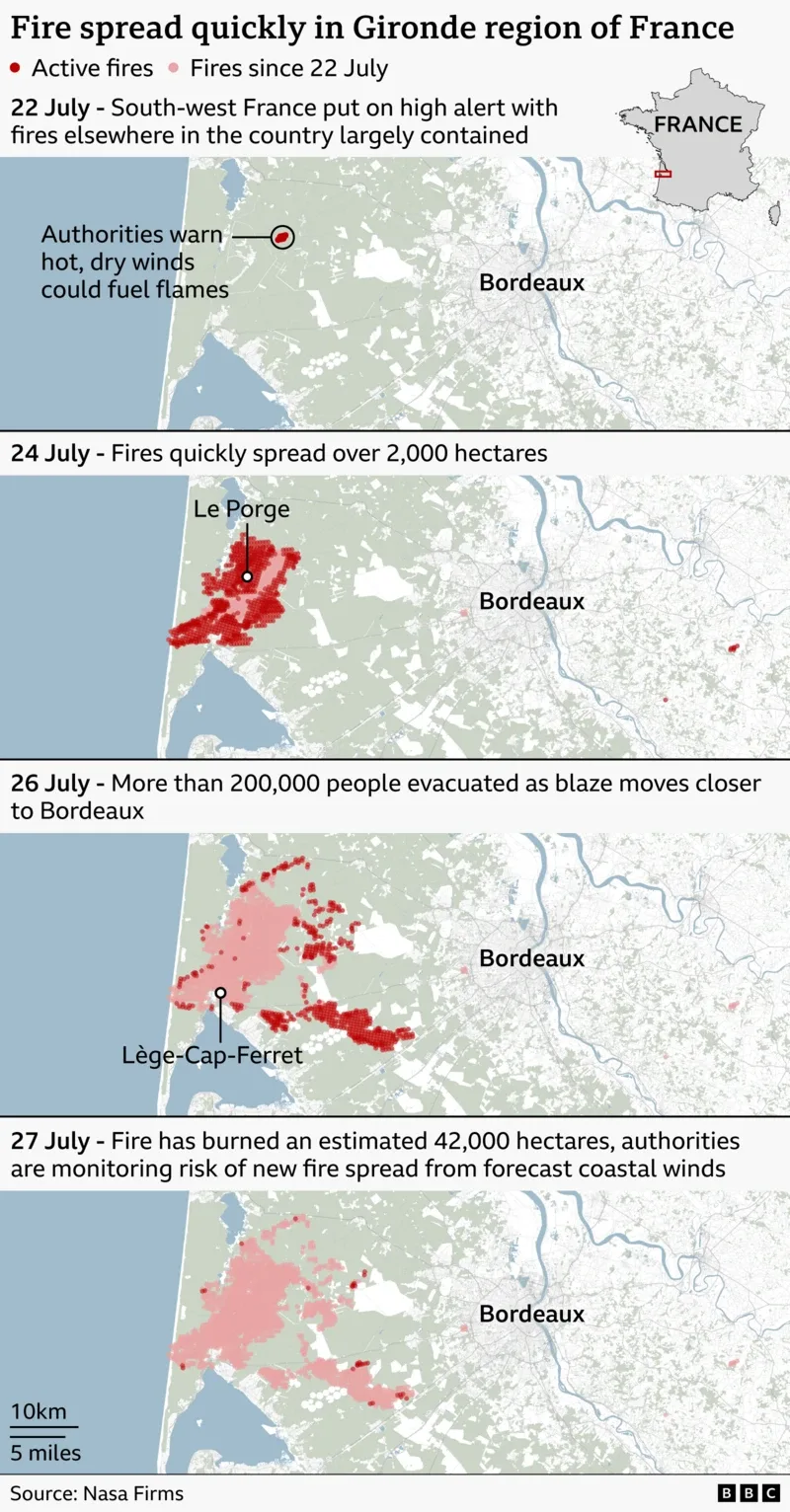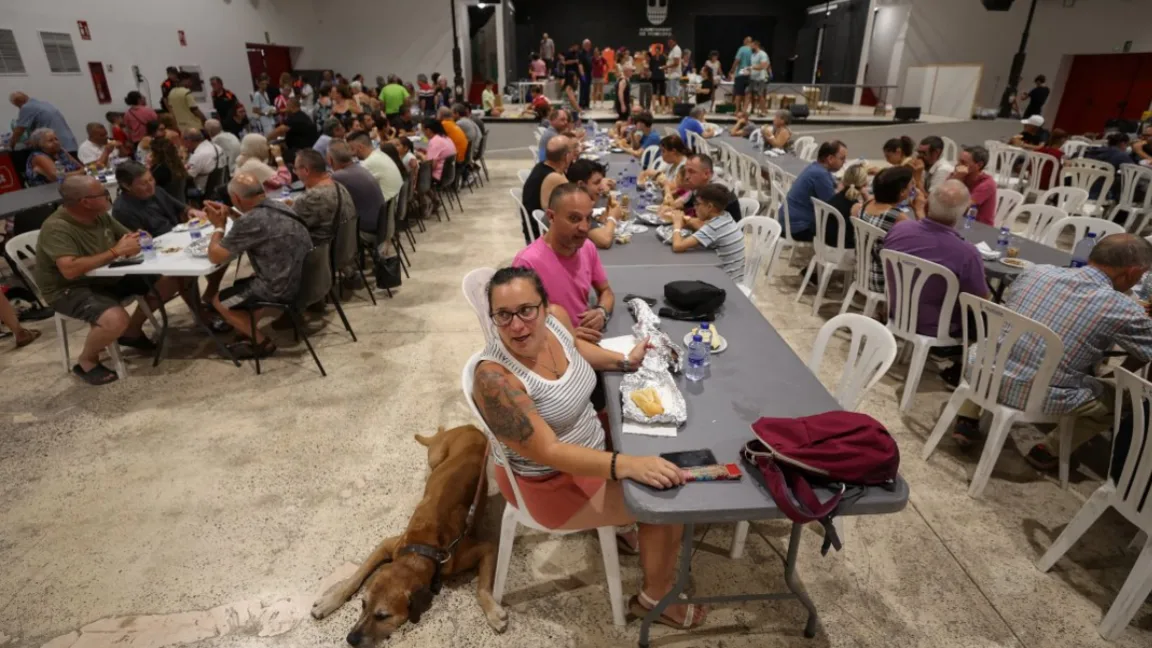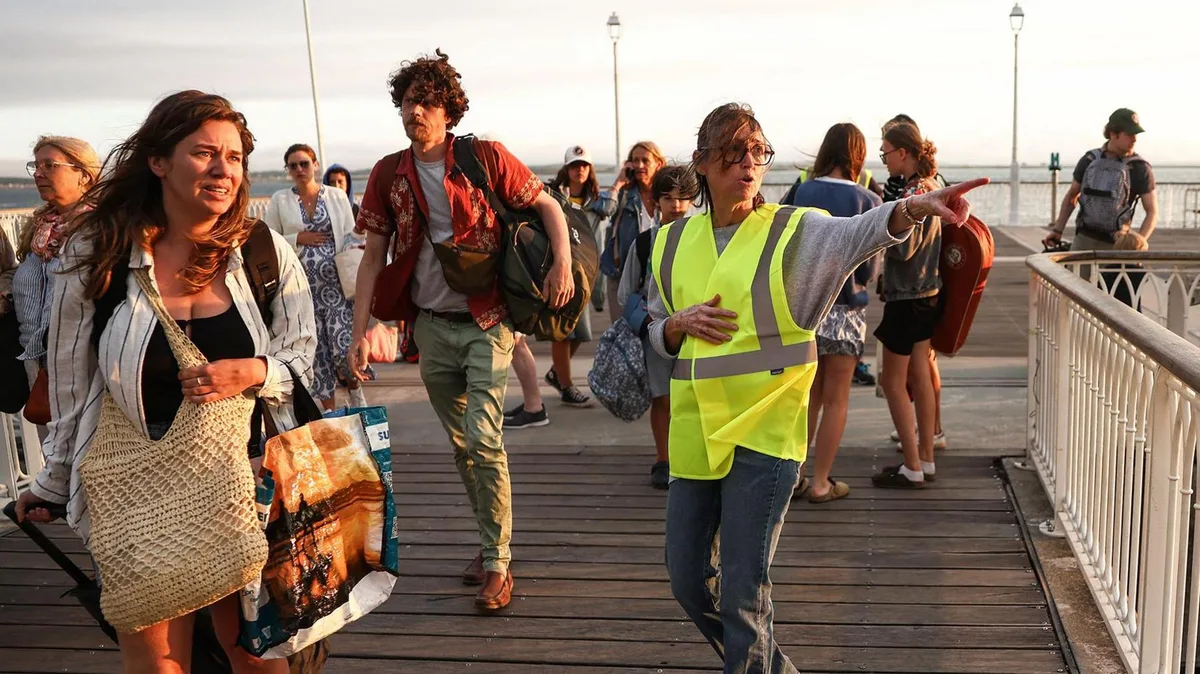
French authorities ordered the total evacuation of the Cap Ferret peninsula and other areas in the Gironde region after wildfires burned over 10,000 hectares, displacing around 40,000 people, including many tourists from campsites and vacation homes [1, 2, 3, 4, 5]. Another major fire near Biscarrosse in the Landes region consumed over 2,500 hectares and forced the evacuation of more than 23,000 residents [1, 2, 3].
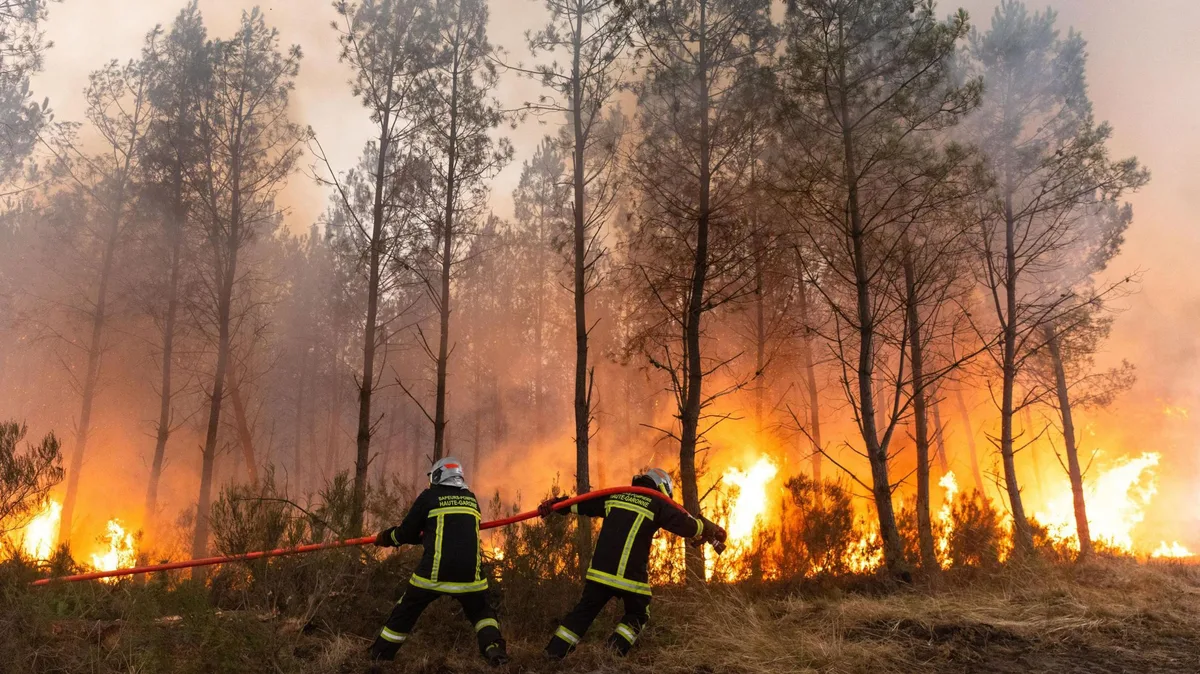
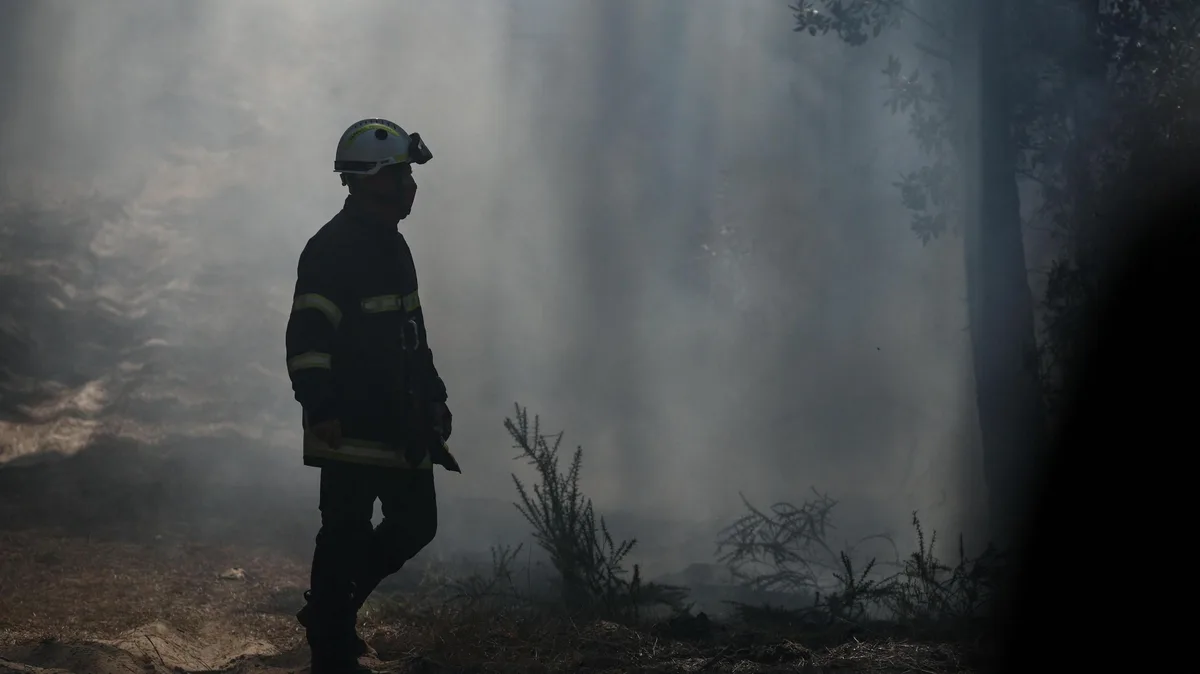
The wildfires in France have killed two firefighters near Bordeaux airport, while more than 700 firefighters have been deployed to the front lines, with about 2,000 total engaged in the Gironde region [1, 6, 7]. French Interior Minister Laurent Nuñez said, "As I speak, a total of 40,000 people have been or are currently being evacuated due to this fire. The fire is currently not under control and continues to spread" [2]. Firefighter Capt. Nicolas Braz described the fires generating a rare "pyro cumulonimbus" cloud that created erratic winds and complicated firefighting efforts [4].
French President Emmanuel Macron called the blaze the "toughest since World War Two" and called for European Union support, including aircraft from multiple countries [1, 2, 5]. Macron described the wildfire situation as "very tense" especially in Gironde [1].
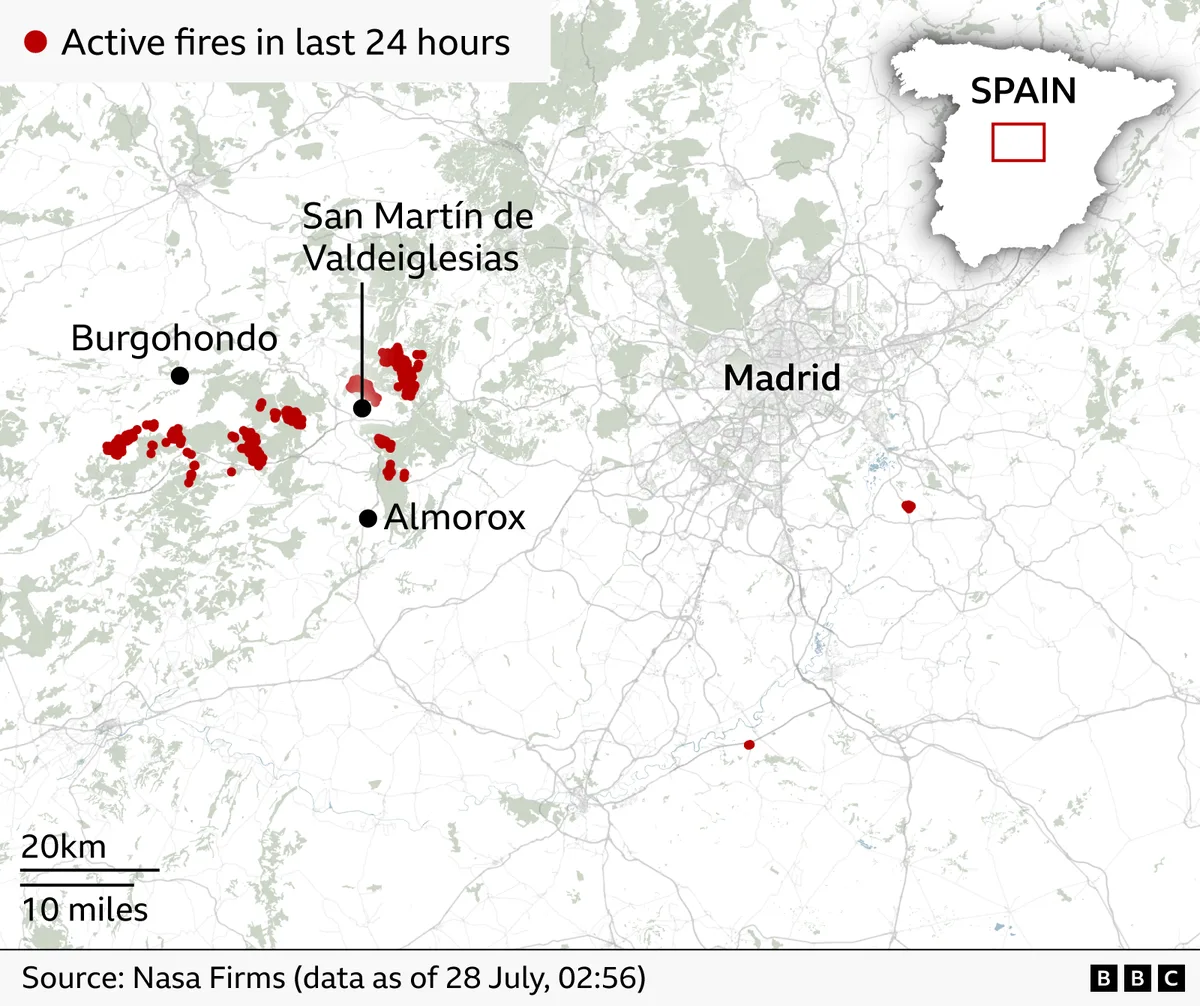
In Spain, wildfires near Madrid and in central Guadalajara province forced more than 70,000 evacuations as fires burned over 104,000 hectares nationwide in 2026 [8, 9, 10, 7]. The Guadalajara fire spread to over 26,000 hectares by July 20, with more than 1,000 residents evacuated [9, 10, 7]. Madrid regional leader Isabel Díaz Ayuso called it "the biggest natural catastrophe in the history of Spain" [8].
Spain declared a national emergency due to the uncontrollable fires near Madrid and Ávila, with a wildfire perimeter reaching 280 kilometers [1, 8, 5]. Civil protection chief Virginia Barcones called the fire a "monster" [5]. Spanish Prime Minister Pedro Sánchez visited the affected zones and said, "The climate emergency is worsening year after year, and we are required to be united to fight against fire, as well as in prevention and reconstruction" [8]. Spanish Interior Minister Fernando Grande-Marlaska described the situation as "monster" and "critical" [8, 5].
Extreme heatwaves with temperatures reaching up to 40 to 44 degrees Celsius and dry conditions fueled the wildfires in both countries, exacerbated by the impact of climate change [8, 6, 10, 7, 11].
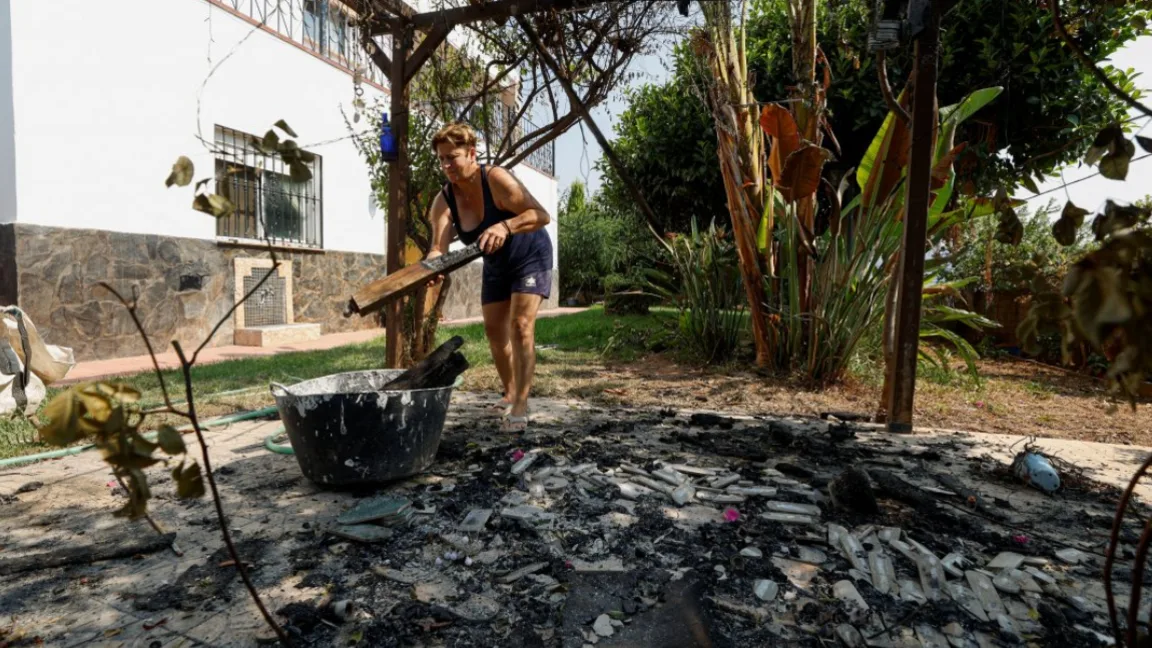
Across France and Spain combined, over 300,000 people have been evacuated this summer as firefighters battle blazes that have destroyed about 80 houses on the Cap Ferret peninsula alone and many more in southern France's Var province [12, 7, 3, 4, 5].
French President Macron held a crisis meeting from July 26 to 27, coinciding with visits by Spanish Prime Minister Sánchez to wildfire zones, aiming to coordinate emergency responses as the fires remain active [5].