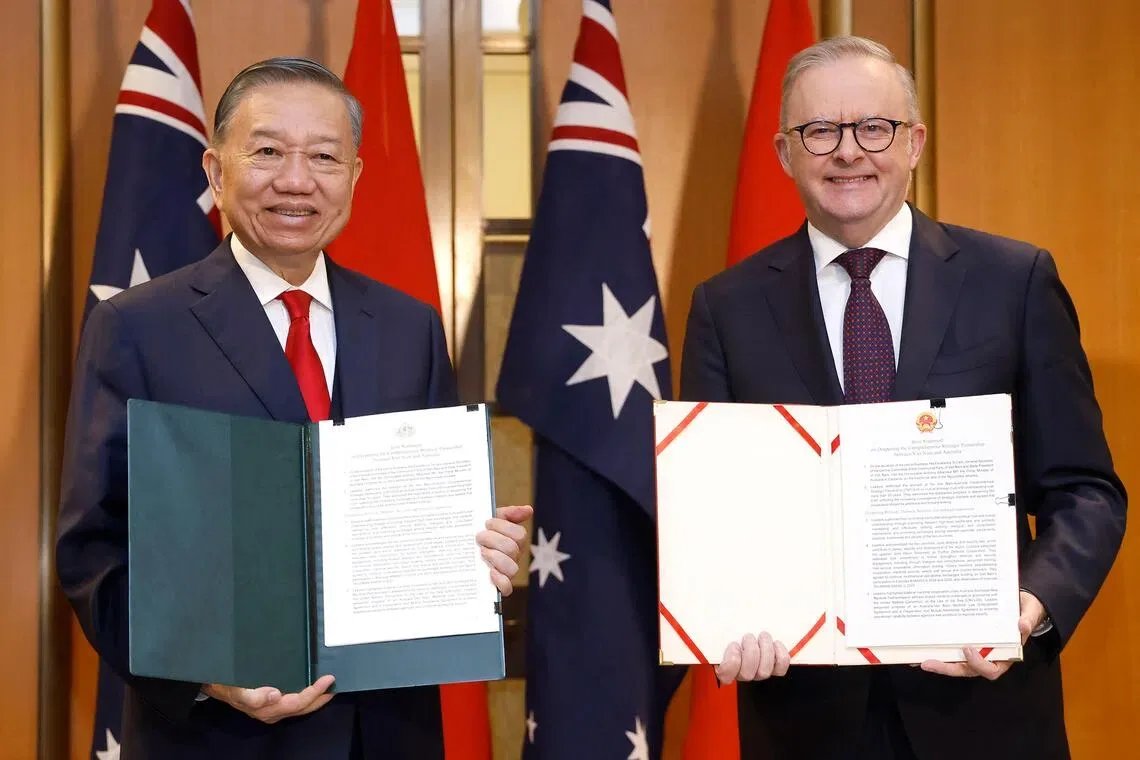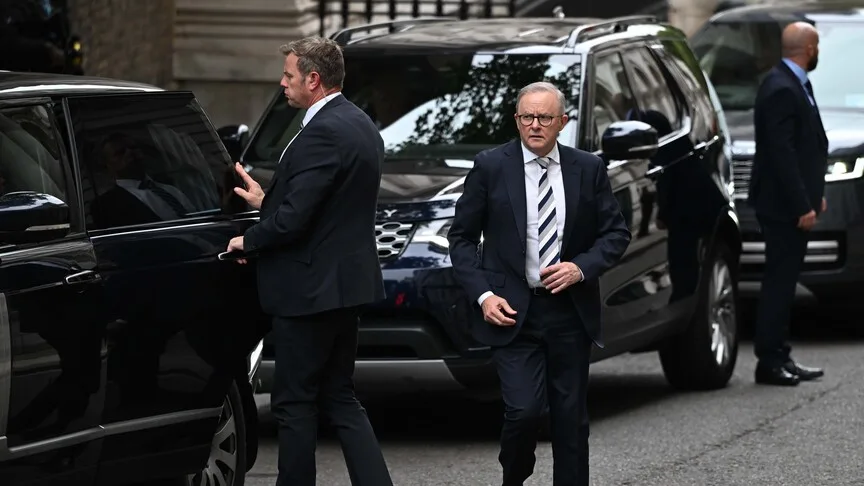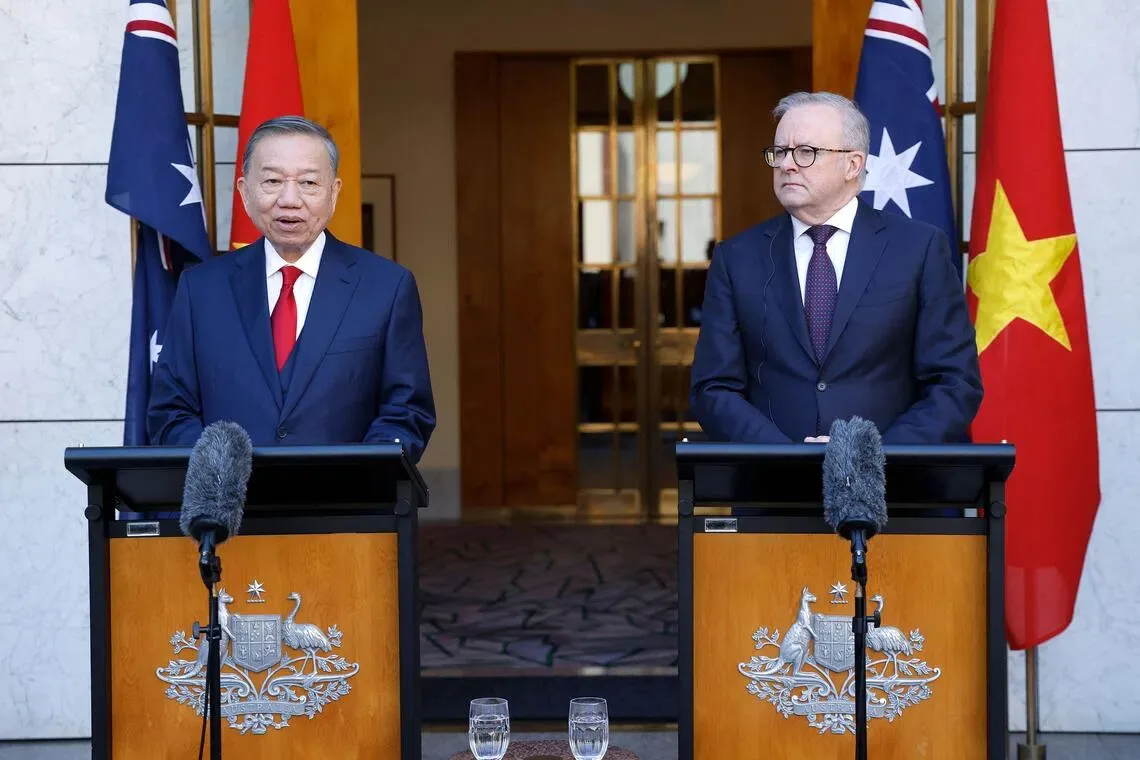
Australian Prime Minister Anthony Albanese and Vietnamese President To Lam agreed on August 11 to strengthen military cooperation focused on maritime security and joint training exercises, aiming to enhance stability in the Indo-Pacific region [1, 2, 3, 4, 5, 6]. The announcement came during To Lam’s first official visit to Australia from August 9 to August 12 as both leaders met in Canberra [2, 3, 4, 5].
The two countries have deepened defense ties in recent years, responding to China’s military expansion and assertive claims in the South China Sea [1, 2, 3, 4, 5, 6]. Australian Defense Minister Richard Marles said the strengthening cooperation would "directly contribute to the stability and security of our region" [1, 5]. Political analyst Huong Le Thu noted that both nations are "very nervous of China’s increasing confidence in testing its military capabilities and projecting its military power," emphasizing the need for international law to restrain superpowers and protect smaller countries [2].
Beyond defense, Australia and Vietnam committed to expanding economic cooperation. They aim to improve supply chain resilience and market access, including restarting Australian game meat exports like kangaroo to Vietnam [1, 2, 3, 4, 5, 6]. Two-way trade has more than doubled from A$14.6 billion in 2020 to over A$30 billion in 2025, driven by Australian exports of iron ore, coal, and education services and Vietnamese exports of manufactured goods and crude oil [2, 3, 4].
The leaders also agreed to broaden cooperation on counter-terrorism, cybercrime, drug and human trafficking, peacekeeping, and search and rescue operations, along with information sharing on security matters [6]. Both called for respect for international law, freedom of navigation in the South China Sea, peaceful dispute resolution, and adherence to the 1982 UN Convention on the Law of the Sea. Their joint statement highlighted their commitment to "a peaceful, stable and prosperous Indo-Pacific that is free from coercion and where sovereignty is respected" [6].
Climate change cooperation formed another pillar of their talks. Australia and Vietnam pledged to accelerate renewable energy deployment and aim for net-zero emissions by 2050 [6]. The leaders reaffirmed support for ASEAN centrality in the regional architecture and urged an immediate halt to violence and humanitarian access in Myanmar [6].
Albanese said, "Our defence industries, as well as our defence forces, are cooperating more and more...Today’s uncertain world means that it is more important than ever that friends engage with each other on all levels – economic, social, environmental – to meet the challenges that are before us" [1]. To Lam expressed confidence in their cooperation, stating, "I am confident that, given our shared resolve, our bilateral ties will continue to thrive" [2].
After concluding his visit to Australia on August 12, To Lam was scheduled to travel to New Zealand to continue his regional tour [2, 3, 4].