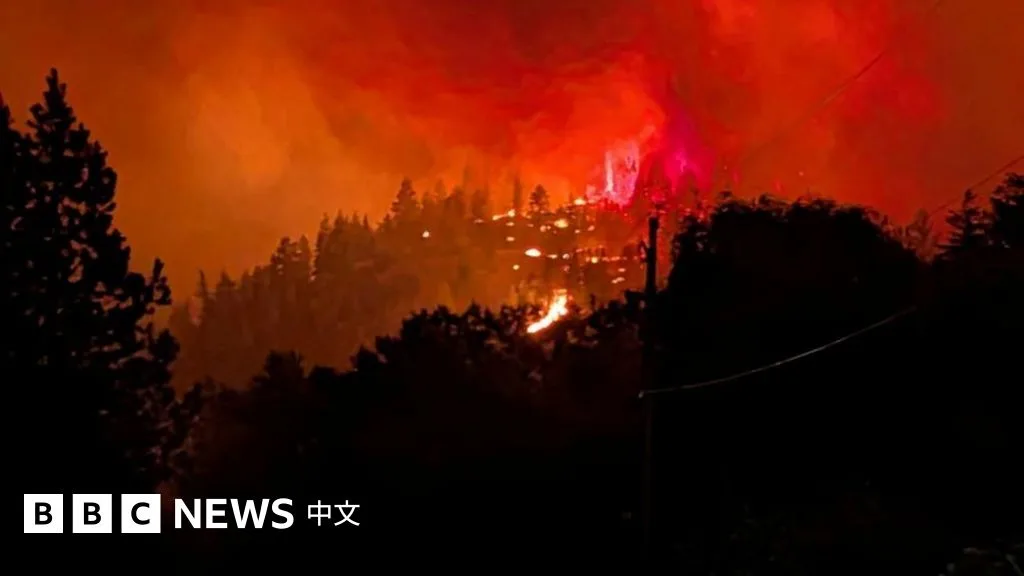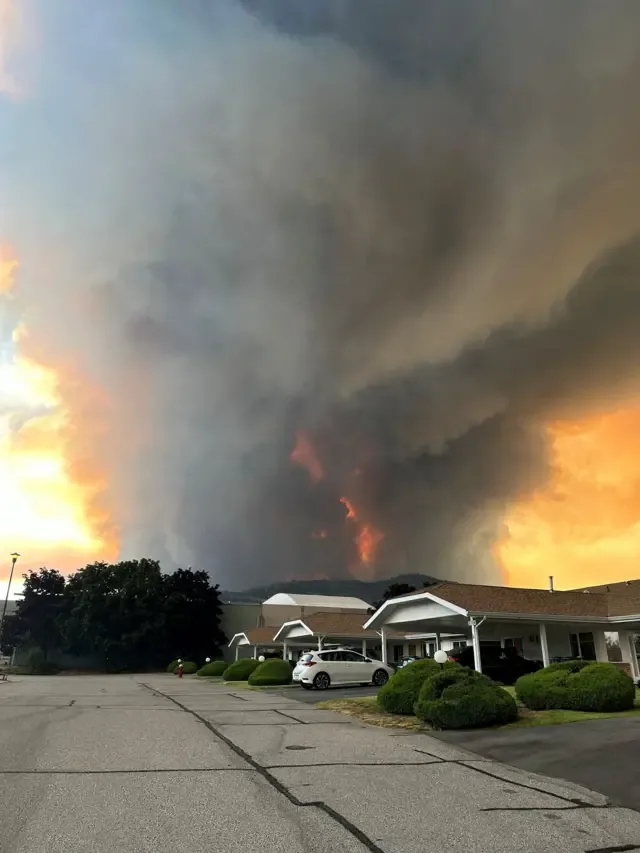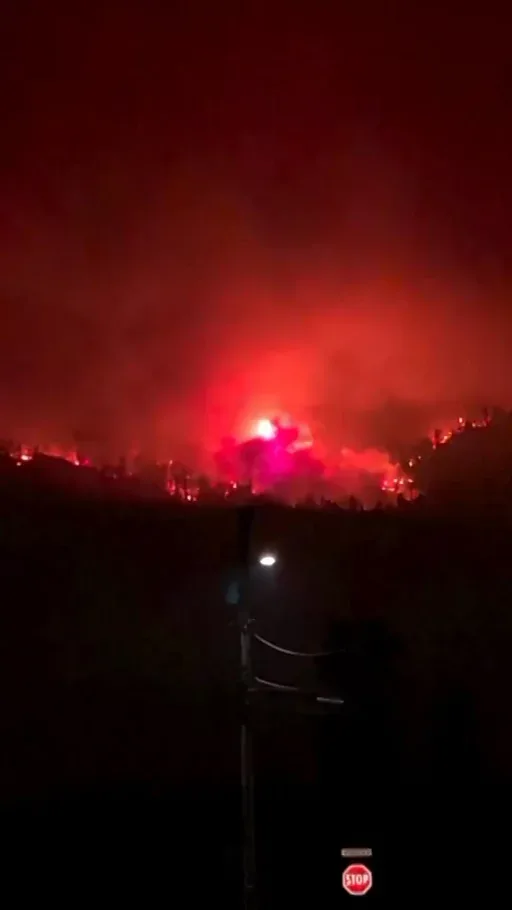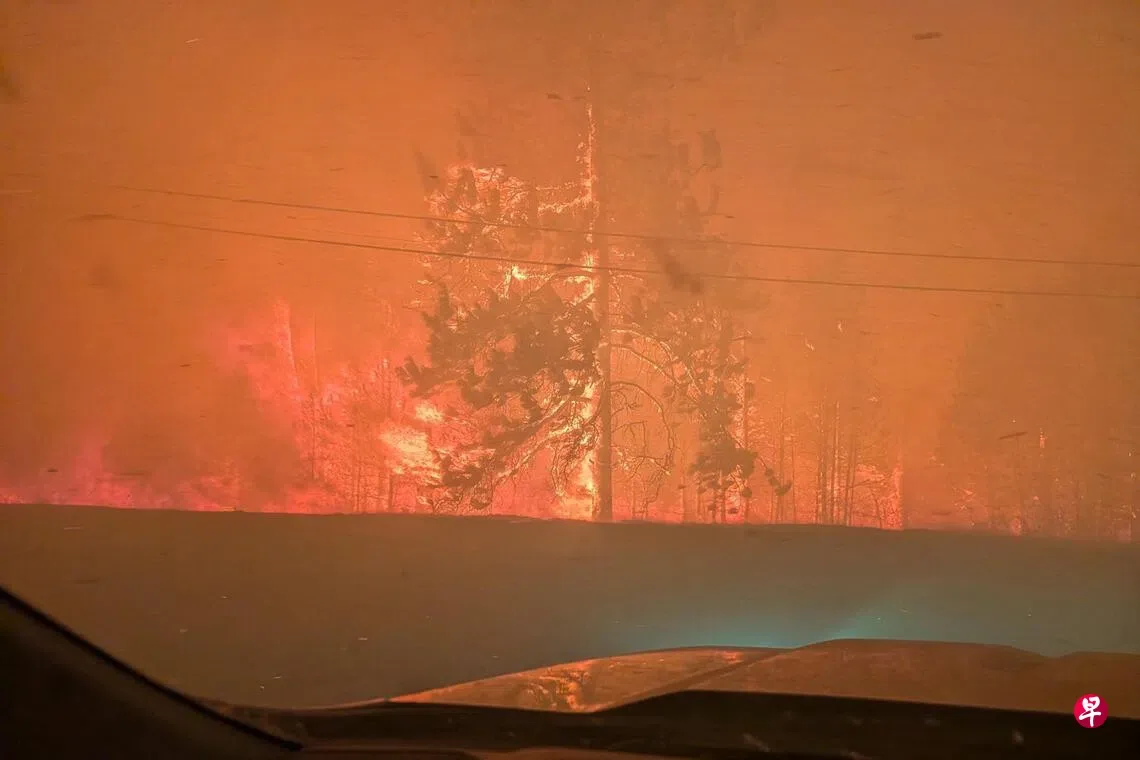
The Bald Range wildfire in British Columbia, Canada, has scorched between 9,500 and 10,300 hectares as of August 8, 2026, after igniting near Summerland and rapidly spreading to Peachland and surrounding areas near Okanagan Lake [1, 2, 3].
The fire began on the evening of August 7 and expanded quickly due to strong winds, forcing evacuation orders in Summerland, which has about 12,000 residents, as well as Peachland with roughly 6,500 inhabitants [2, 4]. The wildfire's high flames generated pyrocumulus clouds and lightning that further fueled its spread, according to British Columbia Premier David Eby: "The flames were very high, forming their own weather system and producing lightning which further fueled the fire" [2, 5].
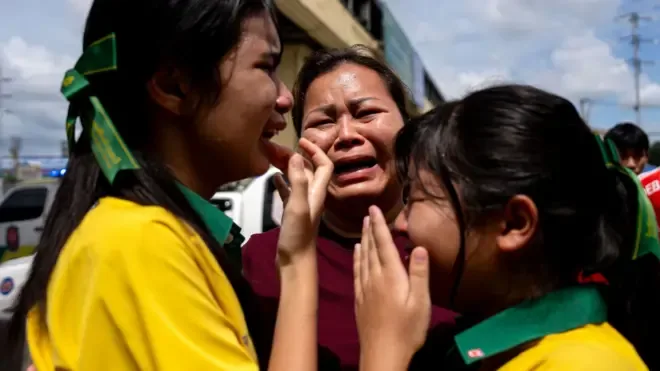
More than 20,000 people have been evacuated from the affected zones, marking the largest evacuation in British Columbia this summer [2, 4, 5]. The government issued 39 evacuation orders alongside 49 evacuation alerts across the region [1, 5]. Around 50 people trapped in the Faulder community were rescued by helicopter during air evacuation operations as officials worked to secure those isolated by the fire [3, 5].
The wildfire has damaged numerous homes and properties, causing power outages in parts of Summerland and prompting boil water advisories after untreated water entered the local supply system [1, 3, 5]. Summerland Mayor Doug Holmes said, "Many farms have been affected. We don’t yet know how many buildings have been destroyed. They are fighting hard to contain this fire. We must prepare for the worst" [2].
In response, the British Columbia government declared a provincial state of emergency on August 8, implementing emergency powers including travel restrictions and measures to prevent supply price gouging [1, 6]. Approximately 1,500 firefighters are battling over 100 wildfires across the province, including the Bald Range fire [1, 5, 7]. Canada has also received international assistance from Mexico, Australia, New Zealand, and France to help combat the fires [1, 3, 5].
Prime Minister Mark Carney expressed gratitude to the firefighting crews and pledged federal support for British Columbia's efforts, stating, "The federal government is ready to assist and support British Columbia’s efforts" [5, 8].
The broader wildfire situation in Canada has been severe this year, with close to 4 million hectares burned nationwide [3, 5]. Smoke from the Bald Range fire has drifted into U.S. states such as Minnesota and New York, affecting air quality there [2].