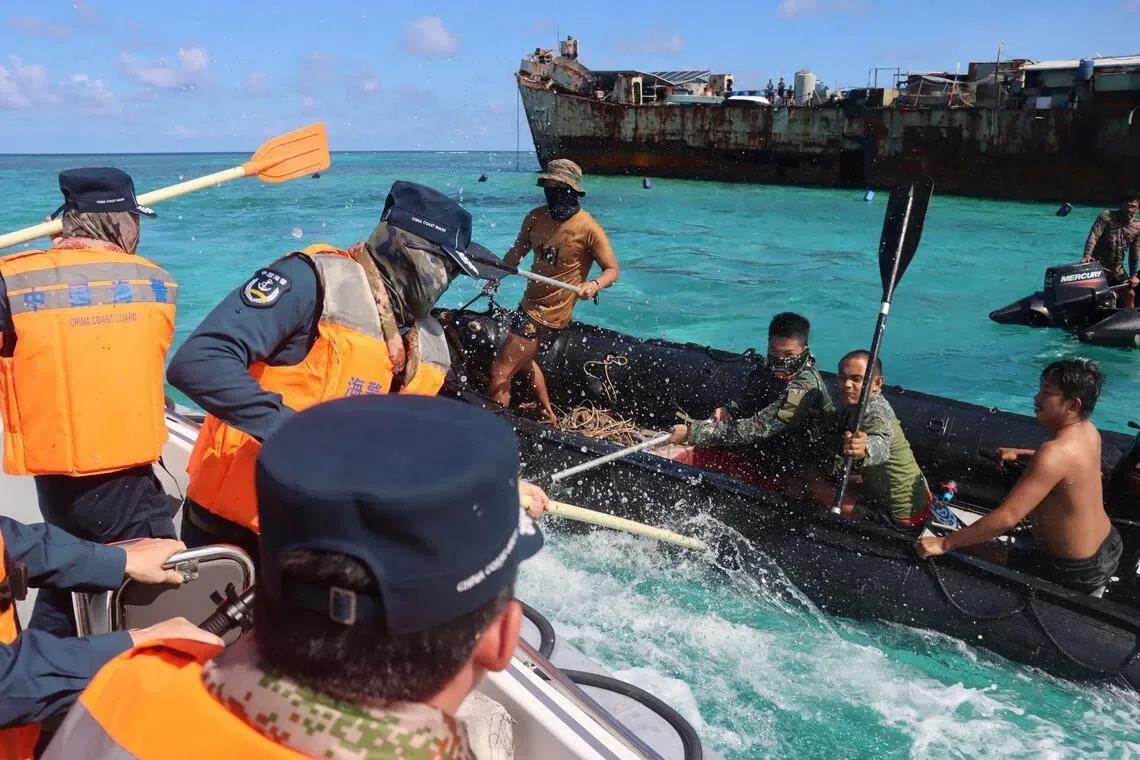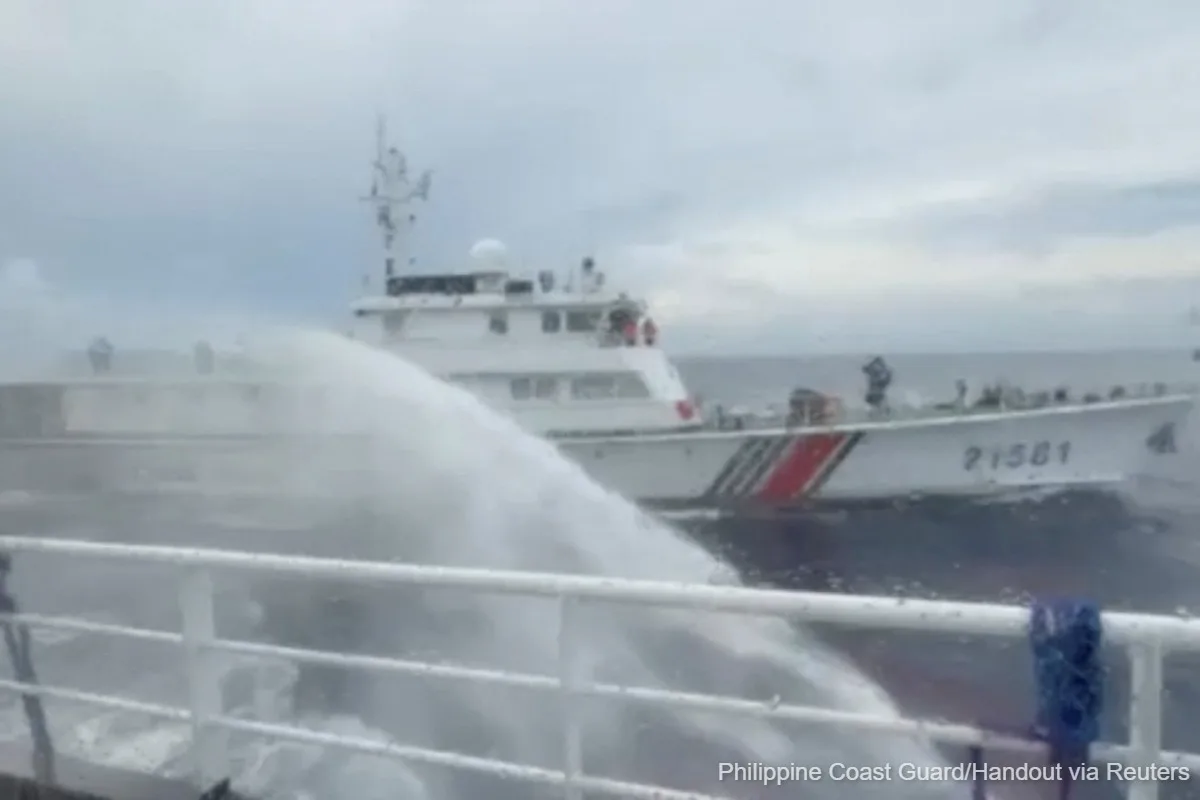
On July 23 and 24, the China Coast Guard confronted around 10 to 12 Philippine vessels near Scarborough Shoal, a contested maritime area claimed by both nations [1, 2, 3, 4, 5]. Chinese forces fired water cannon at Philippine government fisheries vessels, causing indirect hits and coming within about 7 meters (23 feet) of some Filipino boats, according to Philippine officials [2, 4, 5].
China described the actions of its coast guard as lawful and necessary steps to expel what it called illegal Philippine intrusions into waters near Scarborough Shoal, which China refers to as Huangyan Dao or Island [1, 3, 4, 5, 6]. A China Coast Guard spokesman said they took "necessary measures, including tracking, monitoring, blocking, and controlling the Philippine vessels in accordance with the law, and expelled them" [6]. China's Ministry of Foreign Affairs spokesperson Lin Jian called their actions "reasonable, lawful and beyond reproach" and urged the Philippines to stop "infringement, provocation and hype" [5].
The Philippine Coast Guard condemned the Chinese maneuvers as dangerous and unprofessional. Spokesperson Jay Tarriela said the actions "violated the International Regulations for Preventing Collisions at Sea (COLREGs) and endangered Filipino personnel engaged in a purely humanitarian undertaking" [2]. Tarriela added that the Philippine agency "strongly condemns the dangerous and unprofessional actions of the China Coast Guard" [4]. The Philippine vessels were reportedly conducting routine patrols, delivering fuel subsidies, and providing humanitarian aid to Filipino fishermen in the area within the Philippines’ exclusive economic zone (EEZ) [4].
The incidents mark the third recent clash between the two sides in the South China Sea this week, following a previous confrontation at Second Thomas Shoal where a Philippine Navy serviceman was reportedly assaulted [1, 7, 6]. In response to rising tensions, the U.S. Seventh Fleet deployed the George Washington Carrier Strike Group through the nearby Luzon Strait on July 23-24 [7].
On the sidelines of ASEAN meetings held in Manila during July 22-24, foreign ministers from China and the Philippines exchanged protests over the maritime disputes [1, 2, 7, 3, 4]. Philippine President Ferdinand Marcos Jr. spoke with U.S. President Donald Trump on July 23 about the situation, with Trump pledging to raise concerns about Chinese actions with Chinese President Xi Jinping [7].
Chinese Foreign Minister Wang Yi warned the Philippines of "bitter consequences of its own making if it sought to provoke Beijing with the support of outside powers" [1]. The Philippines continues to assert its right to conduct patrols and support fishermen near Scarborough Shoal.
Officials on both sides remain entrenched, with no immediate de-escalation. The disputes continue to unfold amid scheduled follow-up diplomatic exchanges and ongoing regional security meetings.