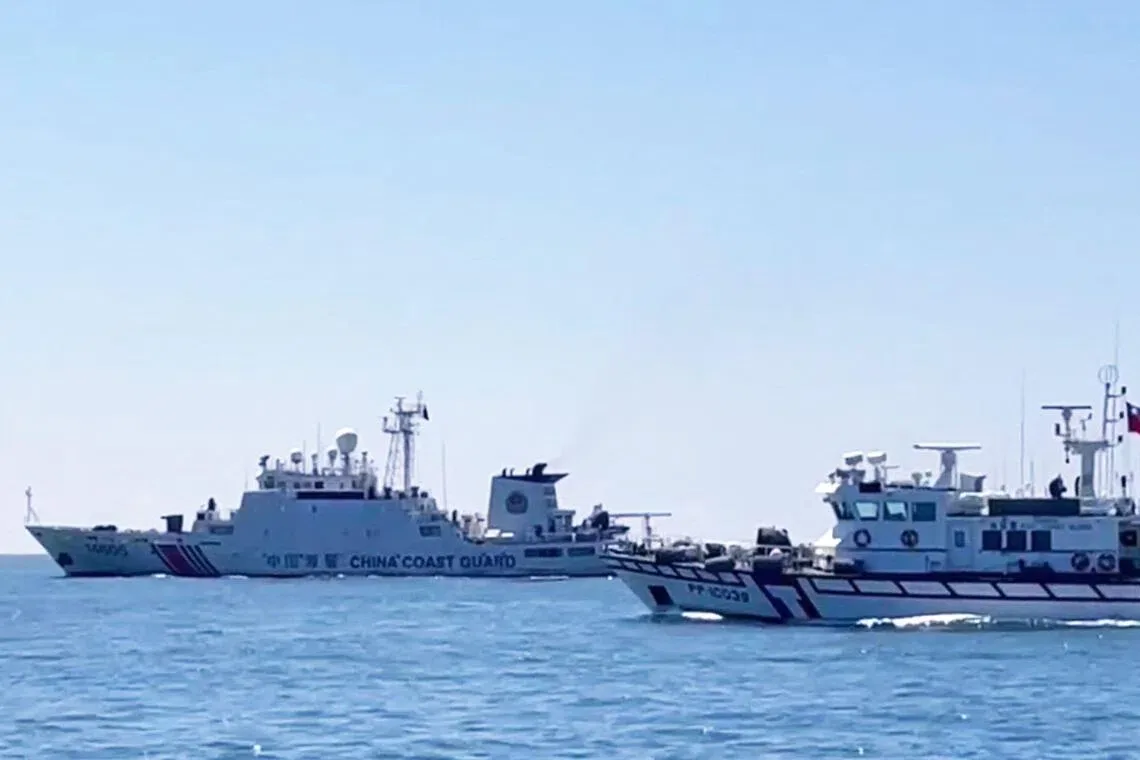
China deployed a record 244 coast guard, scientific research, and other government vessels in the waters surrounding Taiwan in July 2026, marking a sharp increase from previous months and surpassing the 58 ships detected in July 2025 [1, 2, 3, 4, 5]. The daily average reached nearly 8 vessels in July, compared to 55 ships in June and 30 in May 2026 [1, 2, 3, 4, 5]. In the first 21 days of August 2026, 152 Chinese vessels were detected near Taiwan [1, 2, 3, 4].
About 60% of these vessels were coast guard ships; the remainder included scientific research ships and other government-operated vessels [1, 2, 3, 4, 5]. Chinese warships, deployed daily around Taiwan, were not included in these counts [1, 2, 3, 4, 5]. Since May 2026, authorities have detected a total of 1,247 Chinese government vessels in the area [1, 2, 3, 4, 5].
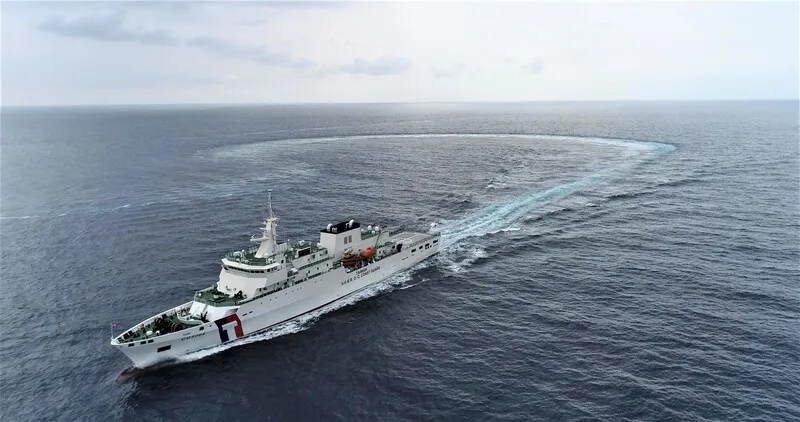
Taiwan's coast guard called the situation "increasingly severe," noting the sharp surge in July. An anonymous senior Taiwan coast guard official said, "We say the situation is becoming increasingly severe, meaning the number of their government vessels in the waters surrounding Taiwan has increased, and there was a marked increase in July." The same official emphasized that "the Communist Party has never ruled Taiwan for even a single day and without sovereignty over land, it has no right to claim economic zones at sea" [1].
Chinese research vessels collect oceanographic and seabed data to support submarine and anti-submarine warfare. A US Naval War College expert explained, "These kinds of data/knowledge are very useful to the Chinese navy and if conflict occurs, they will operate in these waters. This is especially important for anti-submarine and submarine warfare" [2]. Jason Wang, COO of ingen iSPACE, said, "This is the first time we've seen maritime militia escorting research ships in Taiwanese waters. China’s goal is to obtain the latest hydrological data of the Ryukyu and East Taiwan trenches for anti-submarine warfare, and to deny US and allied ships from conducting the same activities" [2].
China’s maritime activity is described as "grey zone" tactics—asserting authority short of war [1, 2, 3, 4]. The China Coast Guard and maritime militia reportedly coordinate to escort research vessels near Taiwan [2, 3]. Chinese ships, including the research vessel Xiangyanghong 03, have operated inside Taiwan's and Japan’s exclusive economic zones and passed through deep sea trenches and submarine cable areas in August 2026 [2, 3].
Taiwanese officials warn China is engaged in authoritarian expansionism and probing boundaries incrementally. An anonymous Taiwan security official said, "China is engaged in authoritarian expansionism and is continuously probing boundaries in an incremental way" [2]. Early August 2026 saw China announce traffic control measures in the Taiwan Strait coinciding with Typhoon Bailu’s approach [2, 3]. Beijing first conducted law enforcement patrols in Taiwan's eastern waters in June 2026 [2, 3].
Concerns remain about potential blockades or quarantine on Taiwanese ports by China [1, 2, 3, 4]. The situation remains tense as maritime activity continues at high levels through August 2026 [1, 2, 3, 4].