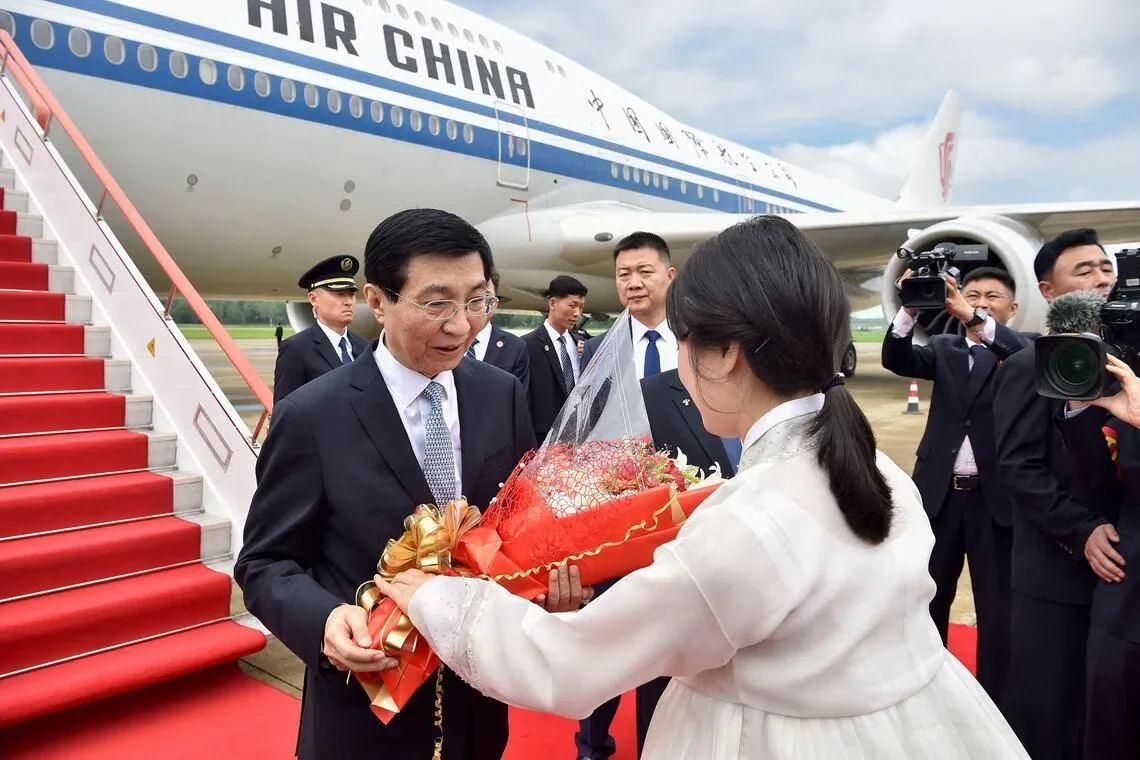
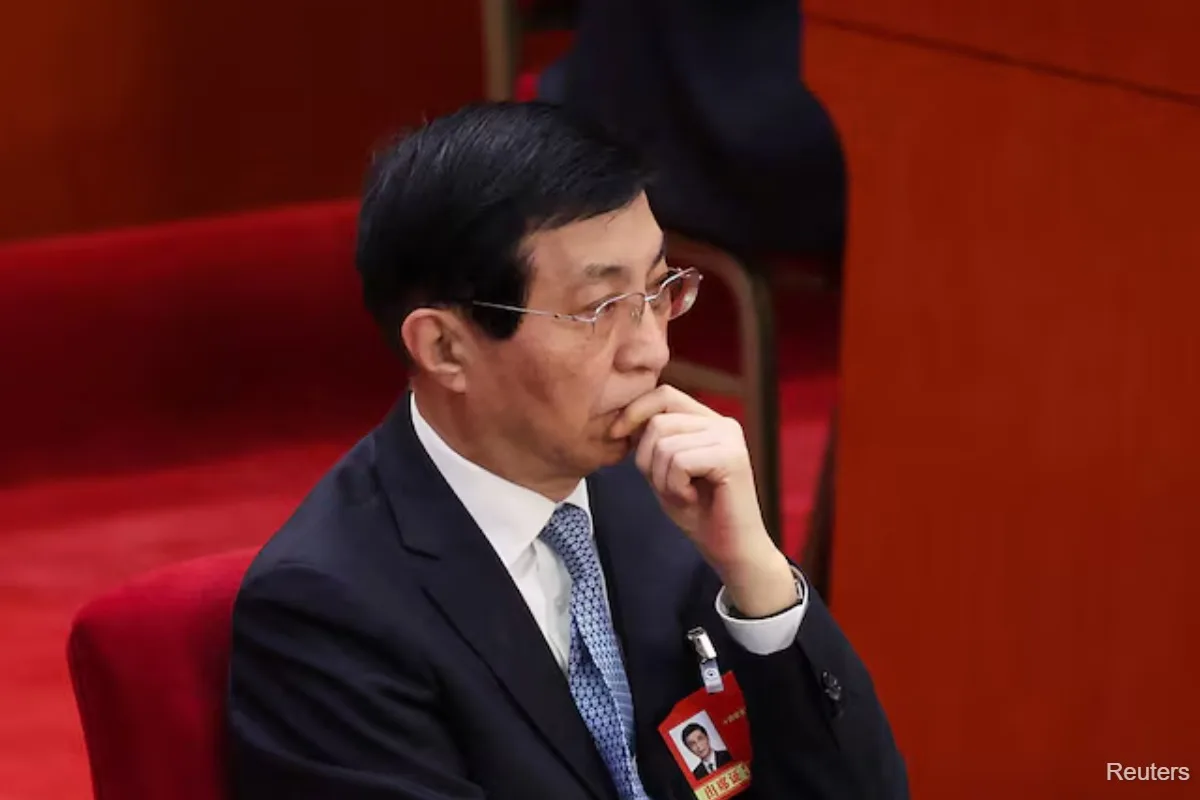
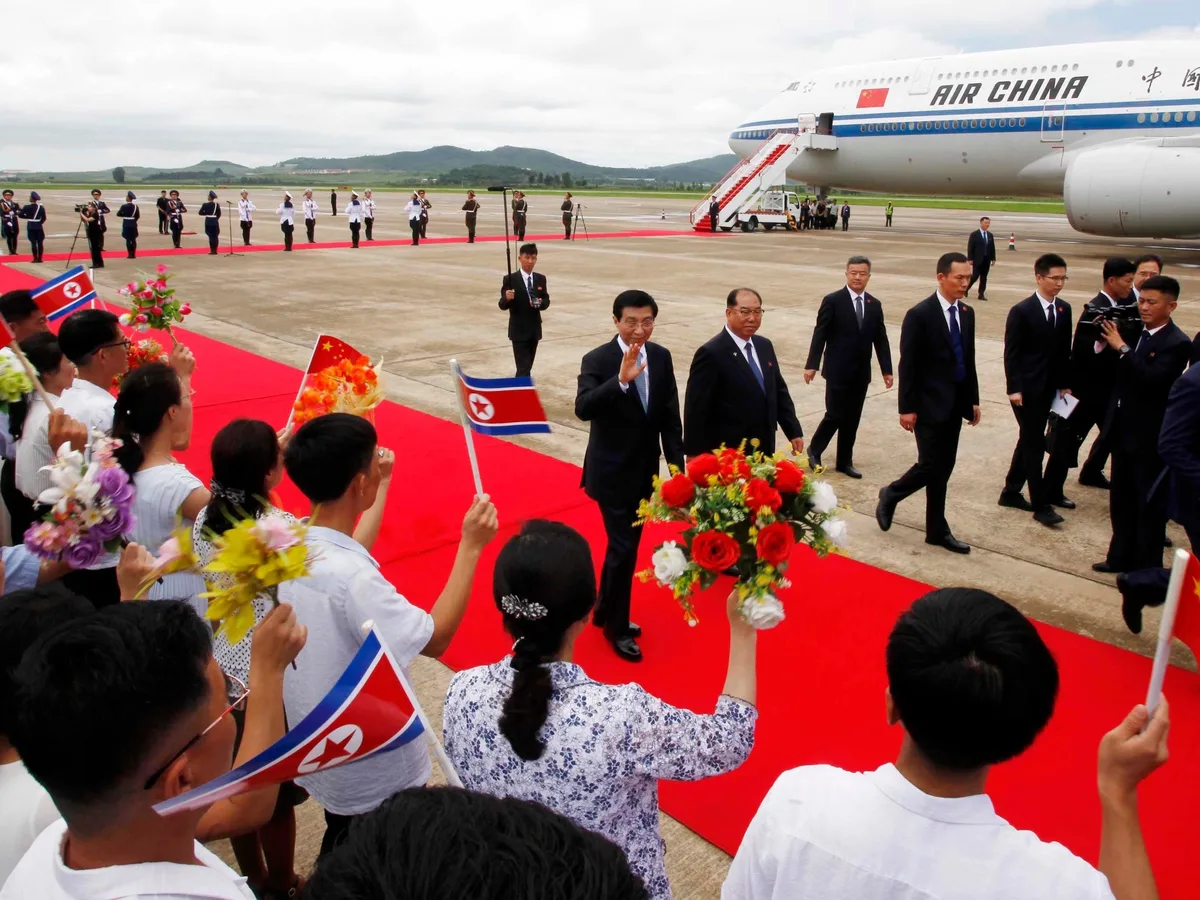
Wang Huning, China’s fourth-highest-ranked official and member of the Politburo Standing Committee, traveled to Pyongyang and met with Jo Yong Won, a senior official of North Korea’s ruling Workers’ Party, on July 15, 2026 [1, 2, 3, 4]. The purpose was to strengthen cooperation across politics, economy, culture, public welfare, and strategic communication [1, 2, 3, 4].
Wang reaffirmed "the will of the Chinese party and the government to implement the agreement reached between Xi Jinping and Kim Jong Un," referencing the far-reaching blueprint for closer ties outlined during Chinese President Xi Jinping’s visit to Pyongyang in June 2026 [1, 2, 3].
Jo Yong Won stressed the need to deepen "militant unity, support and solidarity" and enhance strategic communication and tactical cooperation amid changing global conditions. He said, "The ever-changing present international political situation has required the two countries to further strengthen the militant unity, support and solidarity and steadily intensify and develop the friendly and cooperative relations" [4, 1, 2].
The meeting coincided with the 65th anniversary of the China-North Korea Treaty of Friendship, Cooperation and Mutual Assistance, signed in July 1961, which laid the foundation for bilateral ties [1, 2, 4]. Earlier in July 2026, North Korean Premier Pak Thae-song visited China to mark the anniversary [2, 4].
The visit followed a series of recent high-level exchanges, including Chinese Foreign Minister Wang Yi’s trip to Pyongyang in April 2026 and President Xi’s June visit [1, 2, 4]. Despite North Korea’s growing ties with Russia, China remains its largest economic partner and is eager to maintain influence on the Korean Peninsula [2, 3].
State media KCNA reported Wang’s meeting with Jo on July 16, underscoring ongoing cooperation talks [1, 2, 3, 4]. The next notable scheduled events include continued diplomatic engagements to implement the agreements made during the Xi-Kim summit.