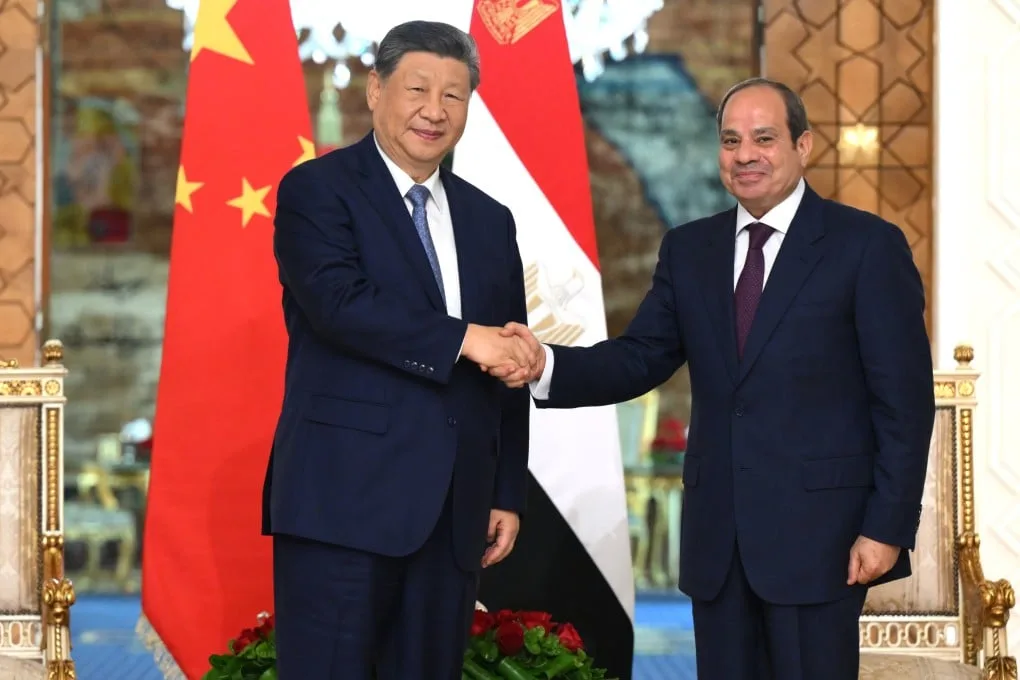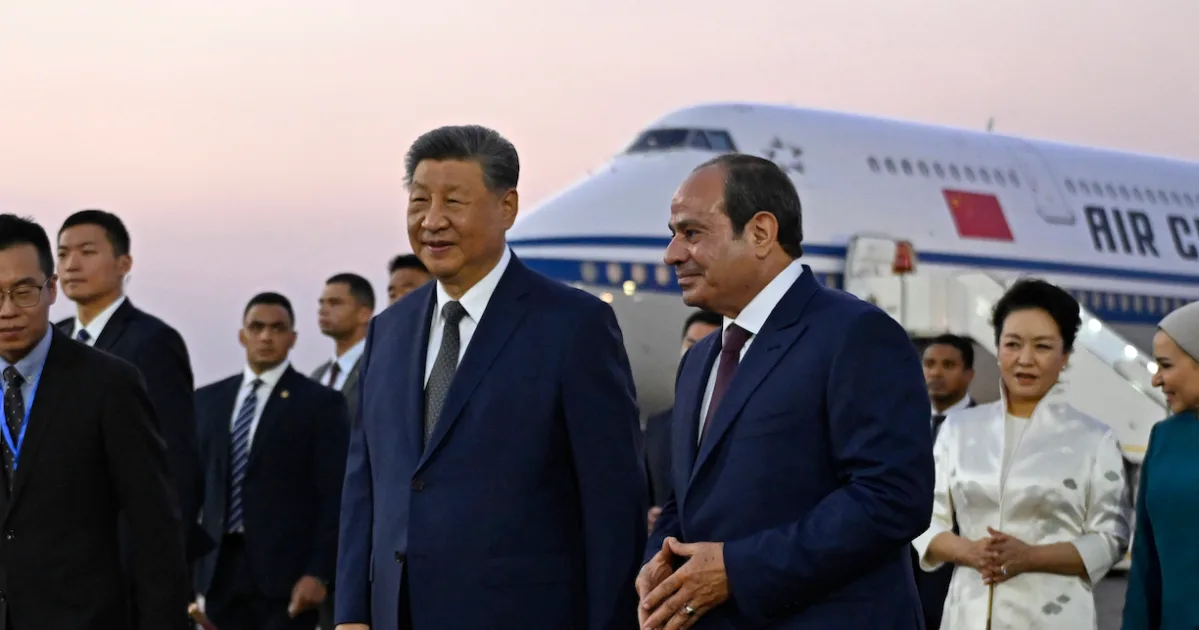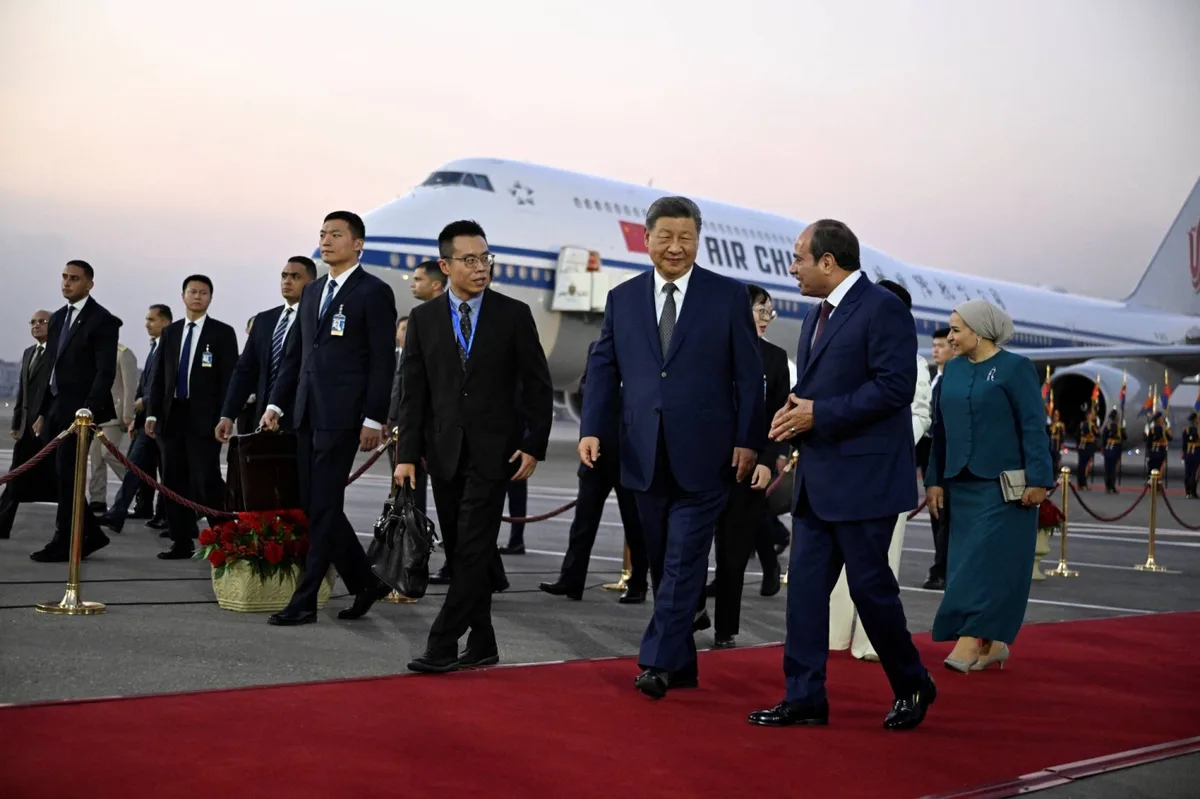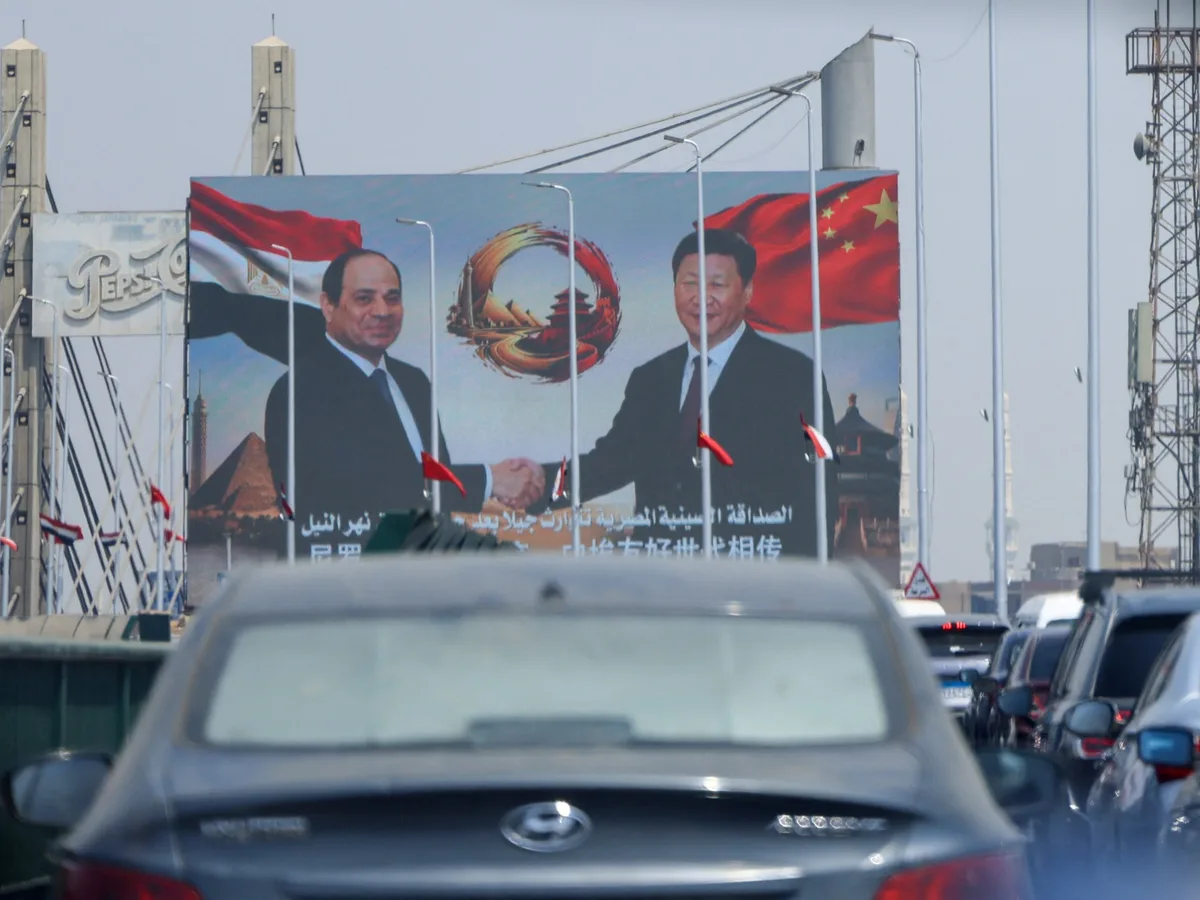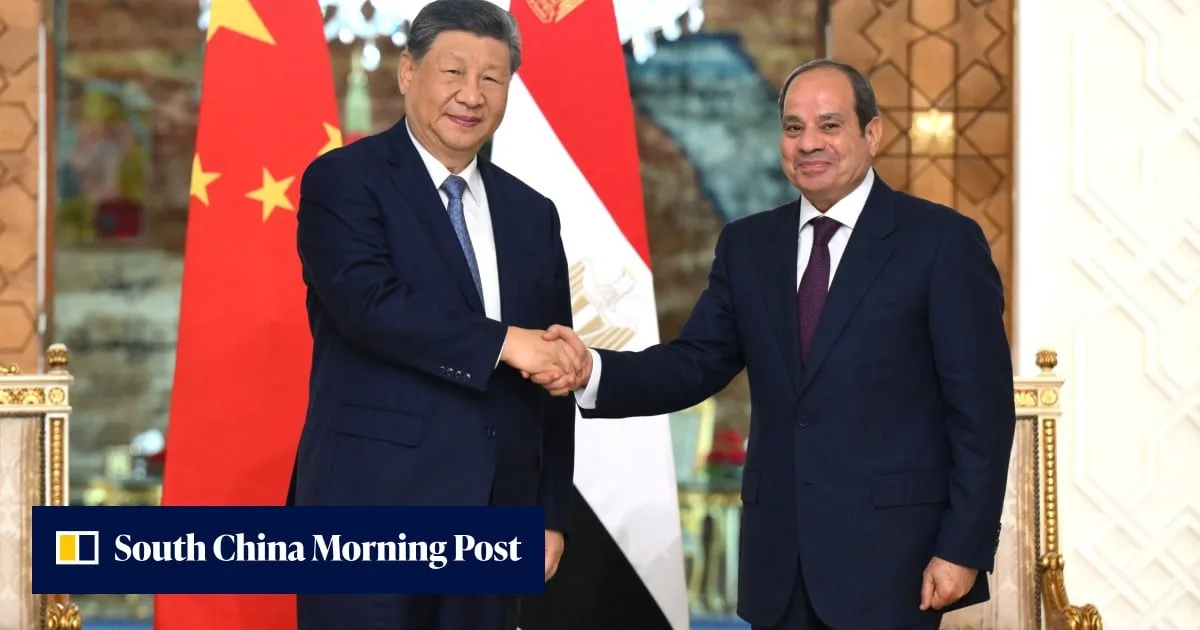
Chinese President Xi Jinping arrived in Cairo on September 1, 2026, marking his first official visit to Egypt since 2016 and coinciding with 70 years of diplomatic relations between the two countries [1, 2, 3, 4, 5, 6, 7, 8]. He was received by Egyptian President Abdel Fattah el-Sisi, who said Egypt aims to "widen the circle of its relations with major world powers, including China" [3, 4, 5, 6, 9, 7, 8].
Xi Jinping said bilateral relations are “in their best period in history after 70 years of friendship” and called for Middle Eastern countries to become "masters of their own destiny" by building a new regional security architecture less reliant on the United States [9, 8]. He urged "stronger cultural exchanges and closer China-Arab and China-Africa cooperation" [7, 8]. Xi also thanked Egypt for its stance on the Grand Ethiopian Renaissance Dam dispute and affirmed Beijing's recognition of the Nile's vital importance. He said, "Once you drink from the Nile, you are destined to return" [1, 2, 3].
The visit aims to deepen political, economic, and military cooperation. Egypt estimates Chinese investments at around $10 billion, with major stakes in the Suez Canal Economic Zone, including $3.8 billion in the TEDA cooperation zone [3, 6, 7]. Bilateral trade in non-petroleum goods reached nearly $20.7 billion by the end of 2025, while Egyptian exports to China jumped almost 200% in the first half of 2026 to $840.8 million [3].
Economic agreements on artificial intelligence, transportation, and manufacturing are expected to be signed. In August, Egypt and China conducted joint air force exercises involving Chinese J-16 and Egyptian Rafale fighter jets, signaling closer military ties [10, 7]. Egyptian President el-Sisi called the comprehensive strategic partnership a breakthrough and warned that "the expansion of armed conflicts would not serve the interests of any regional or international party" [3, 7].
The visit occurs amid rising US-Iran military tensions affecting regional maritime trade routes. Xi reiterated opposition to unilateralism and acts of bullying, advocating for a more just global governance system [1, 6, 9]. Meanwhile, Egypt is diversifying diplomatic relations to maintain balance between Washington and Beijing [10, 6, 9].
Xi’s visit also coincides with Egypt’s large-scale infrastructure projects, including a new administrative capital near Cairo, home to 26 million people, and expanded investment zones around the Suez Canal [11, 6]. Talks between the two leaders on September 2 focused on regional security, maritime trade security, and signing the planned economic agreements [10, 6, 9].