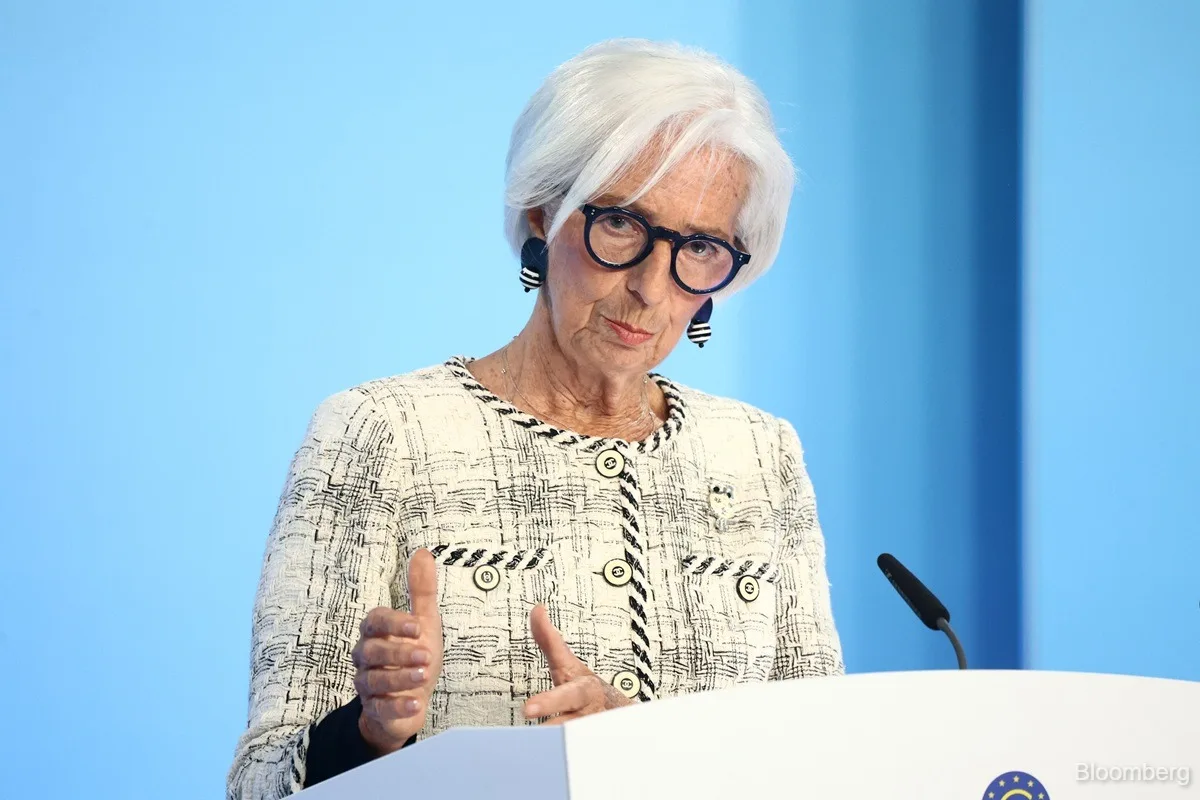
European Central Bank President Christine Lagarde warned on June 8 in Phnom Penh, Cambodia, that governments may increasingly try to control central banks, posing risks to their independence and credibility [1, 2]. She cited the historical example of Napoleon Bonaparte, who founded the Banque de France in 1800 and later retracted the independence he initially granted the bank, illustrating how political influence can erode central bank autonomy [1, 2].
Lagarde said the challenge today is not just maintaining legal independence but preserving the credibility central banks need to exercise it effectively [1, 2]. She noted that in the past decade, "de facto independence" has declined for nearly half of central banks in countries representing more than 75% of the global GDP [1, 2].
"It is precisely when monetary policy decisions are politically fraught and economically costly that credibility is most needed. And it is also when credibility is hardest to keep," Lagarde said, emphasizing that credibility is earned through consistent action but fragile in difficult political contexts [1]. She added, "It takes time to build trust, but only an instant to lose it."
To safeguard central bank independence, Lagarde identified three practical conditions: clear mandates, direct communication with citizens, and preserving room for maneuver in policy decisions [1, 2]. She also pointed to growing concerns about political interference weakening central bank autonomy in both the United States and the European Union [1].
Lagarde’s remarks came ahead of an ECB interest rate meeting scheduled for June 10-11, 2026, which she is expected to oversee [1].