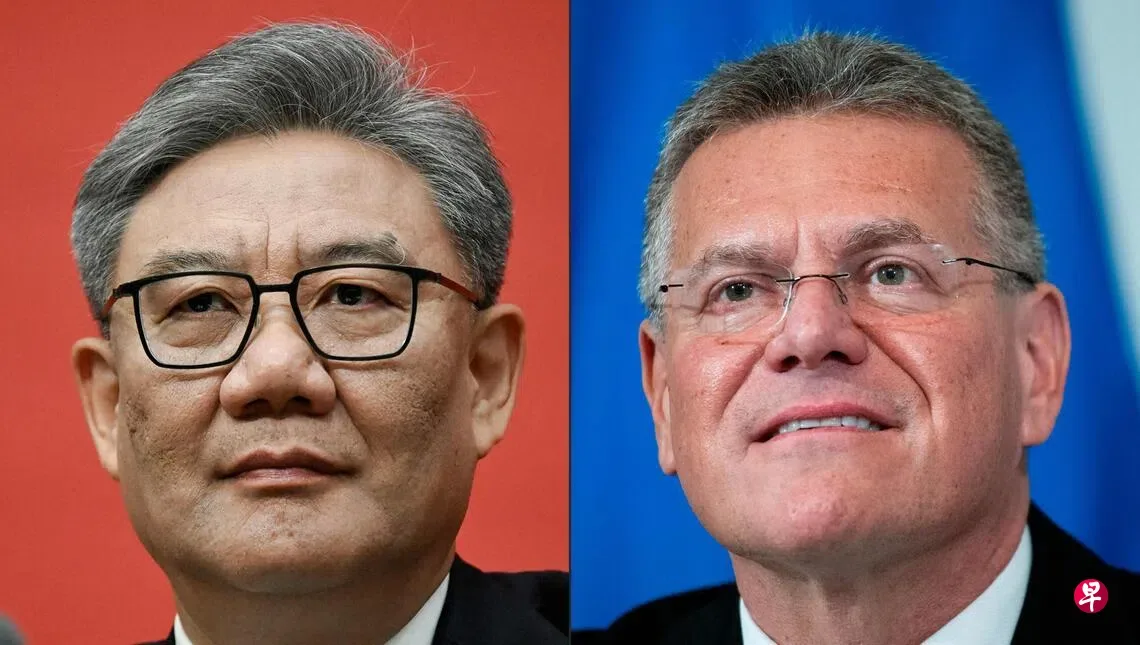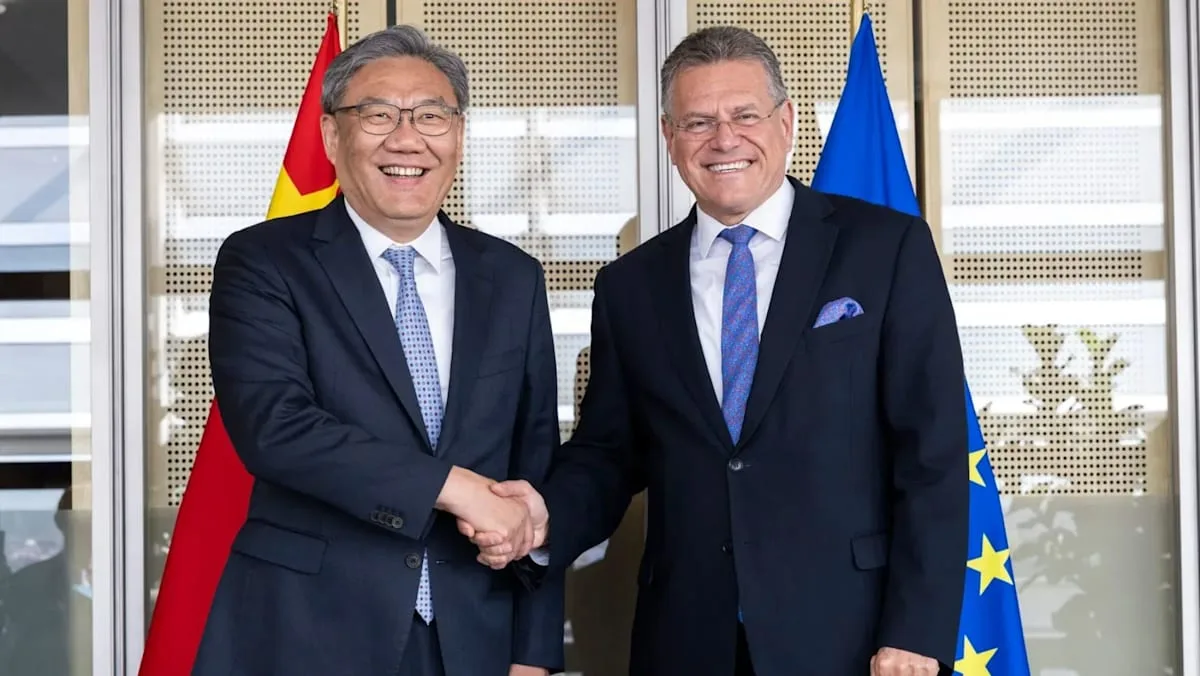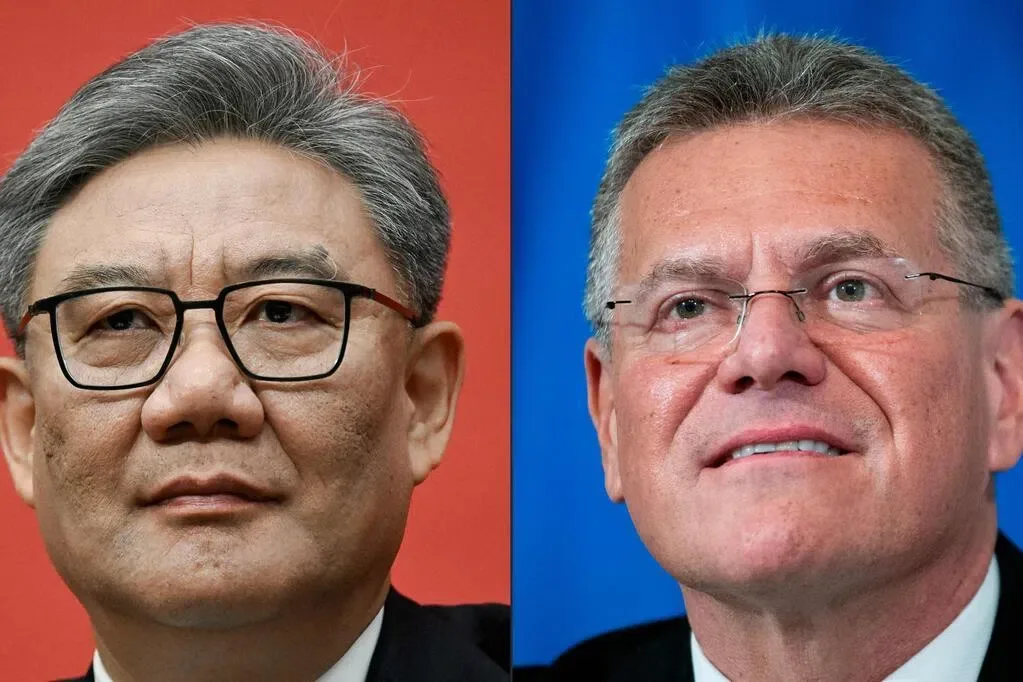
EU Trade Commissioner Maroš Šefčovič and Chinese Commerce Minister Wang Wentao met in Brussels on June 29 to announce a deadline in October 2026 to achieve tangible progress on resolving key trade disputes between the two sides [1, 2, 3]. They agreed to form working groups focused on trade and investment balance, export controls, intellectual property rights, and WTO reform [1, 2, 3]. A joint monitoring mechanism to exchange trade data and detect sudden export surges was also established [1, 2, 3].
Šefčovič said, "Not all issues will be solved but the teams have enough time to produce concrete progress before October" [1, 2, 3]. He highlighted concerns over the growing EU trade deficit with China, which reached about 3,600 billion euros in 2025, a 15% year-over-year increase. The deficit expanded further into early 2026 [1, 2, 3]. He warned that the continued growth of China’s exports to the EU while the EU’s market share in China shrinks “is unsustainable and maintaining the status quo is not an option" [2].
The EU has expressed concern about Chinese government subsidies allowing Chinese companies to flood Europe with products, which threatens the European industrial base [1, 4, 5]. Measures include tariffs on Chinese electric vehicles and planned fees on small packages commonly imported from China [4, 6, 5]. The EU Commission is preparing new rules for Chinese investments in Europe, requiring factories producing batteries, EVs, and raw materials to meet strict conditions, including employing a majority European workforce [4, 6, 5].
Chinese experts say China may respond moderately to EU’s protectionist measures to signal costs but will try to avoid breaking relations. European academic Zhu Tian noted, "China may make a restrained response. The degree will be just enough to signal the EU’s measures carry costs, but not so heavy as to break the entire relationship" [4, 6, 5]. Another expert, Xu Dingbo, said the risk of a trade war between the EU and China is real, with bilateral relations fragile [4]. Still, both sides hesitate to escalate due to economic costs [4, 6, 5].
Practical challenges remain for the EU to reduce its trade imbalance with China, especially as European demand for Chinese goods like air conditioners surged during a historic heatwave [3].
A rare joint statement issued on July 1 affirmed trade cooperation and monitoring of export controls over critical materials [1, 3]. Chinese President Xi Jinping is expected to visit the US in September ahead of the EU Council Summit on October 15, when EU leaders will review trade efforts with China [1].