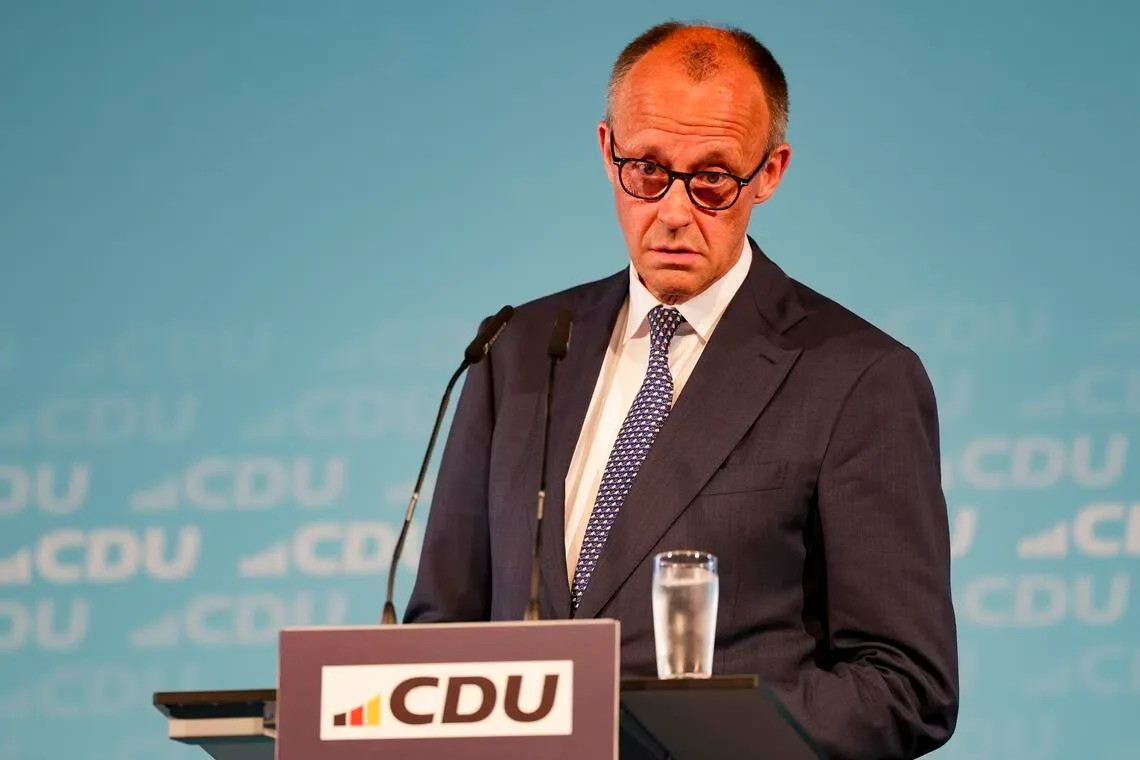
On May 29, the German government officially denied rumors that Chancellor Friedrich Merz is at risk of being ousted by rivals within his party due to his low public approval and slow progress on reforms [1, 2]. Government spokesperson Stefan Kornelius called the reports speculation and said, "The mood in the chancellery is very good and constructive" [1]. Some government sources labeled the rumors "wild speculation" and warned such talk could undermine political stability in Germany [1].
Merz currently holds a 14% public satisfaction rating, making him Germany's least popular chancellor in recent polls [1, 2]. Critics have pointed to delayed economic spending and a lack of progress on healthcare and pension reforms under his administration [1, 2]. Meanwhile, the far-right Alternative for Germany (AfD) party has gained strength, threatening Merz's Christian Democratic Union (CDU) ahead of September state elections [1, 2].
Within the CDU, Hendrik Wuest, the state premier of North Rhine-Westphalia, is seen as a potential challenger or alternative to Merz. Wuest is regarded as a moderate and has increased his media presence and foreign visits, which some interpret as positioning for future leadership roles [1, 2].
If the CDU underperforms in the upcoming state elections, pressure on Merz to resign could intensify, though party officials currently reject claims of internal plots to remove him [1, 2]. The government continues to emphasize stability and constructive work within the chancellery amidst ongoing political pressures.
The CDU faces critical state elections in September, which could influence the future leadership dynamics within the party.