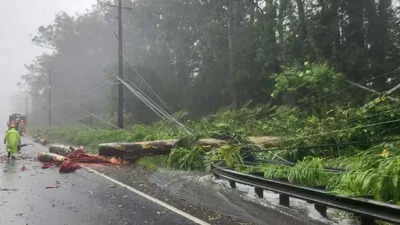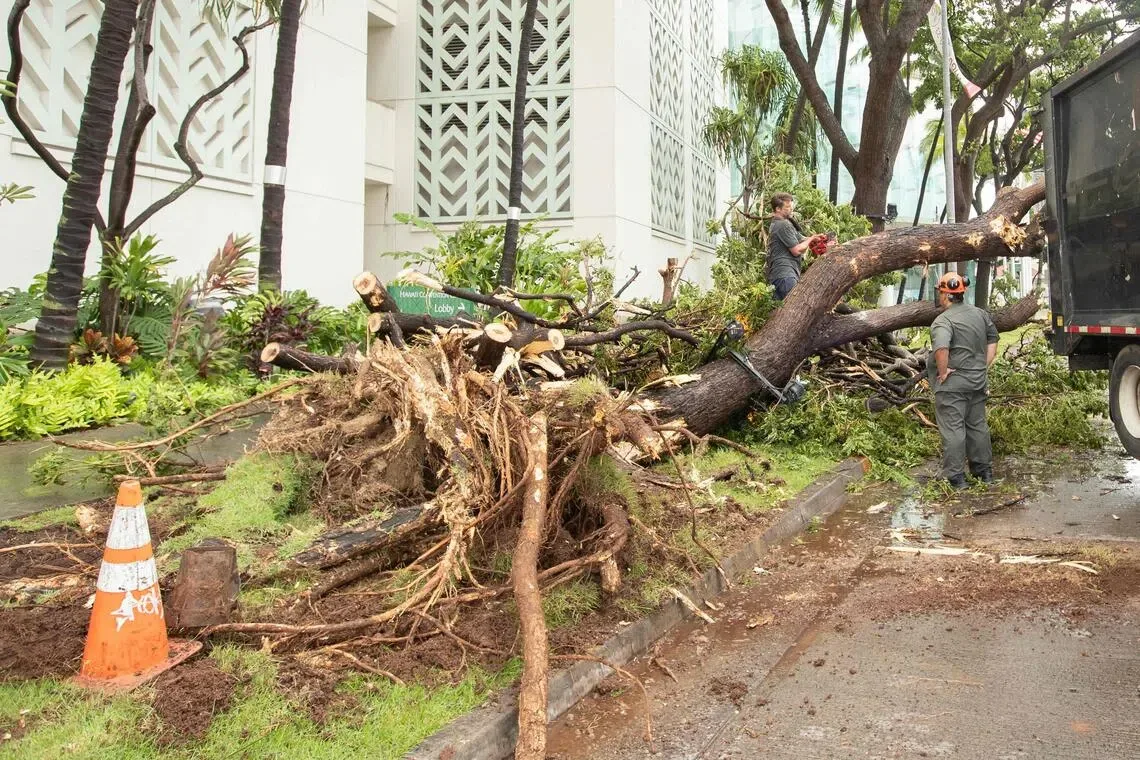
Hurricane Lala passed close to Hawaii's Big Island from August 15 to 16, briefly strengthening to a Category 1 hurricane with peak winds near 129 km/h (80 mph) before weakening to a tropical storm early on August 16 as it moved away from the island [1, 2, 3, 4].
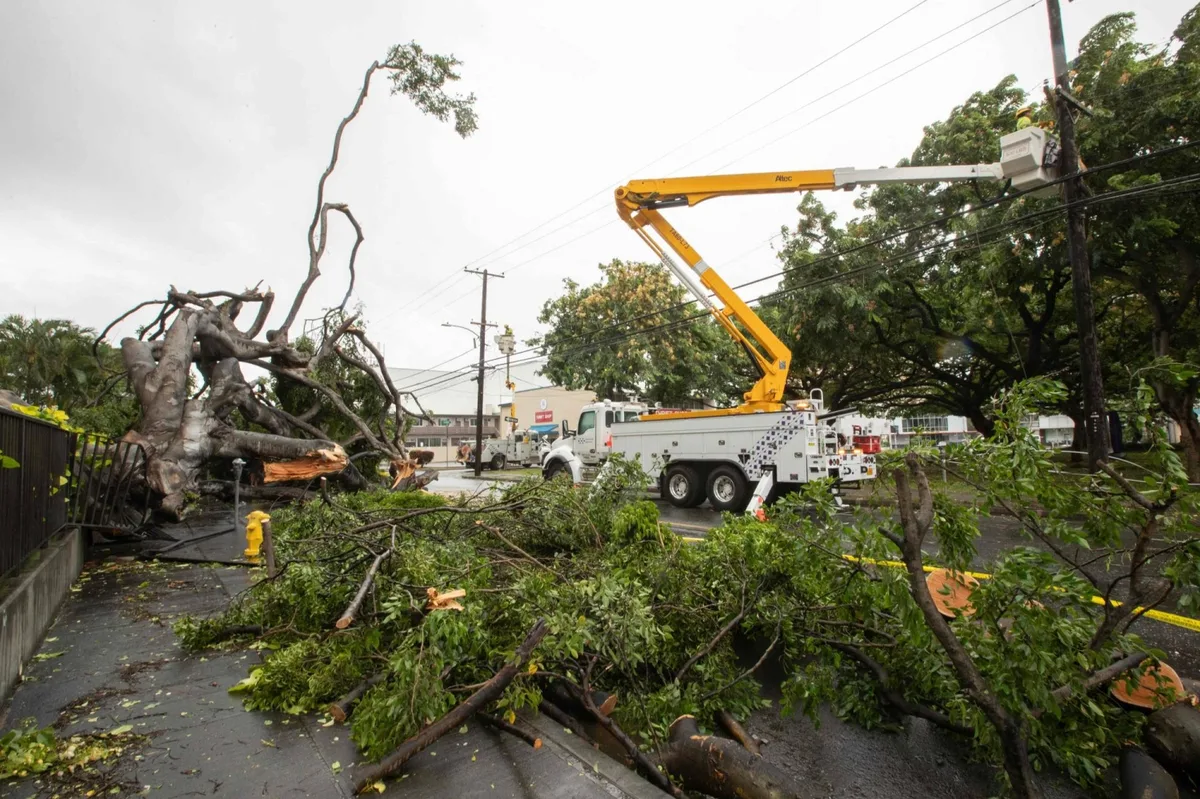
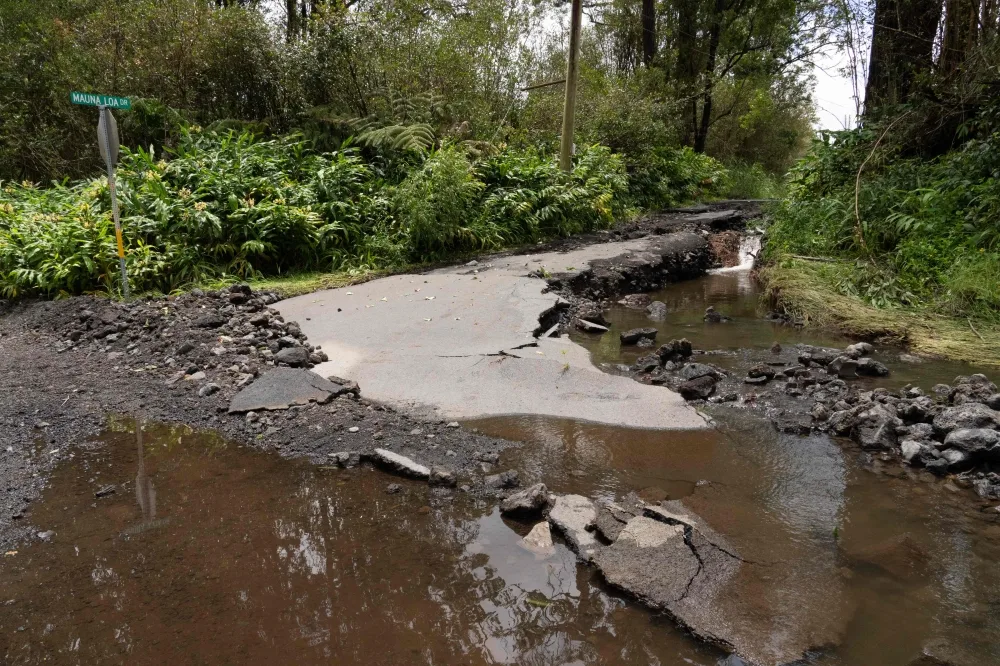
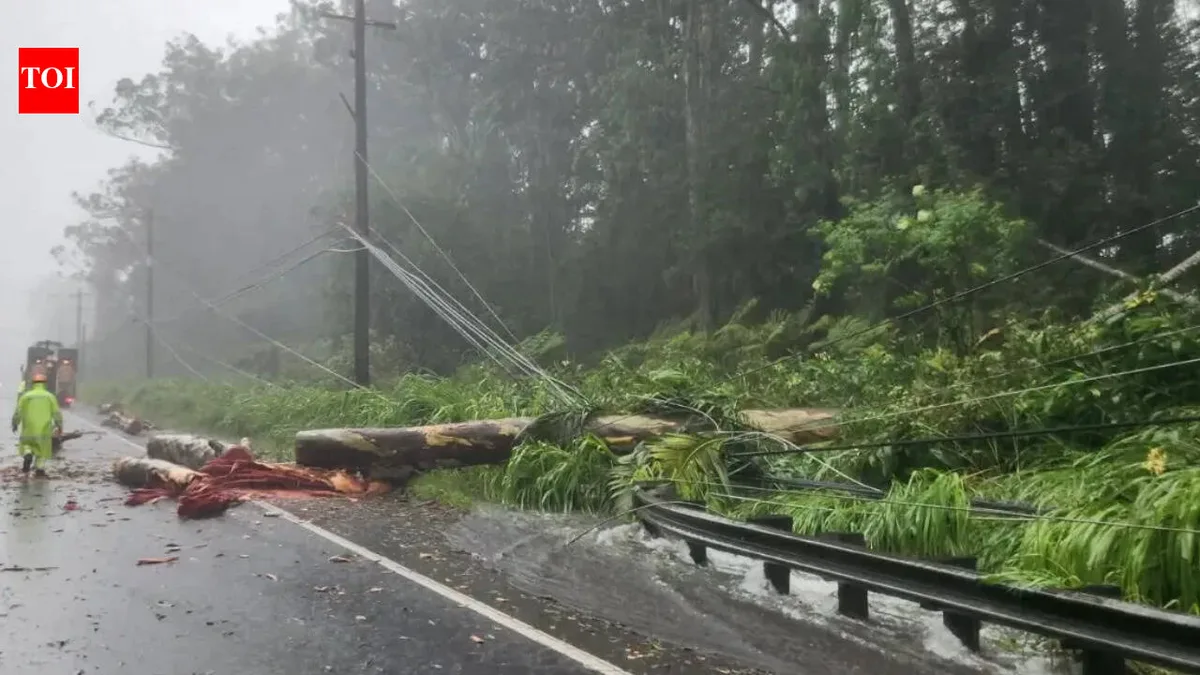
Though Lala did not make landfall, it brought widespread heavy rainfall, flooding, and wind damage across multiple islands including Big Island, Maui, Oahu, and Kauai [1, 5, 2, 3, 4]. The windward side of the Big Island recorded maximum storm rainfall between 76 cm and 89 cm (30 to 35 inches), contributing to flash floods, landslides, and road damage that isolated some communities [1, 5, 2, 3, 4]. One source noted an additional 1 to 3 inches of rainfall was expected after passage [5].
More than 180,000 and up to about 219,000 customers statewide lost power at the peak of outages, with Oahu alone seeing roughly 130,000 to 160,000 without electricity after initial counts topped 220,000 [6, 4, 7, 8, 9]. Power restoration is ongoing but may take weeks or months in some areas, requiring outside assistance [5, 6].
At least 100 homes or residential structures were reported damaged or swept away by floodwaters, mostly on the Big Island. About 117 people sheltered in evacuation centers across the state [6, 4, 7, 8, 9].
One person died in a car accident on the Big Island that may have been storm related. Hawaii Governor Josh Green said, "We're praying that there are essentially no fatalities... there was a terrible car accident that could have been storm-related" [1]. Emergency management officials warned that many casualties often occur during cleanup involving heavy equipment, generators, and downed power lines [1].
Authorities issued or maintained tropical storm warnings for all major Hawaiian islands except the Big Island after Lala weakened [1, 5, 2, 3]. The National Hurricane Center forecasted weakening early August 16 as Lala pulled away from the Big Island [1]. The hurricane center also warned the heavy rain would produce life-threatening flooding and mudslides, with dangerous storm surge expected near the coast [5].
Flights were affected with over 190 delayed and 52 cancelled due to the storm's impact [5, 4, 8].
Governor Green reported rescue teams have been sent to coastal communities, including rescuing an elderly woman from a tree after her home was washed away [4]. Officials urged residents to avoid beaches during the storm [6].
Lala formed as a tropical storm on August 13 before strengthening and approaching Hawaii [4]. Damage assessments, rescues, and cleanup efforts continued through August 17 as flooding persisted and some communities remained isolated [1, 6, 4, 7, 8, 9].
Hurricane Lala occurred amid a strong El Nino event in the central Pacific, which contributed to warmer ocean temperatures fueling the storm [1, 2, 3, 8]. The last major hurricane to hit Hawaii with comparable strength was Hurricane Iniki in 1992, which caused deaths and billions in damage [1, 2, 3, 8].