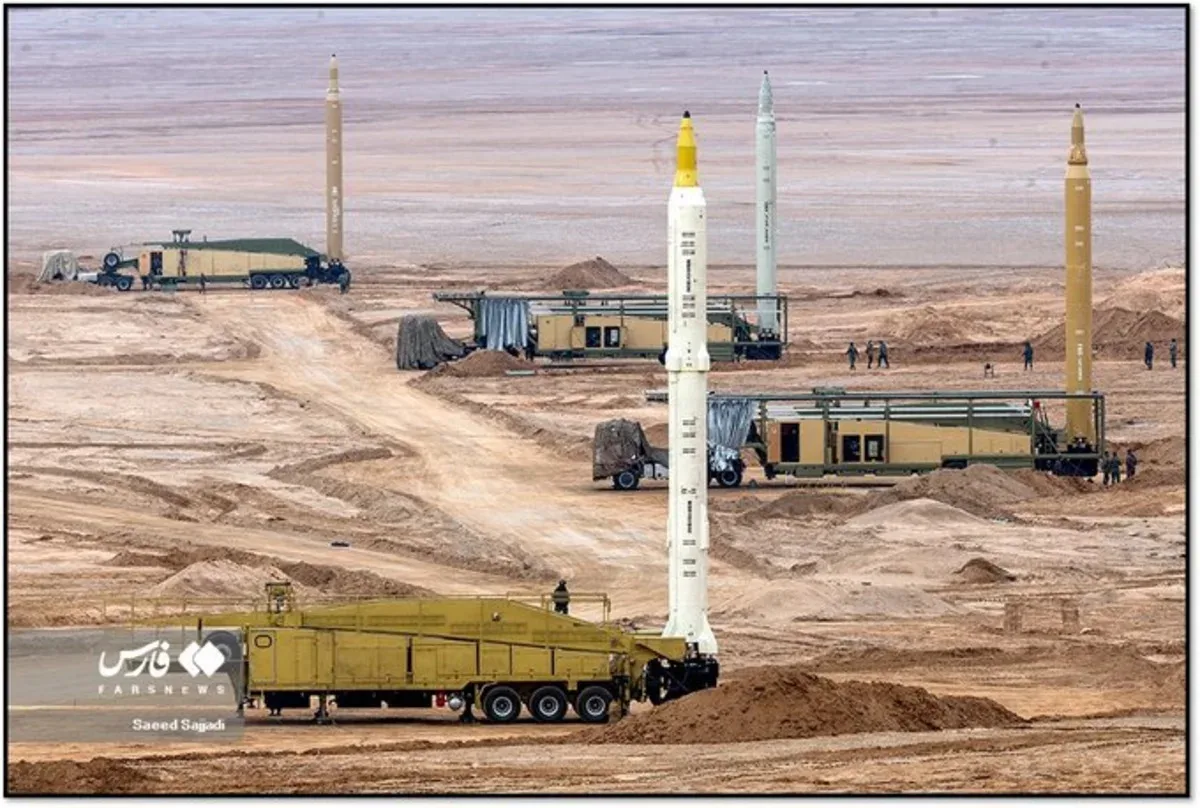
Iranian military commanders and the Revolutionary Guards have assessed possible strikes on US military assets in southeastern Europe. Potential targets include the Bulgarian Bezmer air base, recently approved for US refueling operations in July 2026, and Cyprus, including the British RAF Akrotiri base which was hit by drones in March 2026 [1, 2, 3, 4, 5, 6, 7, 8, 9, 10].
An anonymous Iranian source said, "Should the US go too far, Iran will defend itself at any price, go beyond the region and hit Europe too." Another insider warned, "If the US does too much, Iran will not hesitate to defend itself at any cost, even beyond the Middle East, directly attacking Europe." These statements signal a readiness to expand retaliation outside the Middle East if hostilities worsen [11, 12].
Iran is also exploring attacks on subsea fiber optic cables in the Strait of Hormuz to disrupt communications in the event of further conflict [1, 2, 3, 4, 5, 11, 12, 7, 8, 9, 10]. The Revolutionary Guard spokesman affirmed that Iran’s missile warheads are now far more destructive than in previous conflicts, indicating the use of new weapons if war breaks out [10].
Iran’s capability to reach distant targets has been demonstrated. In July 2026, Iran struck a US military base in Jordan, killing three US soldiers [1, 2, 5, 6, 7, 10]. Earlier in 2026, it attempted missile strikes on the US-UK base Diego Garcia in the Indian Ocean, about 4,000 kilometers away, but missed [2, 6, 7, 8, 10].
Sidharth Kaushal, a researcher at the UK’s Royal United Services Institute, said Iran’s missiles "pose a real but limited threat to Europe; their range and accuracy decline significantly at longer distances," which lessens their destructive impact [1, 2, 3, 4, 5, 6, 7, 8, 9, 10]. However, Iran’s top security official Mohsen Rezaei, a former Revolutionary Guard commander, represents a harder line toward the US [2, 5, 12, 7, 8, 9, 10].
Tensions escalated after a June 2026 US-Iran memorandum aimed at ending hostilities collapsed last month. Renewed attacks and blockades followed. On August 18, 2026, US President Trump declared there were no ongoing or planned talks with Iran and ended the US naval blockade in the Strait of Hormuz [1, 5, 11, 12, 8, 9, 10]. Trump also threatened to destroy an Iranian bridge or power plant for every Iranian ship attacked in the strait [2, 5, 12, 7, 8, 9, 10].
Iranian officials have warned that if the US attacks Iranian infrastructure as threatened, Iran’s retaliation would be unlimited and could include strikes reaching Europe [1, 2, 3, 4, 5, 11, 12, 7, 8, 9, 10]. The developments place southeastern Europe and strategic communication lines in the Strait of Hormuz at increased risk amid escalating hostilities.