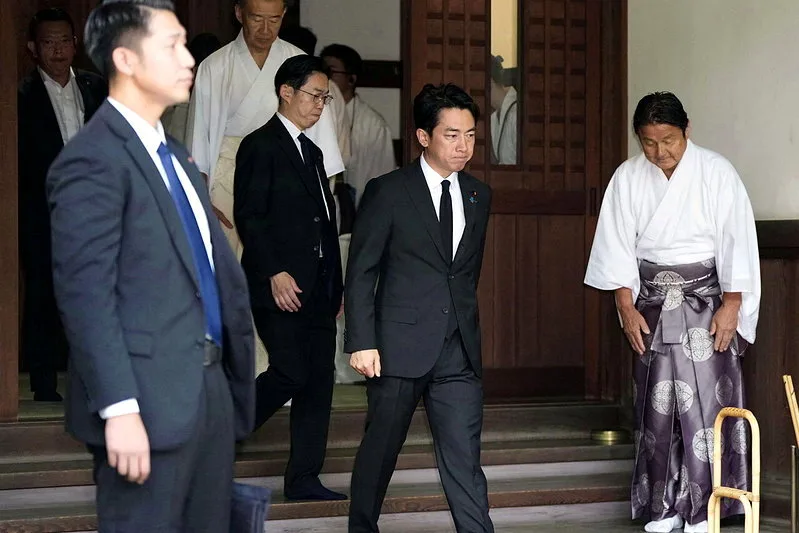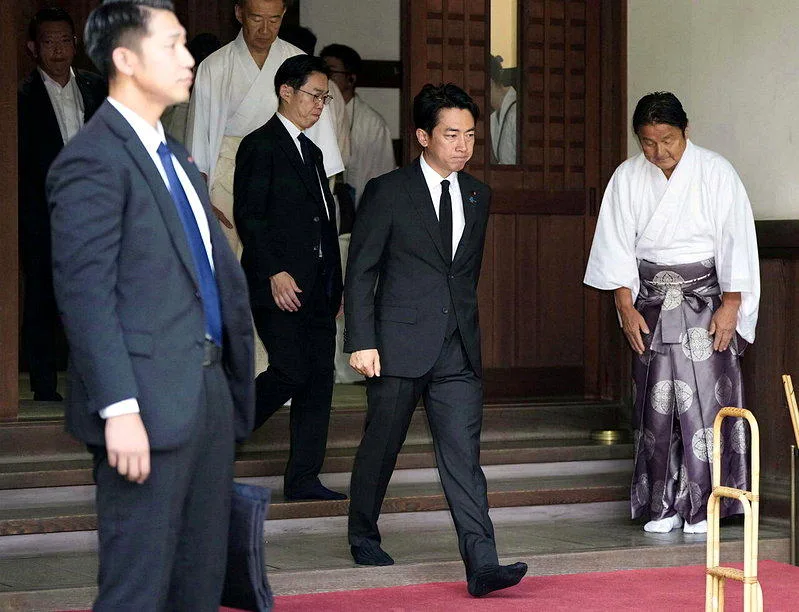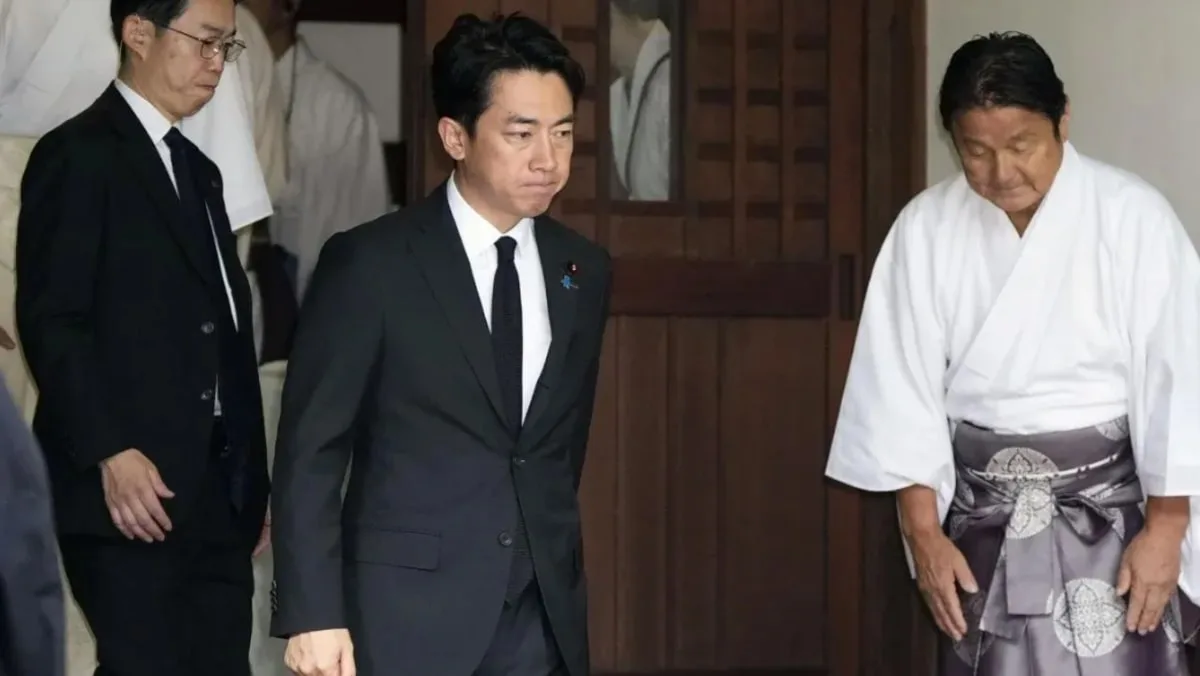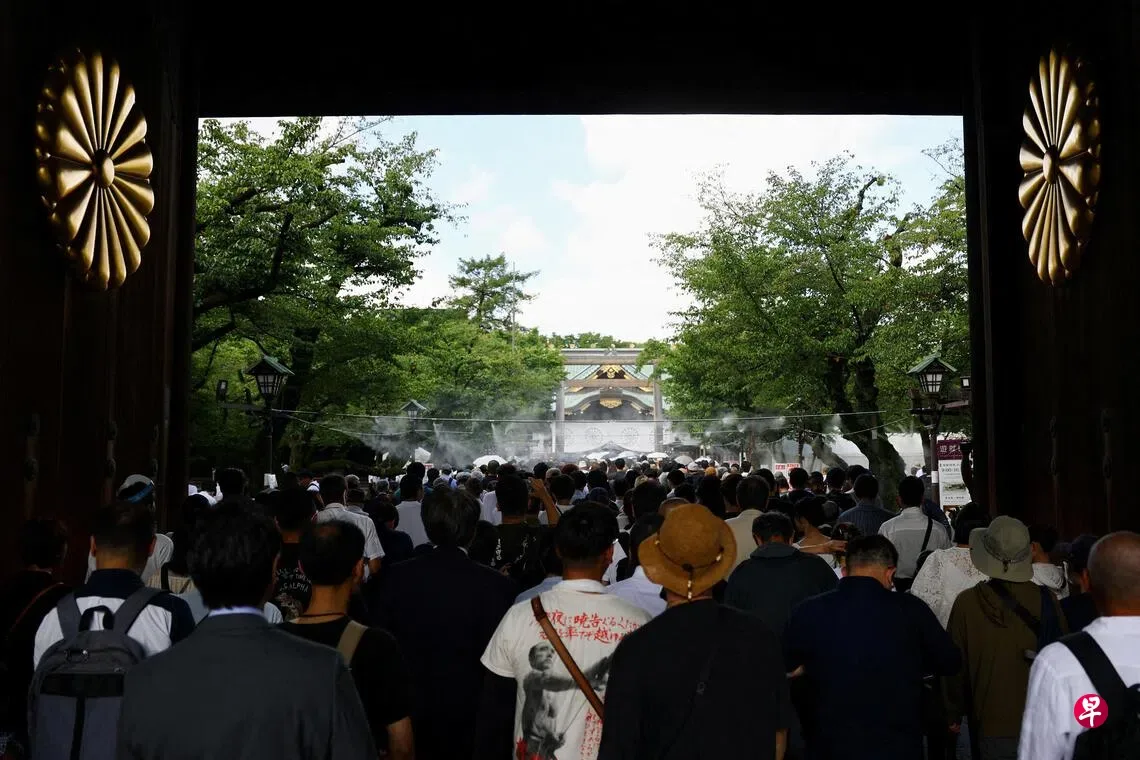
Japan marked the 81st anniversary of its World War II surrender on August 15, 2026, with senior Liberal Democratic Party (LDP) officials and Defense Minister Shinjiro Koizumi visiting Yasukuni Shrine in Tokyo [1, 2, 3].
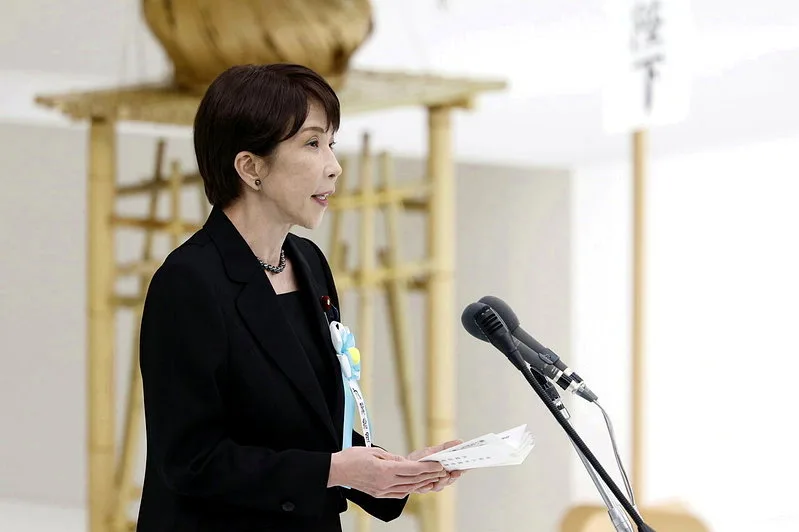
Prime Minister Sanae Takaichi did not personally visit the shrine but paid tribute by offering a "Tamagushiryō" (sacred offering fee) in her capacity as LDP president [1, 4, 2, 3]. She delivered a memorial speech that notably omitted mentions of "reflection" and "historical lessons," continuing a nationalist tone seen in previous right-leaning administrations. Takaichi emphasized Japan as a "beacon" for the Indo-Pacific region and called for peace, without referring to wartime aggression or apologies [5, 6, 7, 8].
LDP senior officials including Secretary-General Shunichi Suzuki, General Council Chair Haruko Arimura, and Election Strategy Committee Chairman Yasutoshi Nishimura made a rare collective visit to the shrine, reflecting a coordinated act often scrutinized domestically and abroad [1, 2, 3]. Suzuki said he deeply understands Prime Minister Takaichi's feelings towards the war dead [2].
Defense Minister Koizumi personally visited Yasukuni Shrine on August 15 for the first time since becoming defense minister. He expressed mourning and respect for those who sacrificed their lives for Japan: "Since my first election, I have continued to visit on August 15. I offer condolences and reverence to the heroic spirits who gave their lives for the country," he said [2, 9, 8].
Other ministers visiting the shrine included Child Policy Minister Hironobu Hoshikawa, Economic Security Minister Kimi Onoda, and Growth Strategy Minister Minoru Kono [3, 9, 8]. In total, three senior LDP officials and four cabinet ministers made visits alongside Koizumi [1, 2, 3, 9].
Yasukuni Shrine honors about 2.5 million war dead, including 14 World War II Class-A war criminals. Visits to the shrine are highly controversial due to the enshrinement of these war criminals [1, 10, 9, 8].
The shrine visits drew strong criticism from neighboring countries. South Korea's Foreign Ministry expressed deep regret and disappointment, warning the visits risk harming bilateral ties, noting Japan's leaders' continued offerings and visits to a shrine honoring war criminals [10]. China's Foreign Ministry lodged strong protests and condemnation, stating Beijing had lodged stern representations with Tokyo and strongly protested Japan's actions [1, 8].
Koizumi's visit was viewed as especially contentious given his role in overseeing Japan's expanding military capabilities and arms exports [8]. Since her 2025 inauguration, Prime Minister Takaichi has avoided visiting Yasukuni herself, instead delegating offerings and visits to party officials [3, 8].
Japan's WWII surrender, announced on August 15, 1945, officially ended hostilities following the formal signing aboard the USS Missouri on September 2, 1945 [3]. Takaichi's speech and LDP officials' visits on August 15, 2026, continued a government approach that emphasizes Japan's future security role while downplaying wartime reflection [5, 6, 7].
The annual controversy surrounding Yasukuni Shrine visits and the messaging around Japan's wartime history is expected to continue as Japan balances domestic political currents and international relations with neighboring countries.