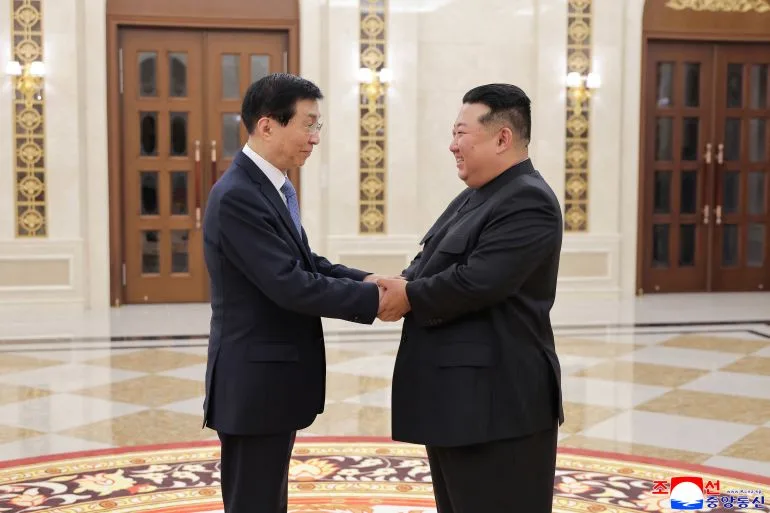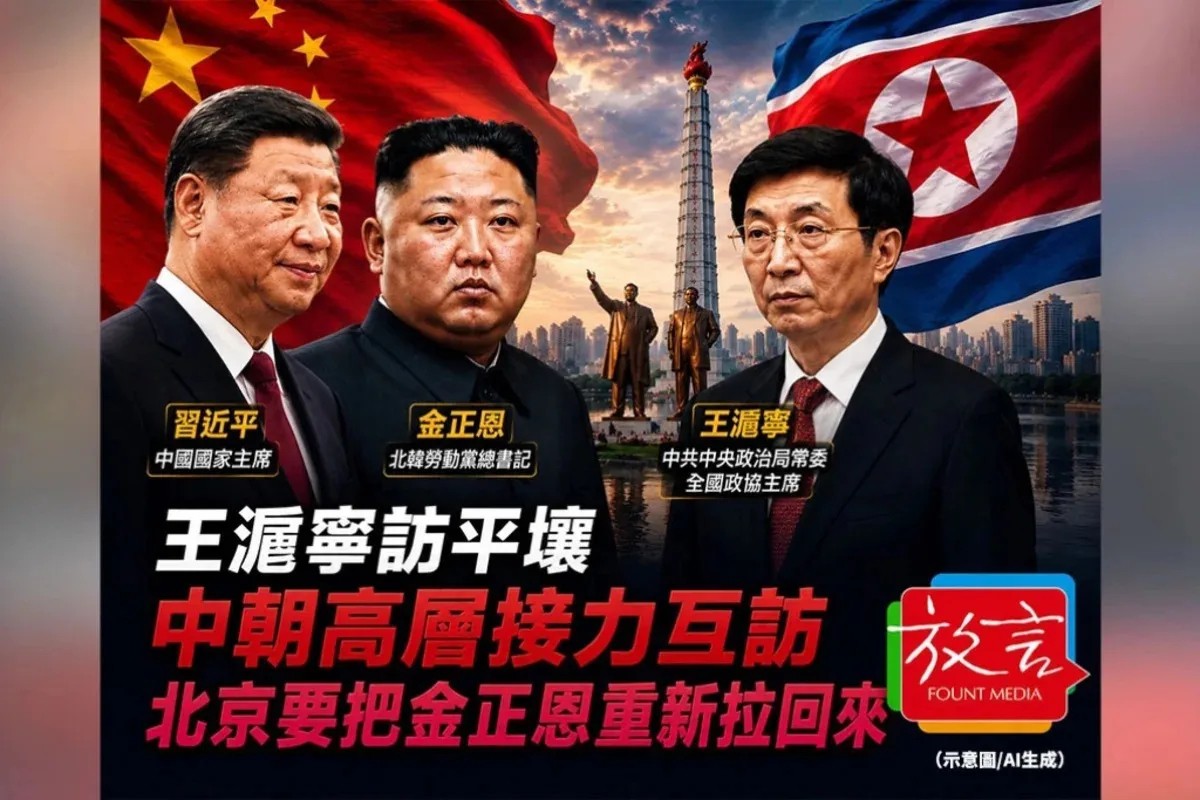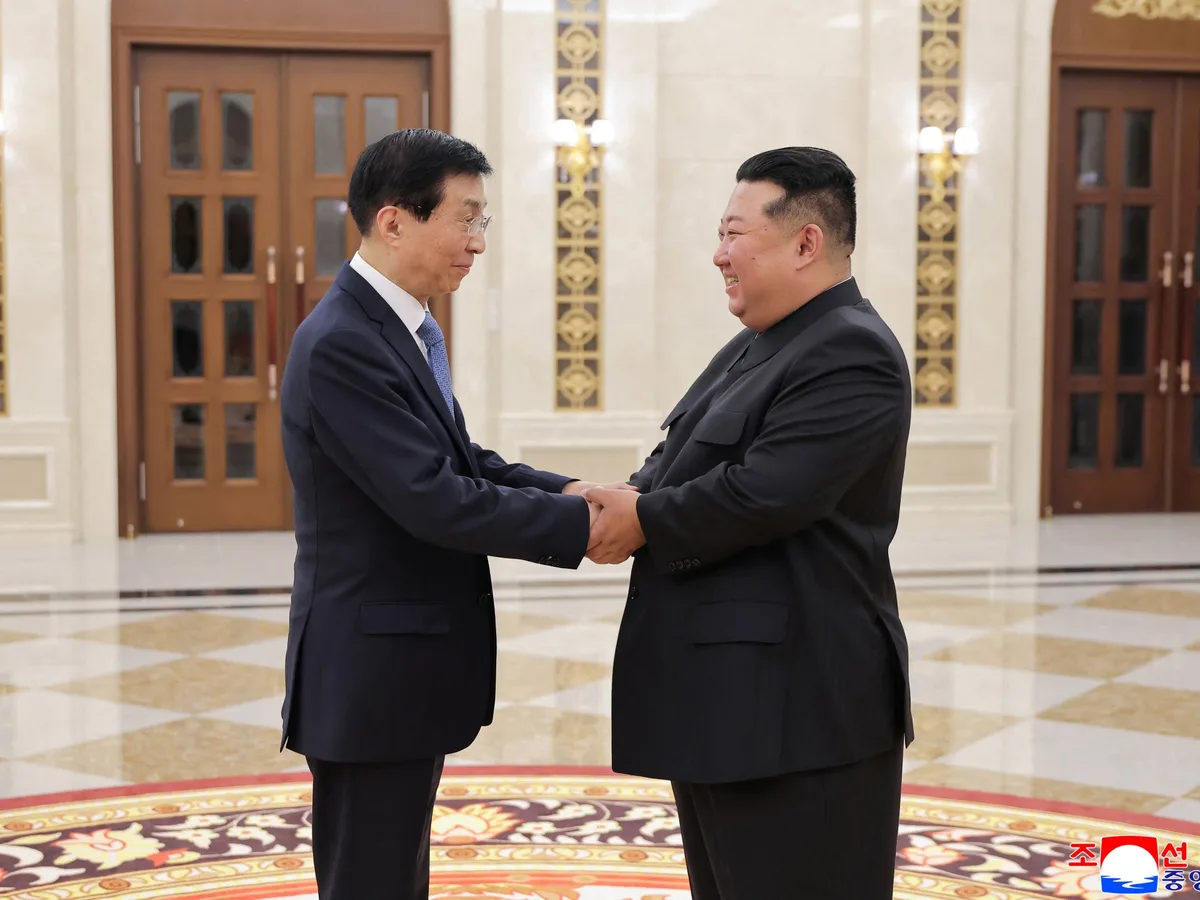
North Korean leader Kim Jong Un met Wang Huning, China's fourth-highest-ranking official, during a Chinese delegation visit to Pyongyang from August 15 to 17, 2026 [1, 2, 3, 4, 5]. The visit coincided with the 65th anniversary of the 1961 China-North Korea Friendship, Cooperation, and Mutual Assistance Treaty [2, 3, 4, 5].
During their meeting, Kim pledged to vigorously develop the traditional friendly and cooperative relations between the two countries [1, 2, 4, 5]. Wang Huning emphasized that "China’s firm support for the cause of Korean socialism led by Comrade General Secretary Kim Jong Un will never be changed" and stated that "China's Communist Party and government will firmly support Korean socialism under Kim Jong Un’s leadership and that China’s position on the bilateral friendship remains unchanged" [1, 2, 4, 5].
The Chinese delegation visited symbolic sites in Pyongyang including a memorial for Chinese soldiers who fought in the Korean War, a Workers' Party cadre training school, and the mausoleum of North Korea’s former leaders Kim Il Sung and Kim Jong Il [1]. Kim personally received Wang and praised recent visits by Chinese leaders including Xi Jinping and Wang Huning as evidence of strong commitment to bilateral relations [5].
This meeting followed Chinese President Xi Jinping’s visit to North Korea in June 2026, his first in seven years, during which both leaders adopted a "far-reaching blueprint" to strengthen their strategic partnership [1, 3, 5]. China remains North Korea’s largest economic partner, accounting for nearly 98% of North Korea’s foreign trade in 2024 despite Pyongyang’s expanding military cooperation with Russia, including sending troops and ammunition to support Moscow in the Ukraine war [1, 2, 4].
China aims to reinforce its influence over North Korea amid its growing ties with Russia, using high-level visits and party-to-party political trust as tools [1, 3, 5]. The China-North Korea Friendship Treaty includes a military clause guaranteeing mutual defense if either party faces armed attack [5]. Recent resumed direct flights and border trade indicate warming relations beyond politics [5].
Reports analyzing Wang Huning’s visit and ongoing diplomatic relations appeared on July 17, 2026, highlighting the importance of these exchanges [1, 2, 4, 5]. The Chinese delegation’s visit concluded on August 17, marking a continuation of closely coordinated diplomacy between Beijing and Pyongyang.