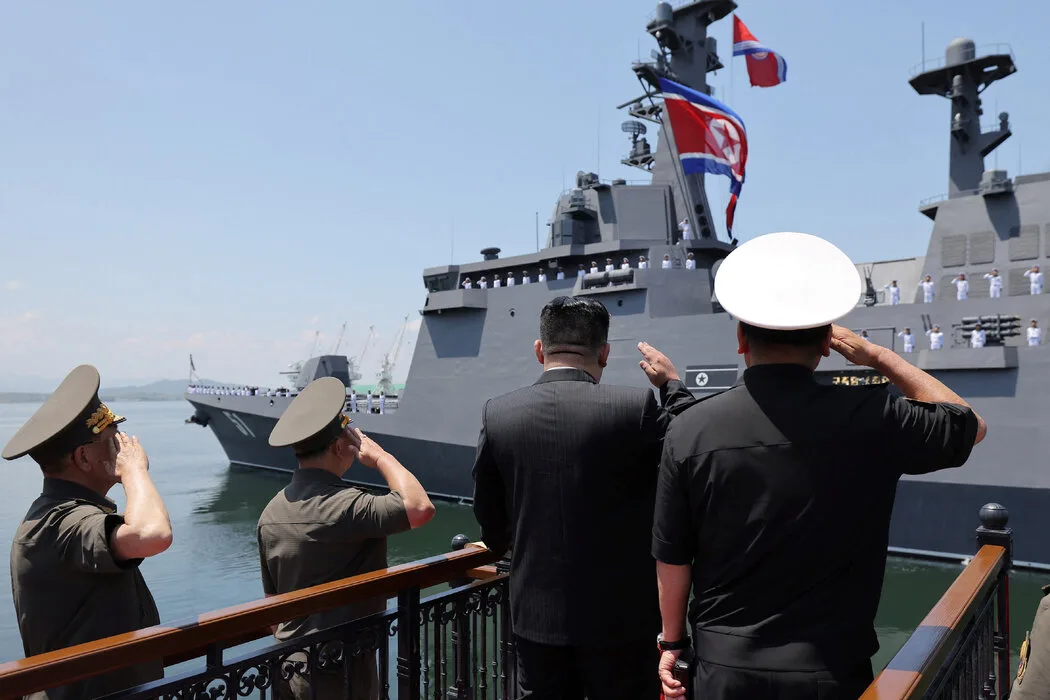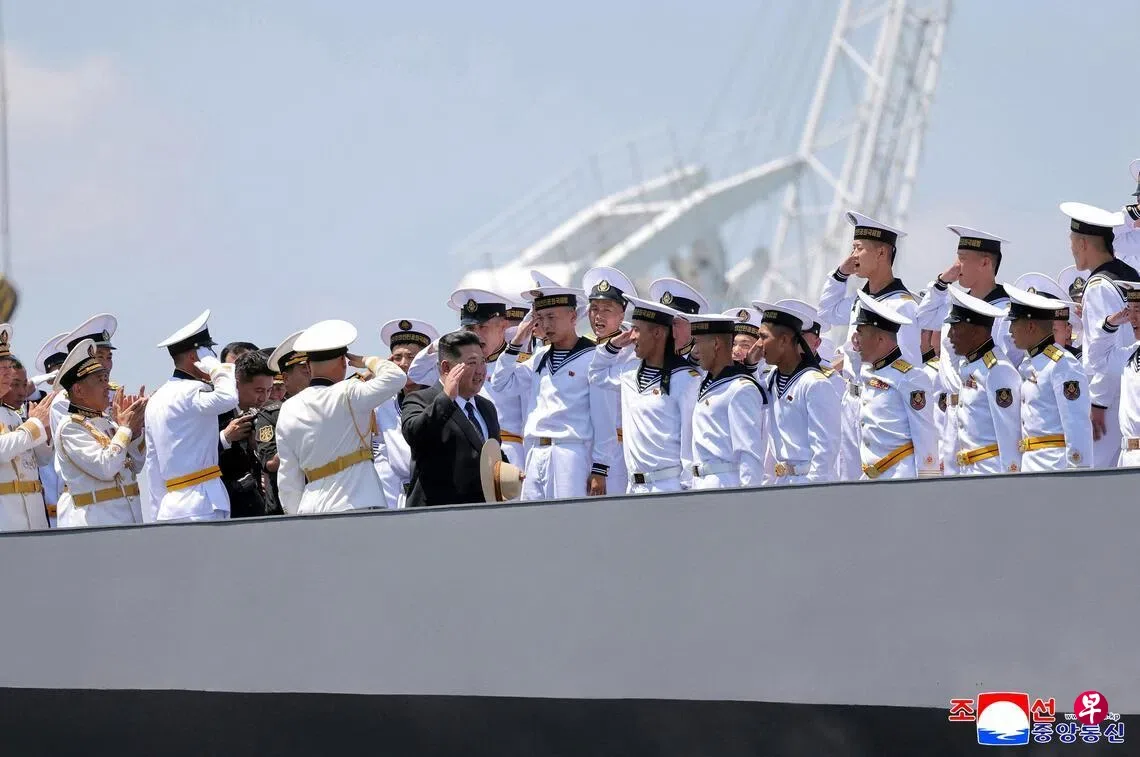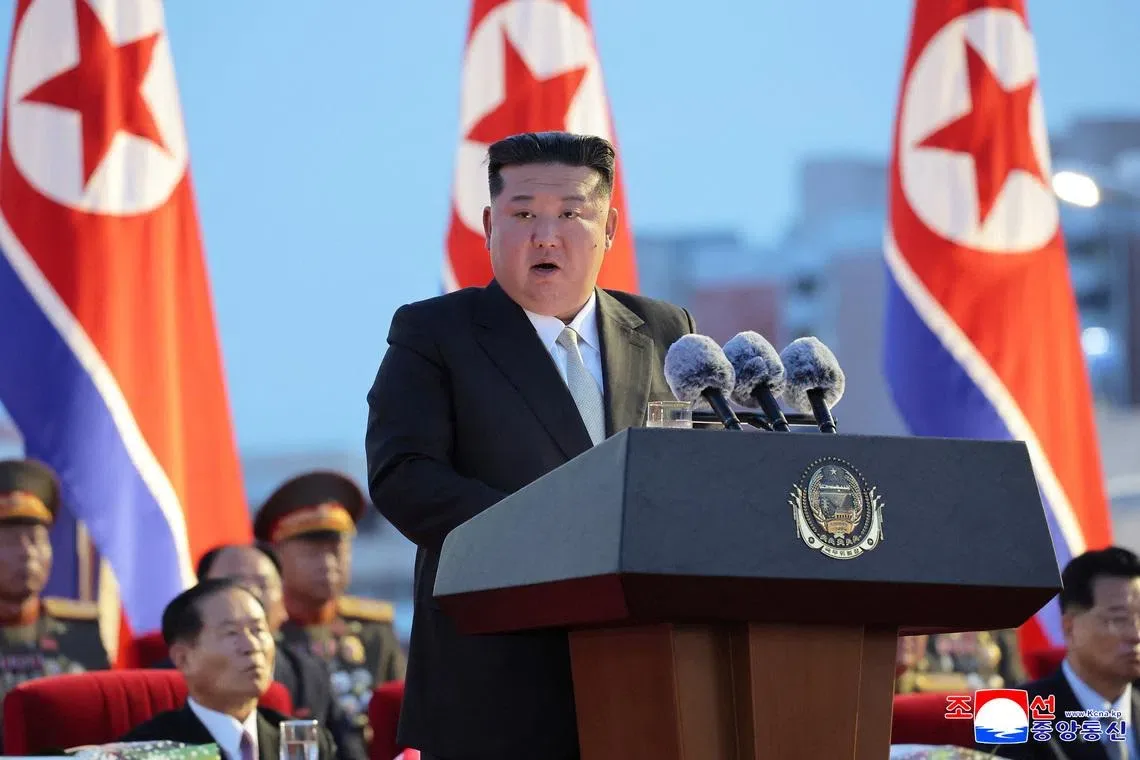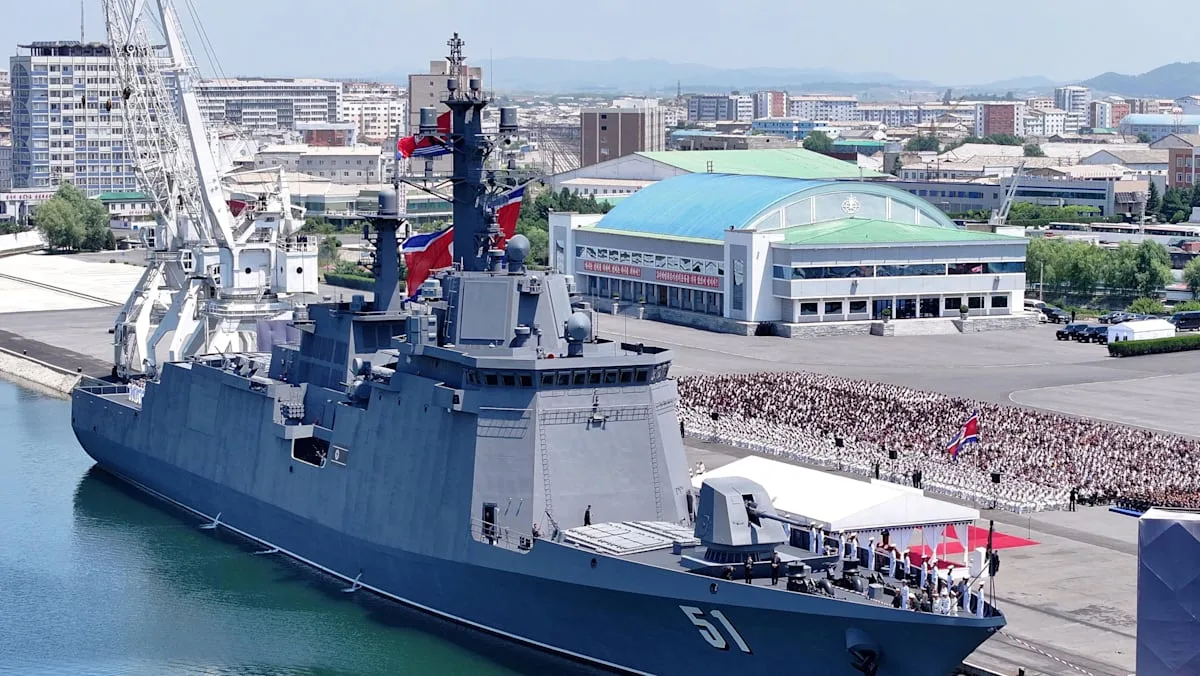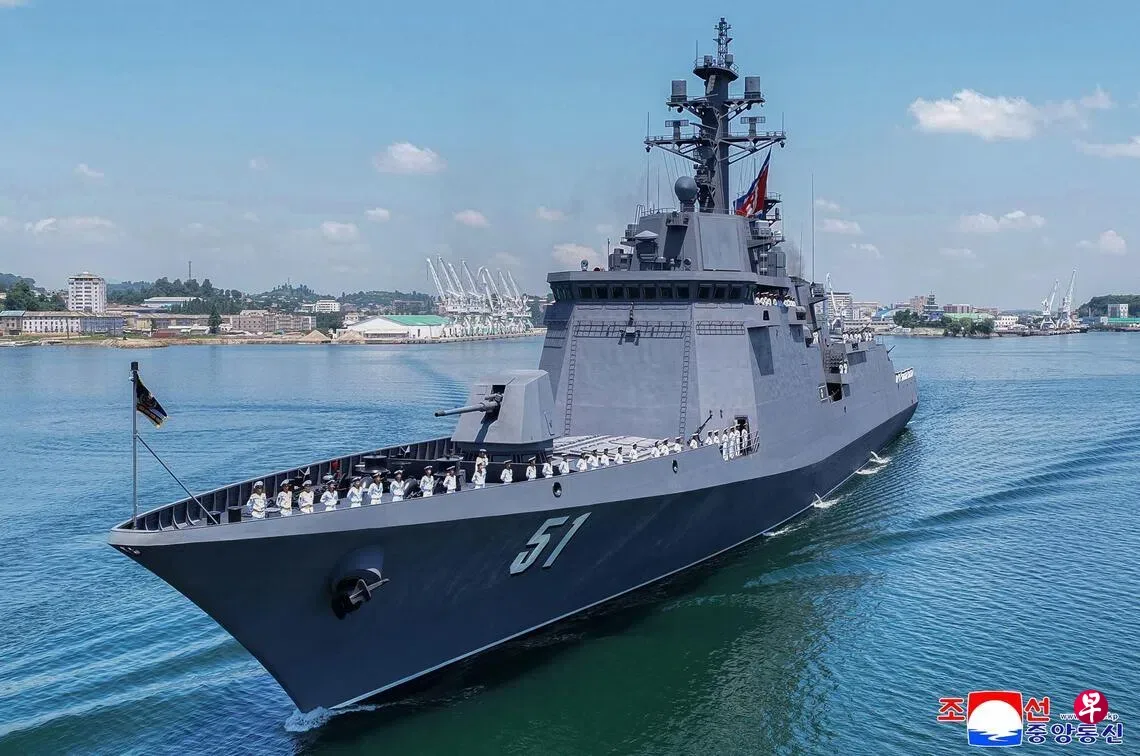
North Korean leader Kim Jong Un said the country will develop nuclear weapons for its navy and shift from coastal defense to long-range strategic strike capabilities. He made the announcement during the commissioning ceremony of the 5,000-ton multipurpose destroyer "Choe Hyon" on June 23 at South Hamgyong port in Nampo, describing the vessel as having comprehensive combat power [1, 2, 3, 4, 5].
Kim pledged to build two new warships each year for five years, with each ship larger than the "Choe Hyon," including a planned 10,000-ton strategic missile cruiser [1, 2, 3, 5]. He ordered the acceleration of conventional weapons production along with the 10,000-ton missile cruiser construction [6, 7].
He said nuclear naval armament would allow the navy, historically the weakest military branch, to reach unprecedented strategic power [2, 3]. "Naval nuclear armament is proceeding along the right course, and the era of navy limited to coastal defense has now firmly become the past," Kim said [2].
Kim criticized the US and South Korea for escalating military threats, including Seoul's nuclear-powered submarine development ambitions, and said he would accelerate North Korea's military and nuclear buildup [6, 8, 9, 10, 11]. He also accused Japan of becoming a militarized "war state," warning that Tokyo's moves to become a military power invite international backlash [8, 9, 7].
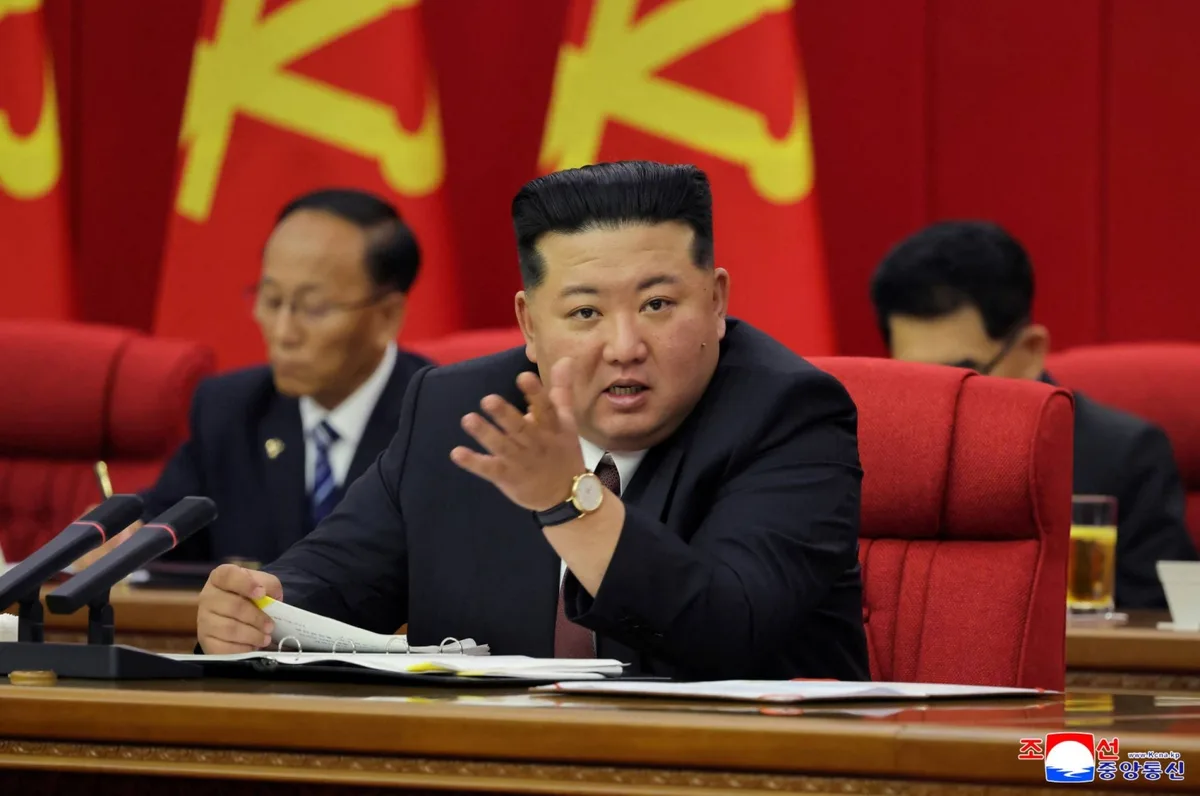
Kim emphasized exercising North Korea's nuclear weapons state status to deal with complex global security challenges. "To steadily expand and strengthen the nuclear forces... and to thoroughly exercise the position of a nuclear weapons state is the most correct and unique way to actively and confidently cope with the unpredictable international military and political situation," he said earlier during a Workers' Party Central Committee meeting from June 20 to 22 [6, 7, 12, 10, 11].
On June 23, the same day as the naval ceremony, a North Korean active-duty soldier defected to South Korea through the Military Demarcation Line in Gangwon Province [2].