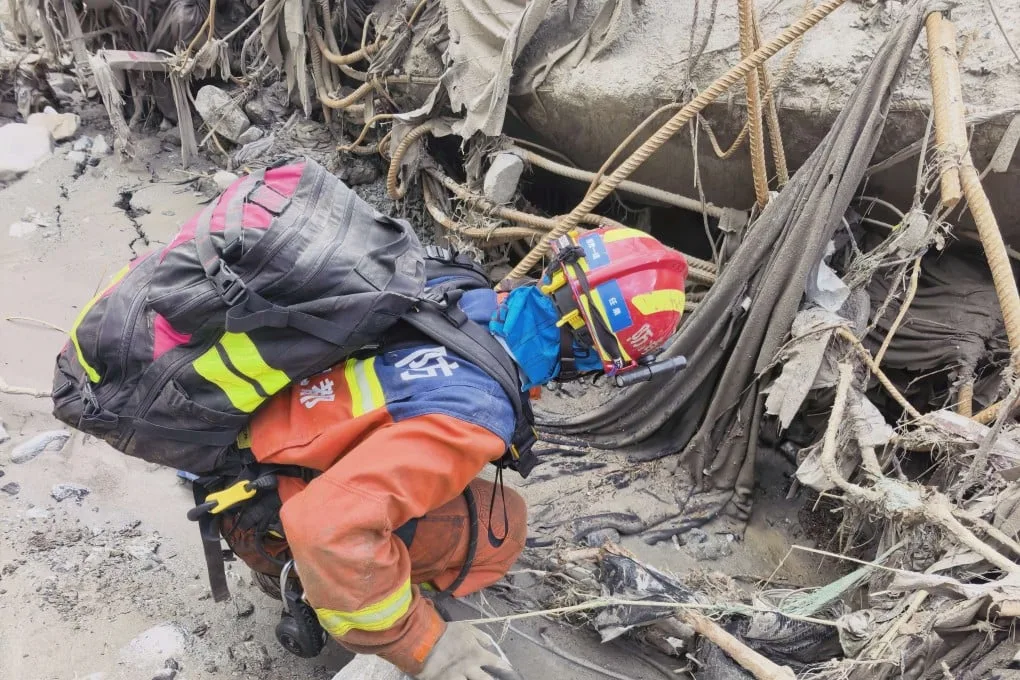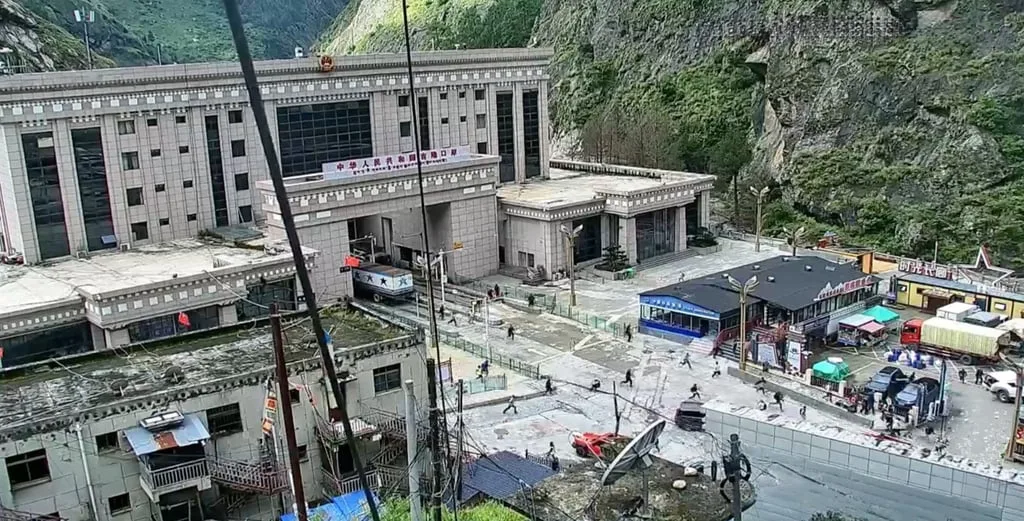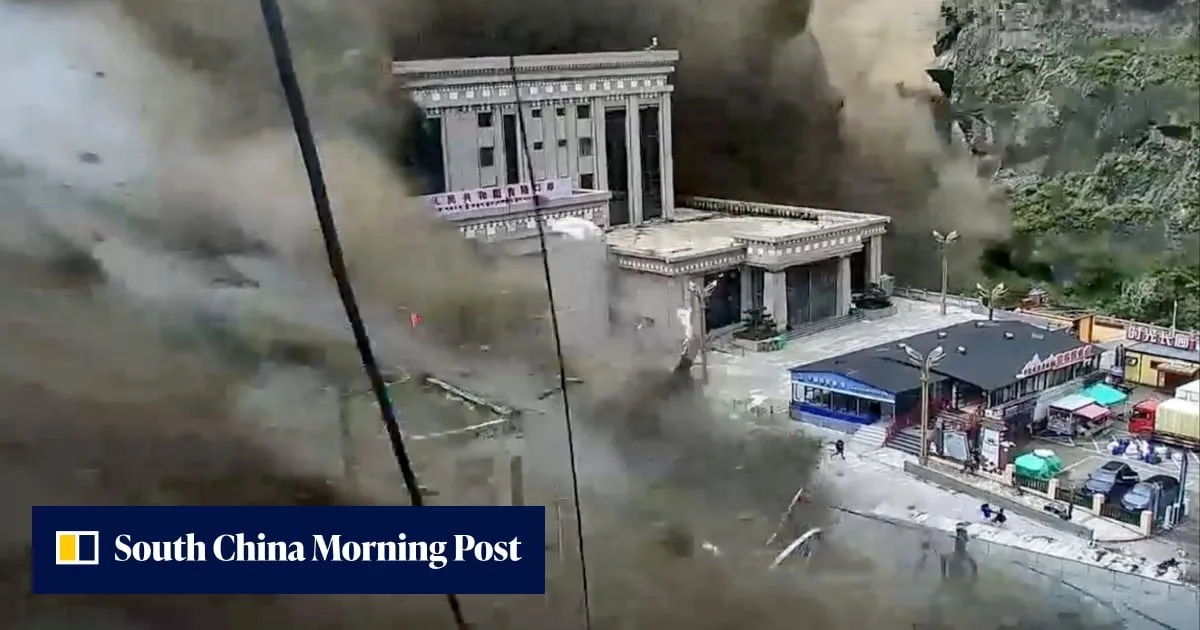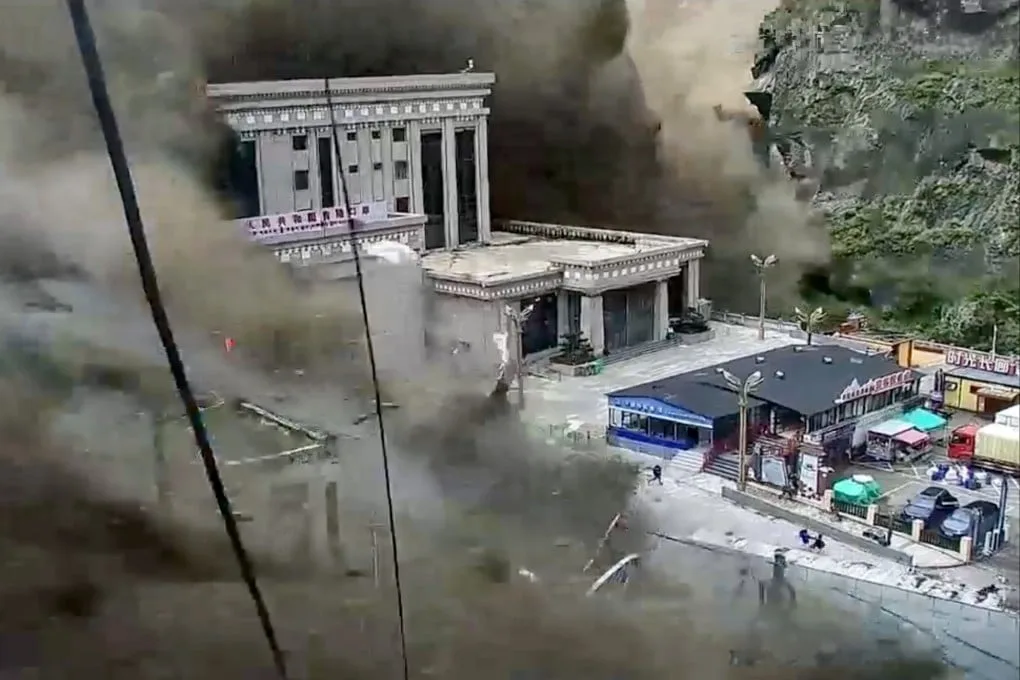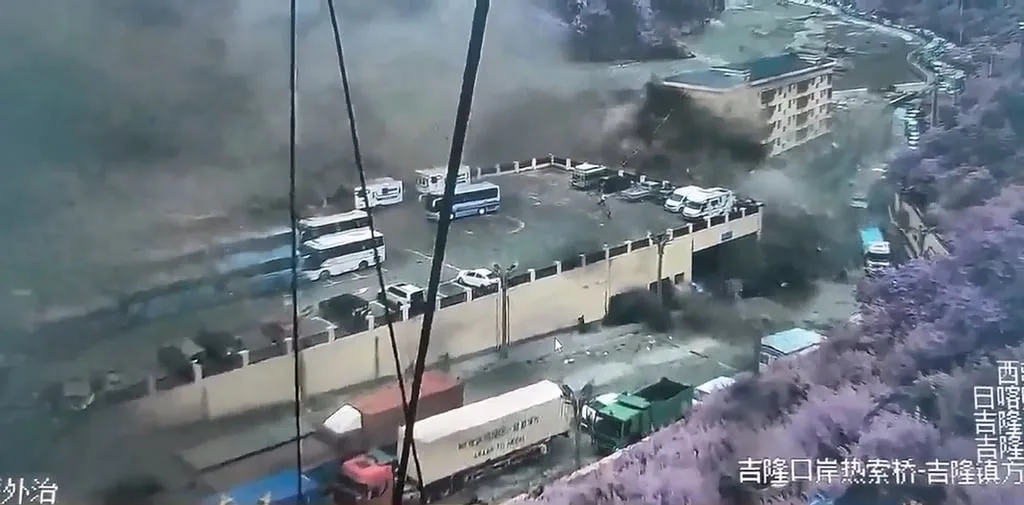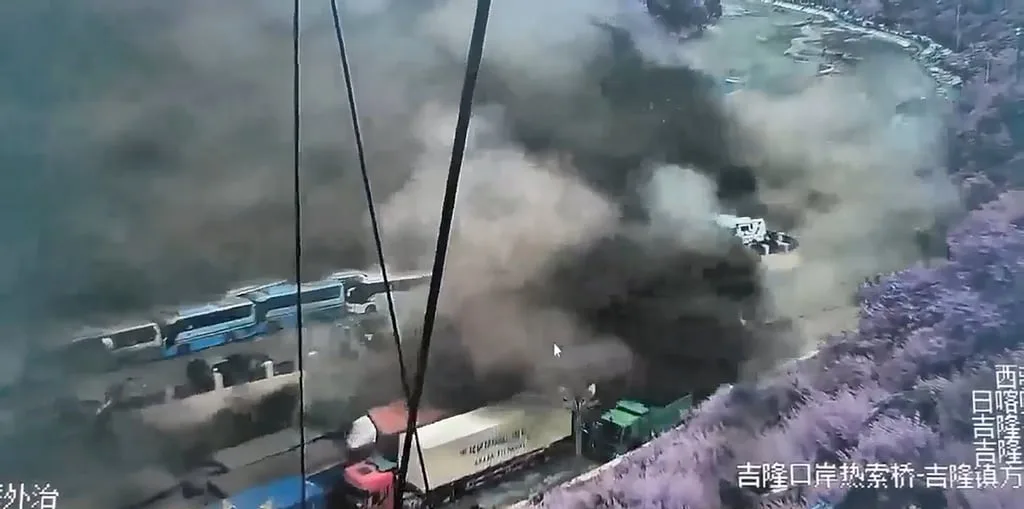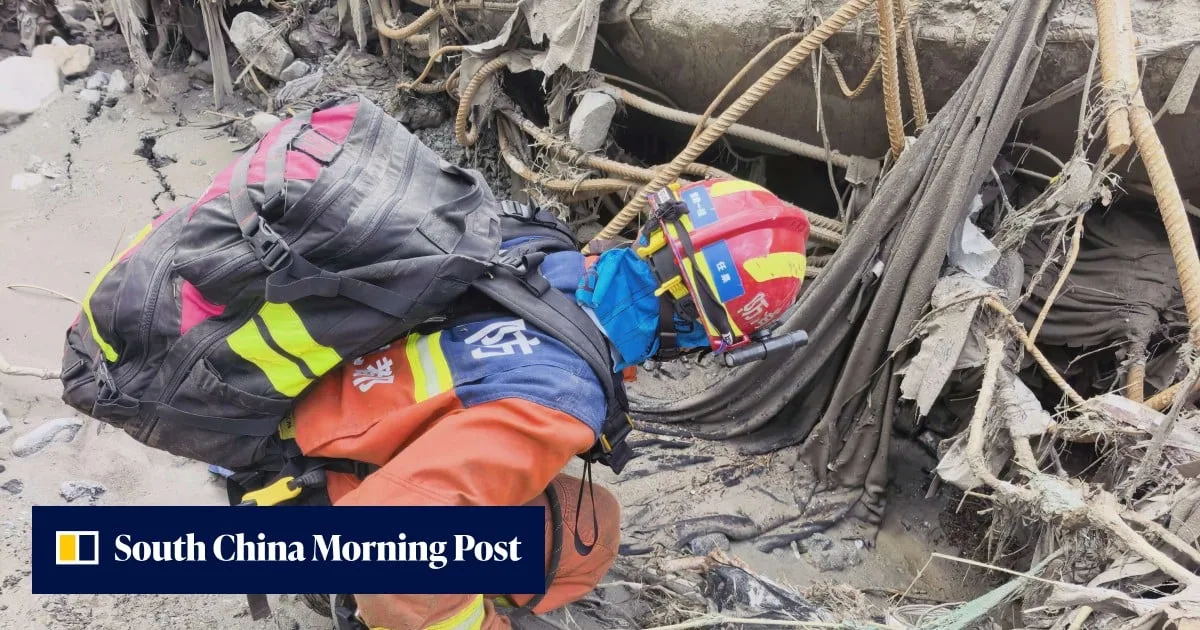
A glacier collapse triggered a massive landslide and flash floods near Gyirong Port on the China-Nepal border on 26 August 2026, destroying the border checkpoint and causing significant casualties [1, 2, 3]. The landslide debris reportedly reached speeds of 50 meters per second as it engulfed the area, overwhelming the checkpoint building [2, 4]. "The checkpoint building had been completely destroyed by a mudslide," said rescue team leader Liu Maolin [4].
The disaster has caused at least 610 deaths and over 2,400 people missing in Nepal, according to official reports [4]. In Nepal, 384 tourists and travelers remain missing, including 93 Nepalese and 291 foreigners from countries such as India, Australia, the US, UK, and the Netherlands [1]. On the Tibetan (Chinese) side, the death toll ranges from 3 to 7, with missing persons reported between 544 and 558, reflecting differing official counts [4, 3]. Chinese authorities note that among the missing are 260 foreign nationals [3].
Chinese President Xi Jinping ordered local authorities to "spare no effort in searching for and rescuing missing persons, evacuating residents, promptly treating the injured and minimising casualties" [1]. Chinese Premier Li Qiang visited Gyirong county on 27 August to oversee relief operations and support evacuated residents [3]. More than 300 villagers near Gyirong Port have been moved to safer locations within the county [3].
Rescue teams including Chinese military personnel remain on-site conducting search and rescue and clearing roads to reach affected zones [1, 5, 6]. The China Meteorological Administration has warned of ongoing light rain and low temperatures through this week, complicating response efforts [4].
Among those caught in the disaster was police officer Huang Peng, filmed guiding people away from the port moments before the landslide struck; his current status remains unknown [2].
The disaster struck Tibet’s main foreign trade port with Nepal, a critical border crossing heavily used by tourists and goods [1, 7]. Authorities continue rescue operations amid challenging weather and mudslide debris.