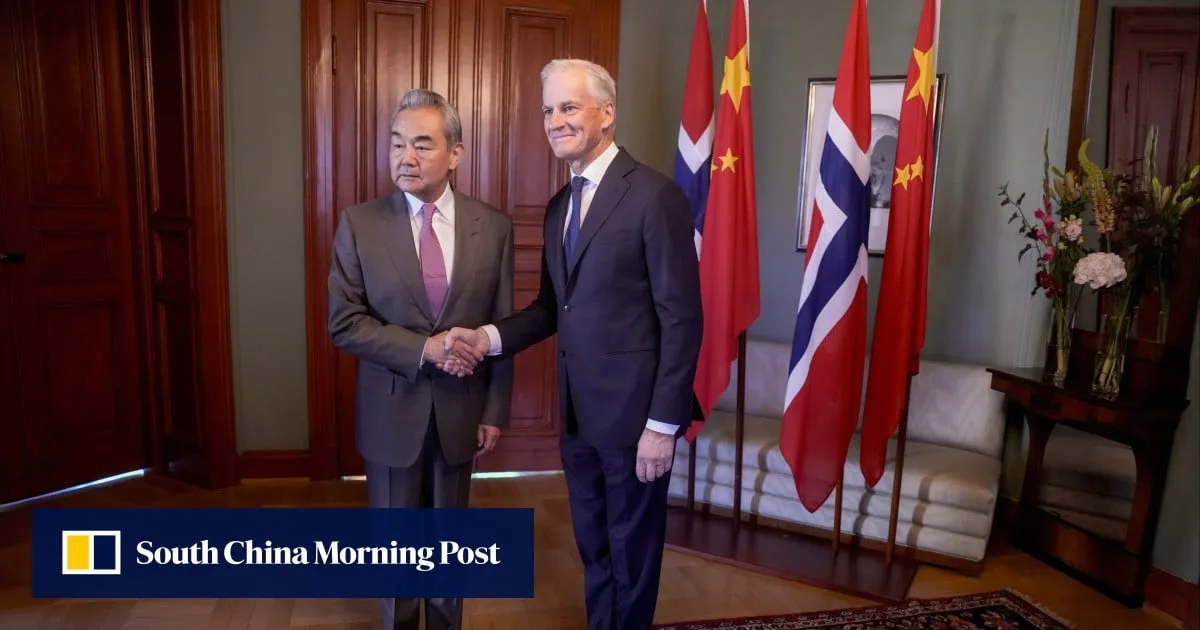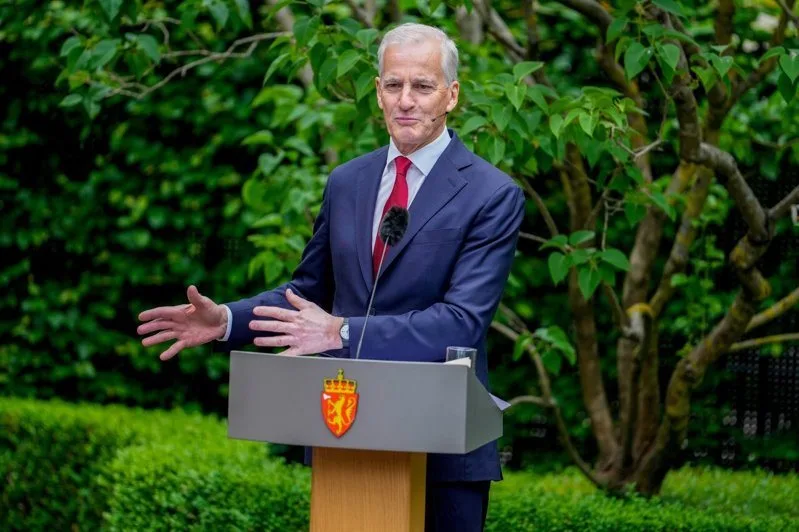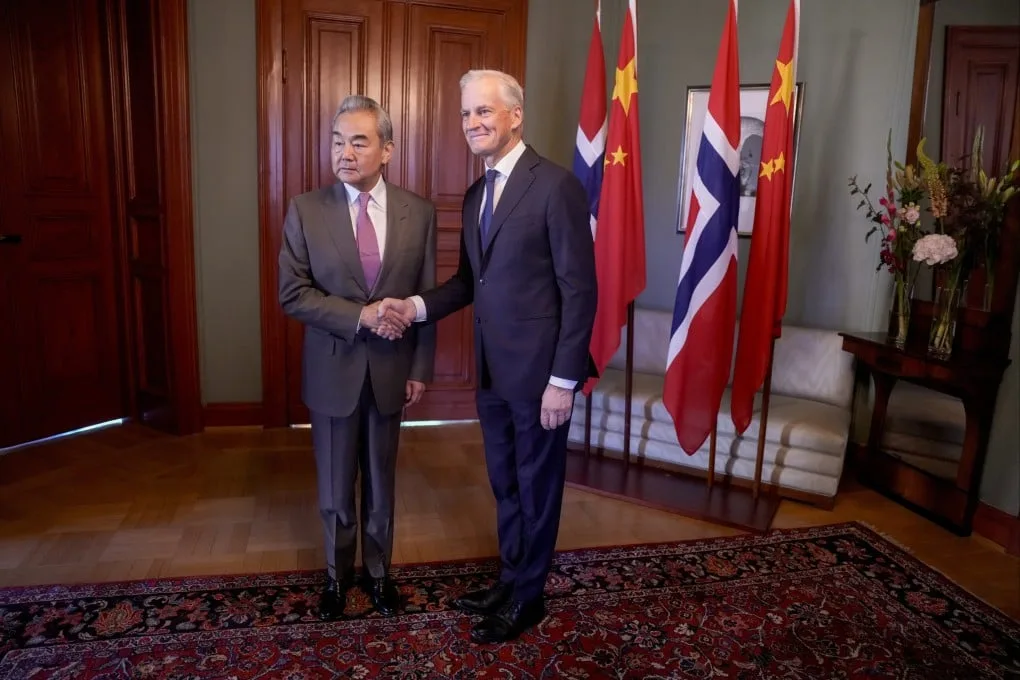
Norwegian Prime Minister Jonas Gahr Støre met Chinese Foreign Minister Wang Yi in Oslo on August 6, 2026, during Wang's Nordic visit to discuss the war in Ukraine and bilateral relations [1, 2, 3, 4, 5, 6, 7]. Støre told Wang that "China is probably the country with the best and most direct access to the Russian leadership. We expect, hope and strongly urge China to use that channel" to help bring Russia to peace talks with Ukraine [1].
The discussions largely focused on the Ukraine conflict. Norwegian Foreign Minister Espen Barth Eide described the dialogue as "constructive and promising," but said China did not explicitly commit to convincing Russia to return to negotiations, only giving hints of willingness [1, 3, 5, 6]. Norwegian officials stressed that peace negotiations should begin unconditionally with a ceasefire on the current front line in Ukraine [1, 5].
Støre also noted that while there is potential for deeper cooperation between Europe and China, "as long as this war goes on and China is a close partner of Russia, that is a limitation on that opportunity" [1]. At the same time, he warned China poses an increasing security challenge to Norway, requiring strengthened national security measures and reduced dependence on China [2, 4, 7]. He acknowledged Norway has responded to Chinese intelligence activities and said they must be closely monitored, including in embassy security planning [2, 4, 7].
In addition to the Ukraine conflict, Norway raised human rights issues with China, including concerns about Uyghurs, Tibet, and Hong Kong [2, 4, 7]. Despite tensions, the two countries noted progress in political trust and cooperation on environmental and economic issues such as green transition, clean energy, electric vehicles, green shipping, and circular economy [3, 6]. They also expressed commitment to strengthen communication and cooperation on global issues including climate change and upholding international norms [3, 6].
Norway and China signed a new 70-year lease agreement for the Chinese embassy site in Oslo, lasting until 2097, with Norway paying about 3.55 billion Norwegian kroner (roughly 36 million USD) [2, 4, 7].
Norwegian officials said Nordic countries delivered a shared message to China during Wang's visit, pressing China to end support for Russia's military efforts and urge Moscow toward unconditional peace talks [2, 4, 7]. Foreign Minister Eide stated, "I’m not a spokesperson for China. I’m not going to quote them but there are some hints in what they say" regarding China's willingness to engage [1].
The next diplomatic steps will likely focus on monitoring China's actions related to Russia and assessing progress on possible peace negotiations.