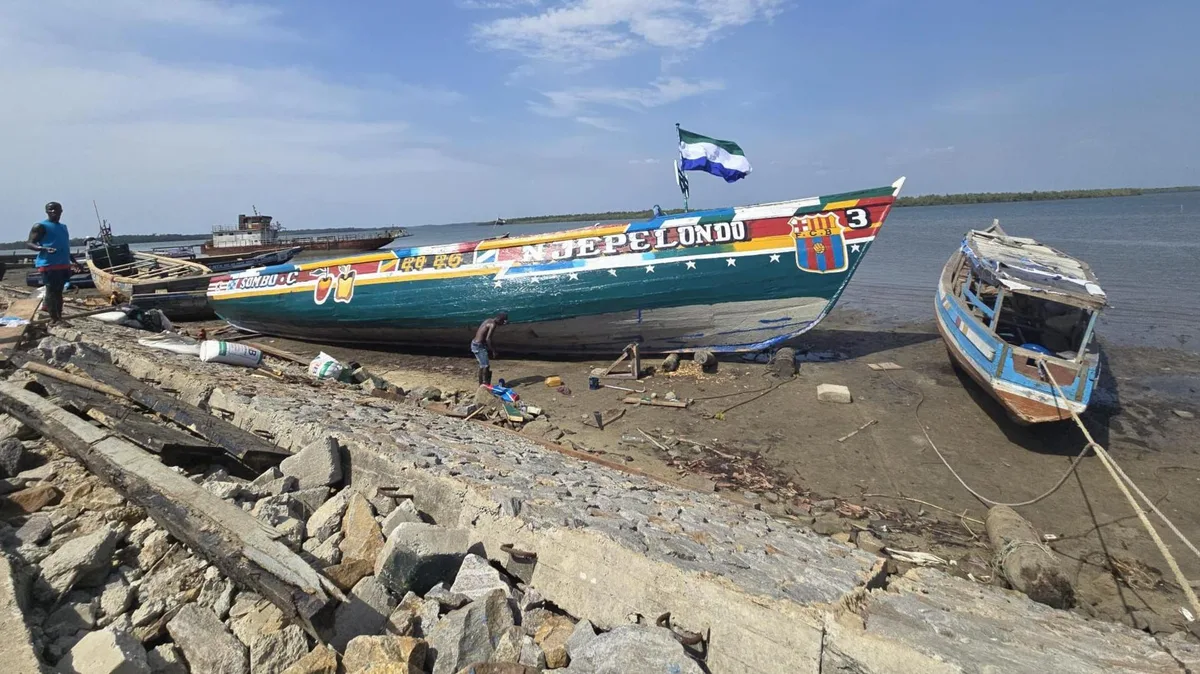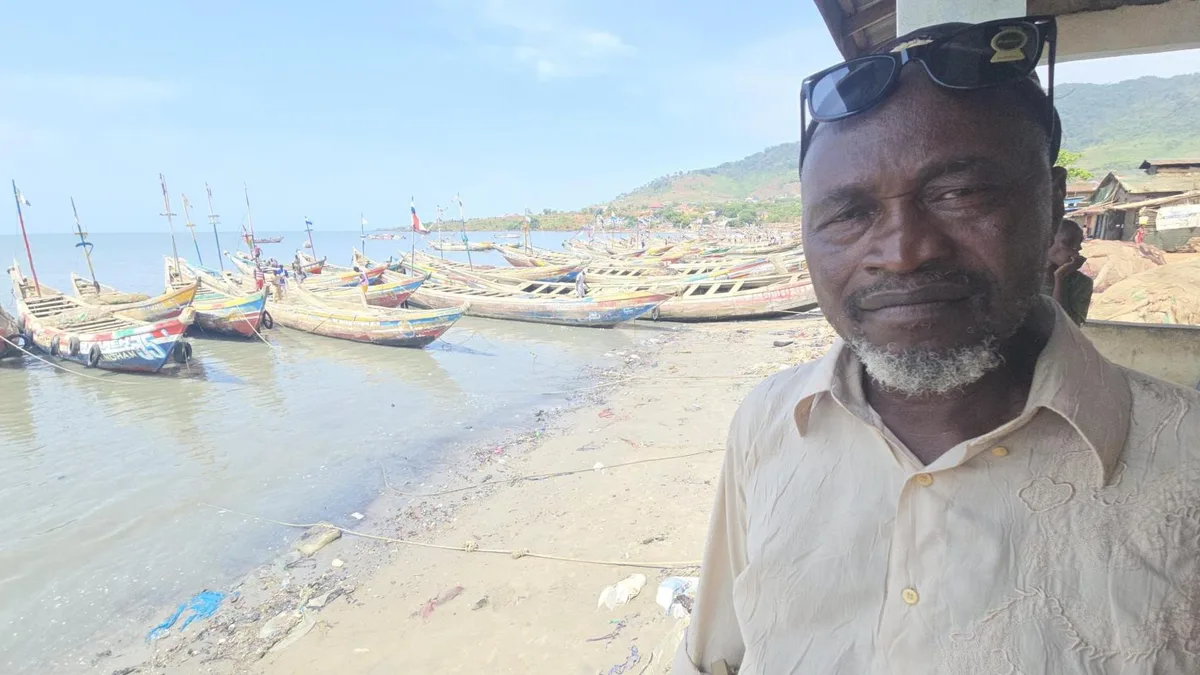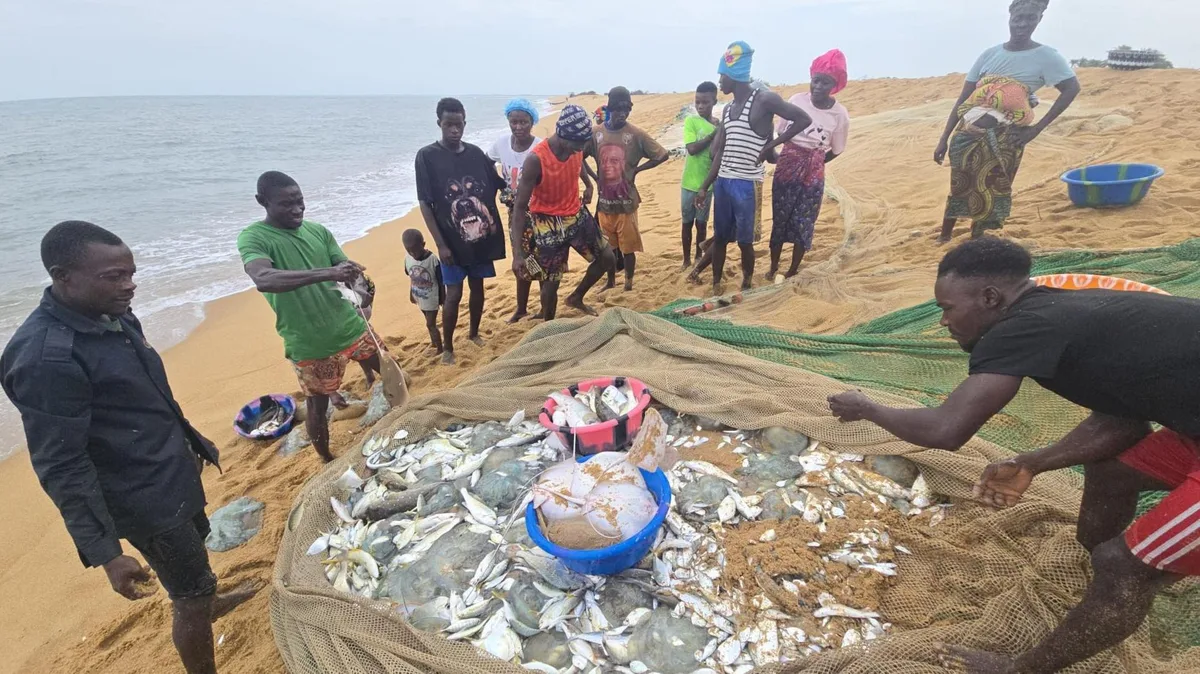
Fishermen on Sherbo Island in Sierra Leone say their fish catches have declined sharply due to illegal fishing by large foreign trawlers in coastal waters, often inside the 7-mile exclusion zone reserved for local fleets [1, 2, 3]. The Sierra Leone Fishermen's Union president, Thomas Turay, estimated that average catches for members have fallen by about 40% in recent years because of these illegal incursions [1, 2, 3]. Turay said, "Illegal fishing is severe. The sea belongs to us, but foreign trawlers enter the 7-mile exclusion zone at night, approaching nearshore waters" [2].
Fishermen report that at night trawlers often damage and cut their fishing nets deliberately, causing costly replacements at around $250 per net [1, 2, 3]. Musa Gassimo, a local fisherman, said, "After we cast our nets in the evening and return ashore, trawlers come at night and cut the nets' ropes on purpose" [2].
A 2024 global report estimated that about 40% of the world's illegal fishing catch originates from West African waters, costing the region around $10 billion in lost revenue and threatening food security for millions [1, 2, 3]. Illegal fishing in West Africa has remained largely unchanged in the past two years, according to observers [1, 2, 3].
Steve Trent, CEO of the Environmental Justice Foundation, said most foreign trawlers illegally fishing off Sierra Leone are Chinese. He accused China of lacking credible oversight, stating, "China has still not taken sufficient measures to regulate its fleet. In fact, it is enabling the situation through subsidies and poor regulation" [2, 3].
However, Sheku Sei, head of Sierra Leone fisheries, denied the presence of significant ongoing illegal fishing. Sei said, "Illegal fishing was a big problem in the past but we have taken measures, so the situation is reducing. All international vessels must carry vessel tracking devices now, and government patrols are frequent" [2, 3].
Fishermen complain about insufficient enforcement, blaming corruption and bribery for authorities ignoring complaints [2, 3]. Turay said the lack of enforcement is due to official corruption preventing effective action against illegal trawlers [2, 3].
The Chinese Foreign Ministry stated that China is a responsible fisheries nation, strictly regulating its distant water fishing fleets and cooperating with other countries on mutually beneficial fisheries management [2, 3].
The dispute between fishermen’s reports and official statements highlights ongoing tensions over enforcement. Local fishers continue to battle losses amid rising illegal fishing. The fisheries ministry plans to maintain regular patrols and tracking to monitor and control fishing vessels in Sierra Leone’s waters [2, 3].