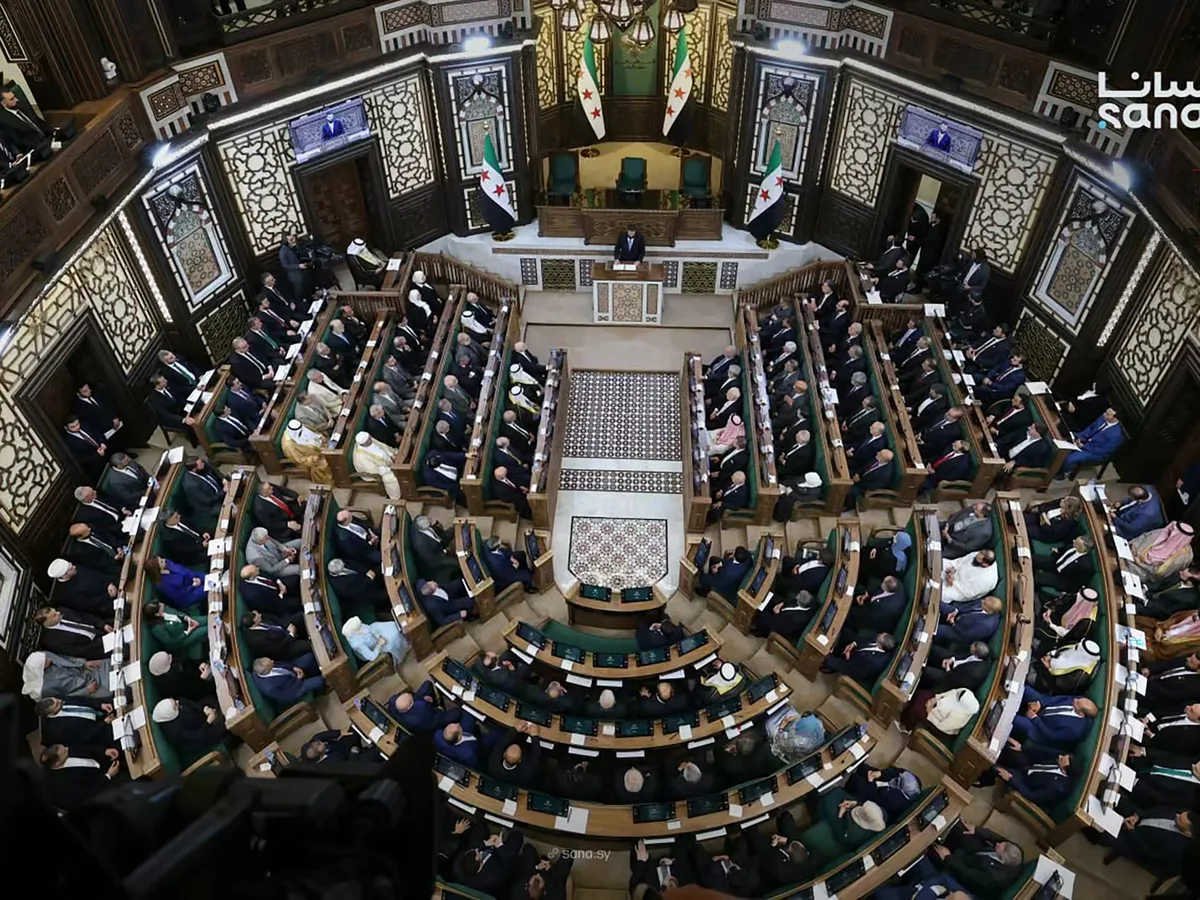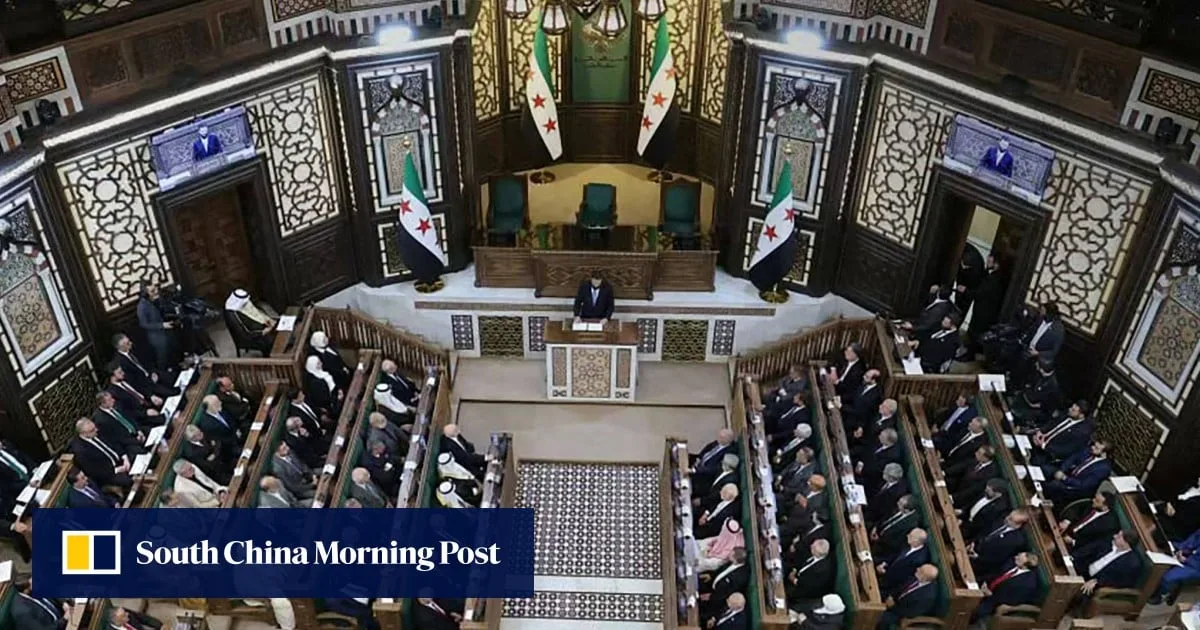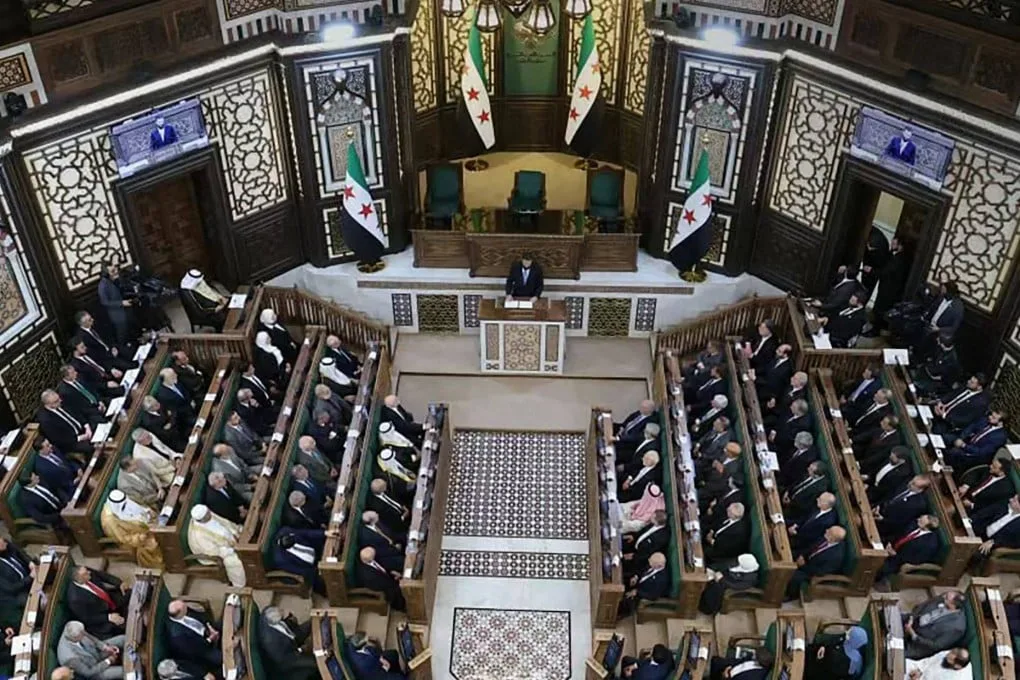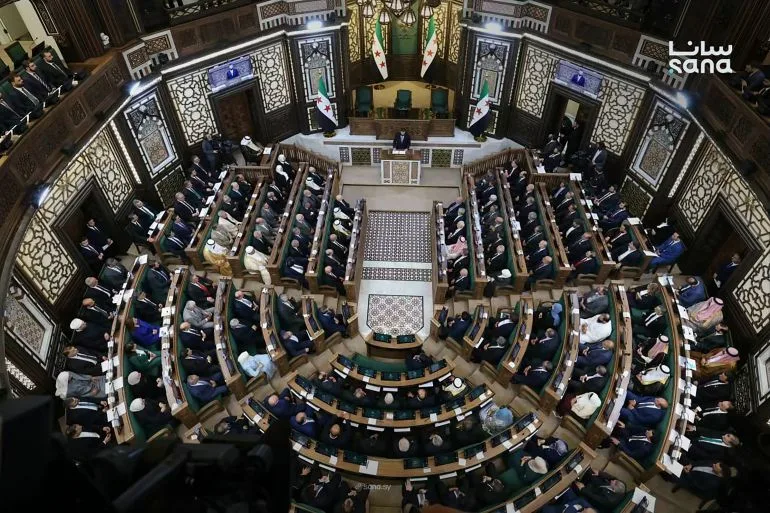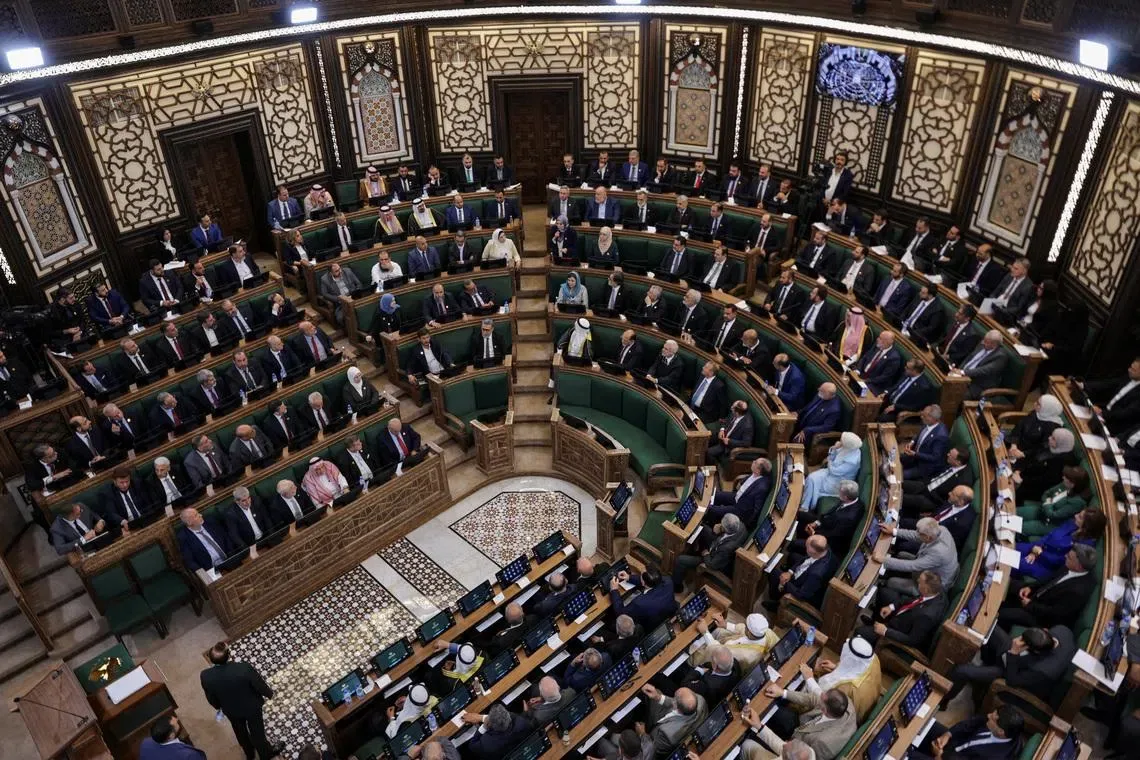
Syria’s new transitional parliament convened for the first time in Damascus on Sunday, July 12, 2026, with 206 of its 210 members present. The Druze-majority Sweida province had not designated representatives due to ongoing sectarian violence, and one member was deceased at the time of the session [1].
The 210-seat chamber is made up of two-thirds of members chosen last year by regional electoral colleges appointed by the electoral commission, which itself was appointed by President Ahmed al-Sharaa. The remaining one-third, or 70 lawmakers, were directly appointed by al-Sharaa in early July 2026 [2, 1, 3].
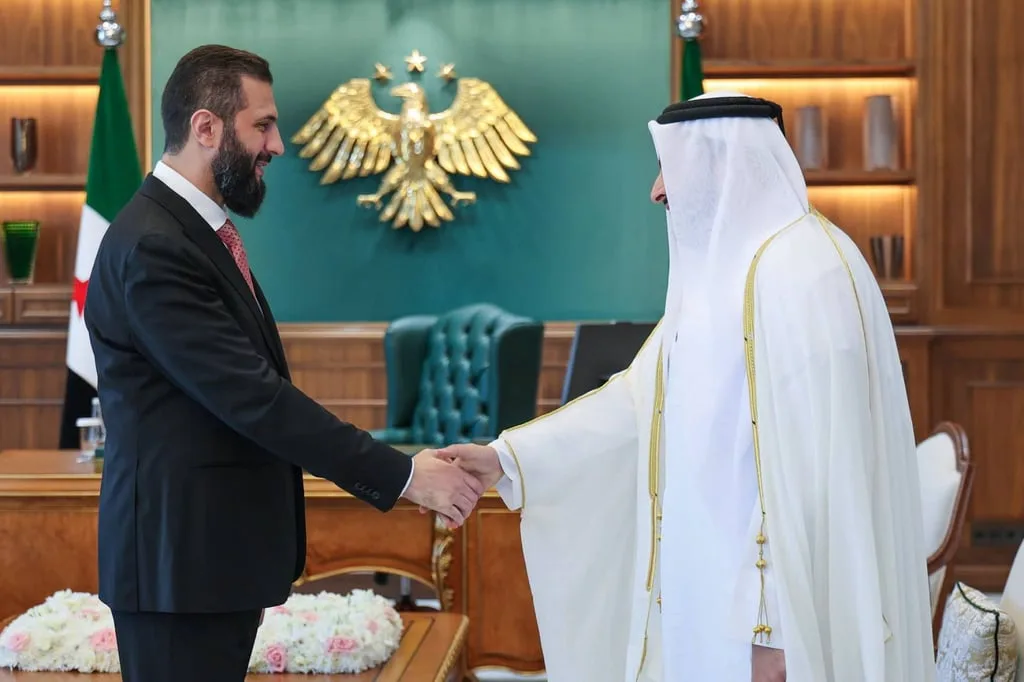
Al-Sharaa urged parliamentarians to "make this council a model of responsibility and competence," calling on them to foster dialogue, uphold the rule of law, and respect institutions during his opening address [2, 3]. He said, "Syria is writing a glorious history that reflects its heroism, and we face the responsibility of building both the nation and the individual" [2].
The new parliament faces the task of drafting a constitution and laying foundations for democracy after more than 14 years of civil war and four decades of Assad family authoritarian rule [1, 3]. Operating under a temporary constitutional declaration introduced in 2025, the parliament currently holds limited legislative powers and does not require the government to seek a vote of confidence [2]. The legislature’s term is 30 months, with the option for renewal, and will serve until a permanent constitution and elections are established [2].
Among the members are 21 female lawmakers, representing about 10% of the chamber, with 15 of them appointed by President al-Sharaa [2].
Syria continues to face economic hardship and sectarian tension after Assad’s overthrow in December 2024, when al-Sharaa and rebel forces dissolved the previous legislature [3]. Claudio Cordone, UN deputy special envoy for Syria, described the parliament’s opening session as "a key milestone in the country’s political transition" [3].
Al-Sharaa has pledged to hold general elections once infrastructure issues and voter documentation challenges have been resolved [2, 3].