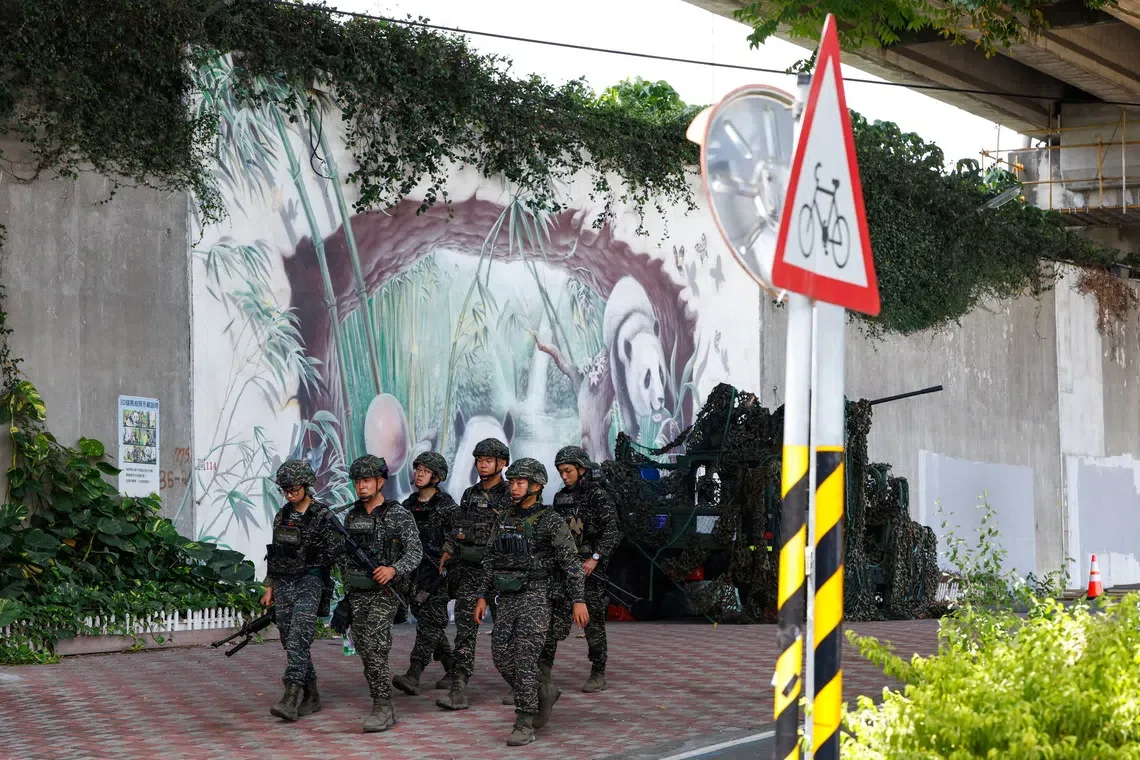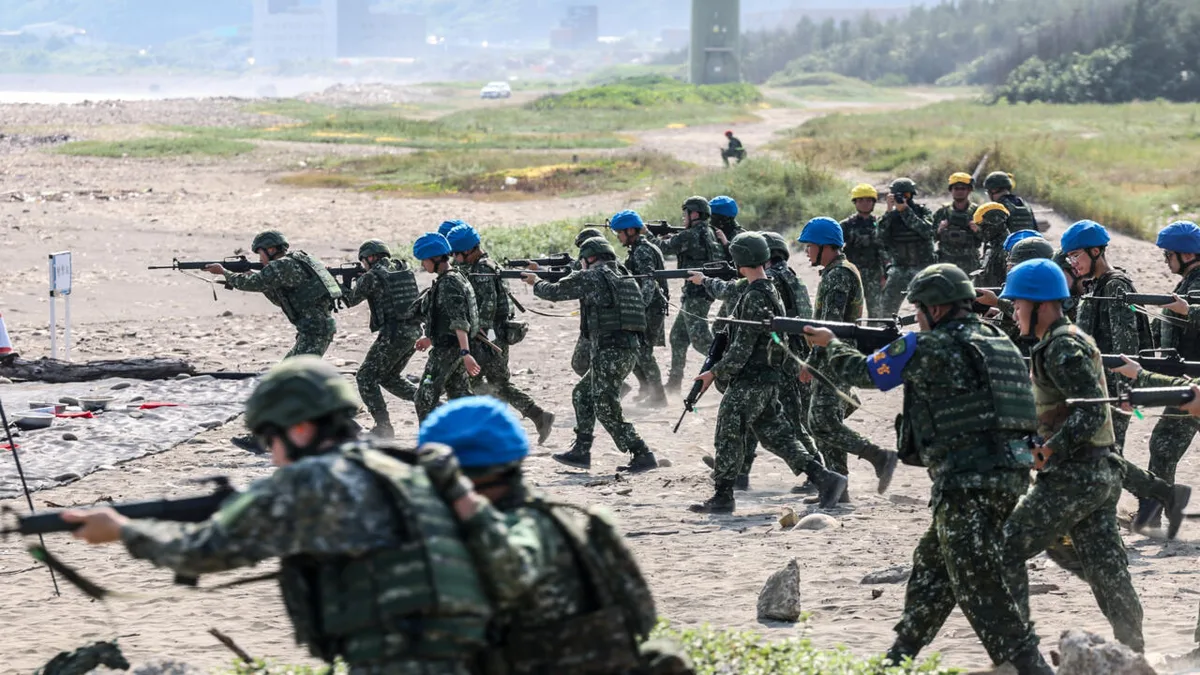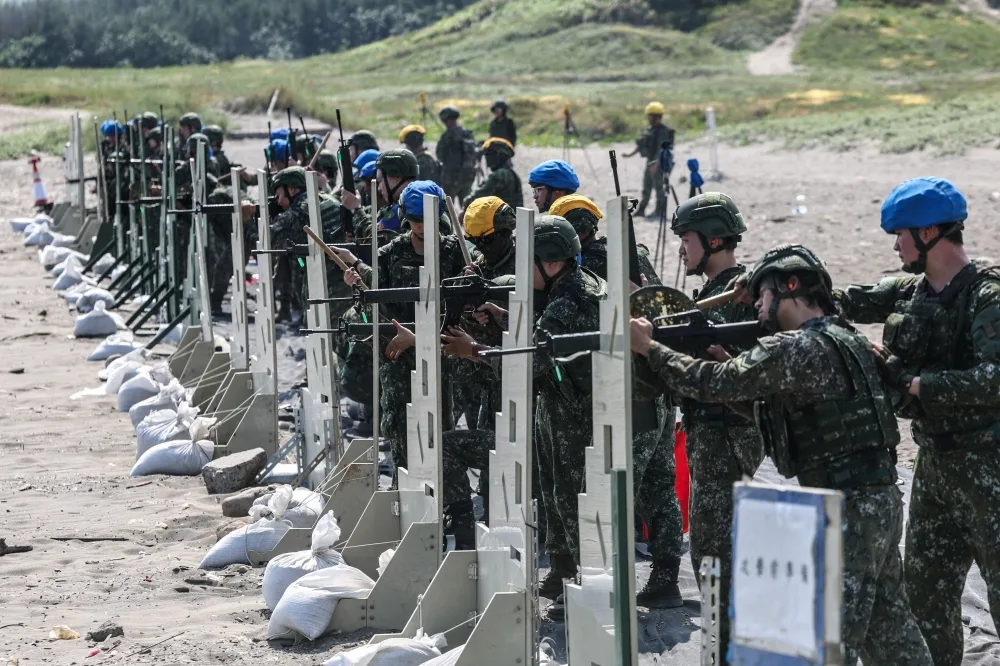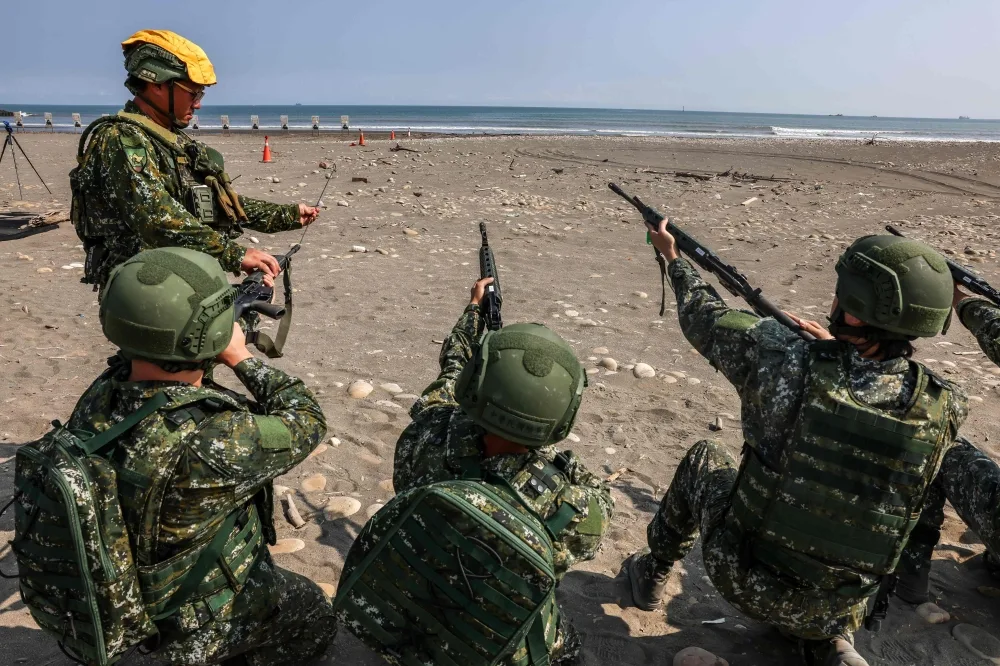
Taiwan started its largest military drills of the year, the annual Han Kuang exercise, on August 5, running through August 14 [1, 2, 3, 4]. The 10-day drills include combat scenarios designed to prepare troops and reservists for a potential Chinese invasion [1, 2, 3, 4]. Dozens of reservists fired Taiwanese-made assault rifles at targets on a beach facing the Taiwan Strait on the first day of exercises [1, 2, 3, 4].
The drills involve various military activities such as launching reconnaissance and attack drones, naval deployments including submarines, mortar and rifle training, tank and armored vehicle maneuvers, and helicopter flights [2]. Civilians also participate through exercises like air raid drills and temporary slowdowns of mobile internet speeds to simulate wartime conditions [1, 2, 3, 4].
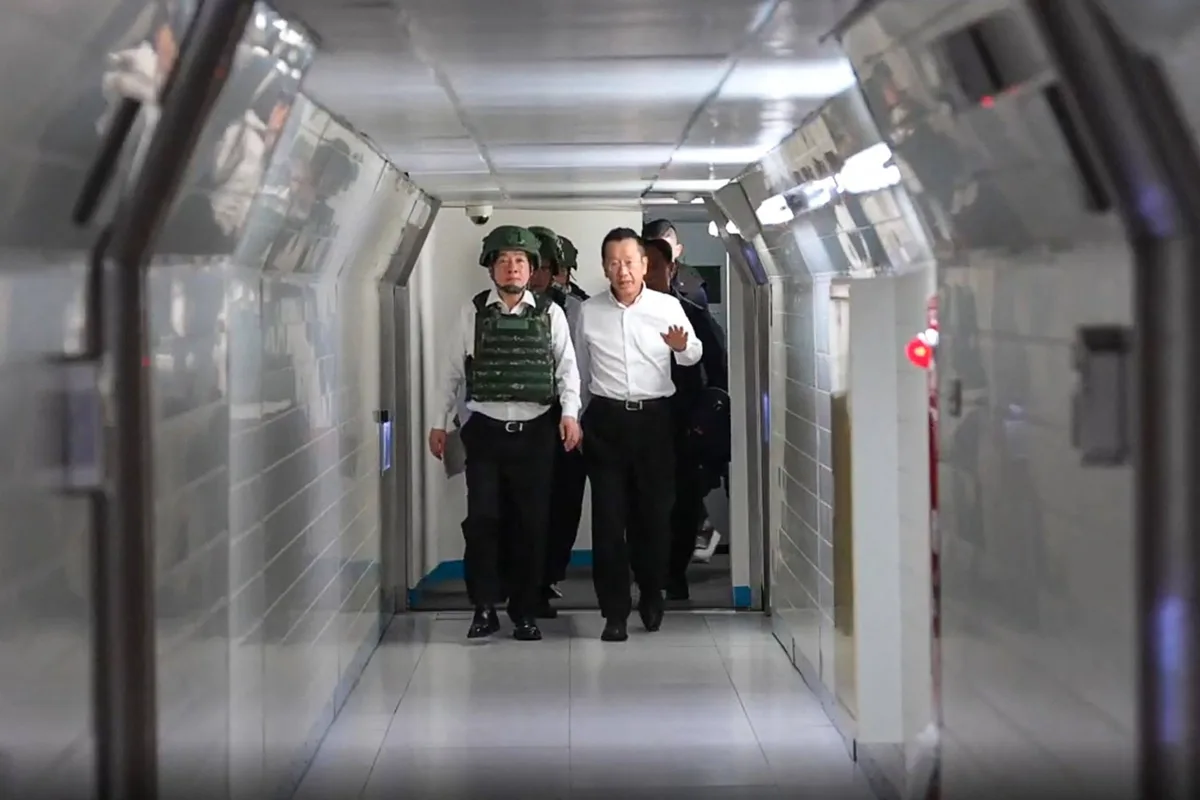
A key focus of the 2026 drills is decentralizing command and control, giving battlefield commanders greater decision-making autonomy [2, 3, 4]. The exercises test not only military readiness but also inter-agency coordination and emergency response measures to ensure government continuity during crises or war [5]. Taiwanese President Lai Ching-te took part on the night of August 5 by riding inside an armored personnel carrier to a command center as part of the drills [5, 6].
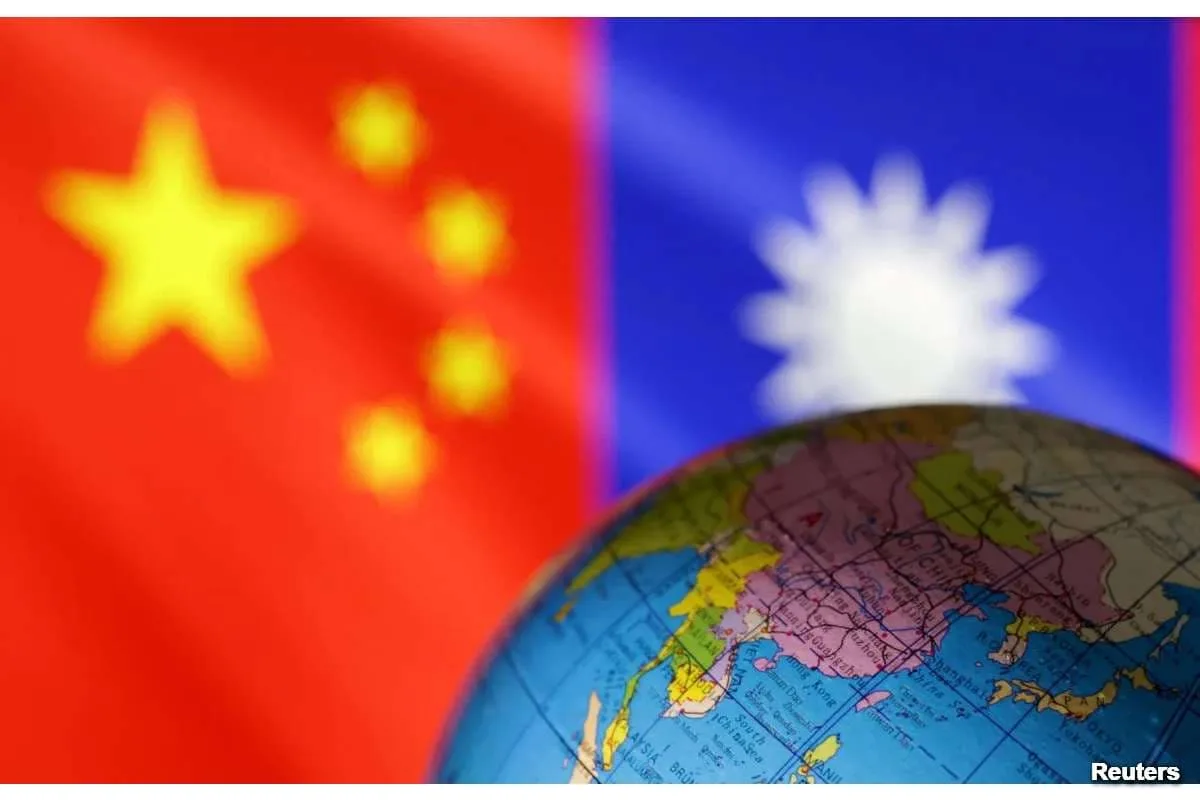
Taiwan faces growing pressure from China, which claims the island of 23 million people and has threatened to use force to seize it [1, 2, 3, 4]. China has increased military pressure with near-daily fighter jet and warship deployments, large-scale drills, and gray zone activities by its coast guard near Taiwan and its outer islands [1, 2, 3, 4].
President Lai stated, "As the CCP’s (Chinese Communist Party’s) authoritarianism continues to expand, red terror is also spreading into every corner of the world. We will continue to upgrade our national defence and build whole-of-society defence and resilience" [1]. He has repeatedly emphasized that only Taiwan’s people can decide their future and rejects Beijing’s sovereignty claims [5].
Taiwan has increased defense spending and is acquiring more nimble weaponry, including drones, aiming to wage asymmetric warfare against China [1, 2, 3, 4]. The government plans to raise defense spending to 5% of GDP by 2030 under U.S. pressure [1, 2, 4]. However, opposition parties in parliament cut a special defense budget passed in May by about one-third to $25 billion from the government’s original request [1, 4].
The Han Kuang drills continue until August 14, with ongoing exercises testing Taiwan’s military, civilian, and government readiness amid mounting tensions with China.