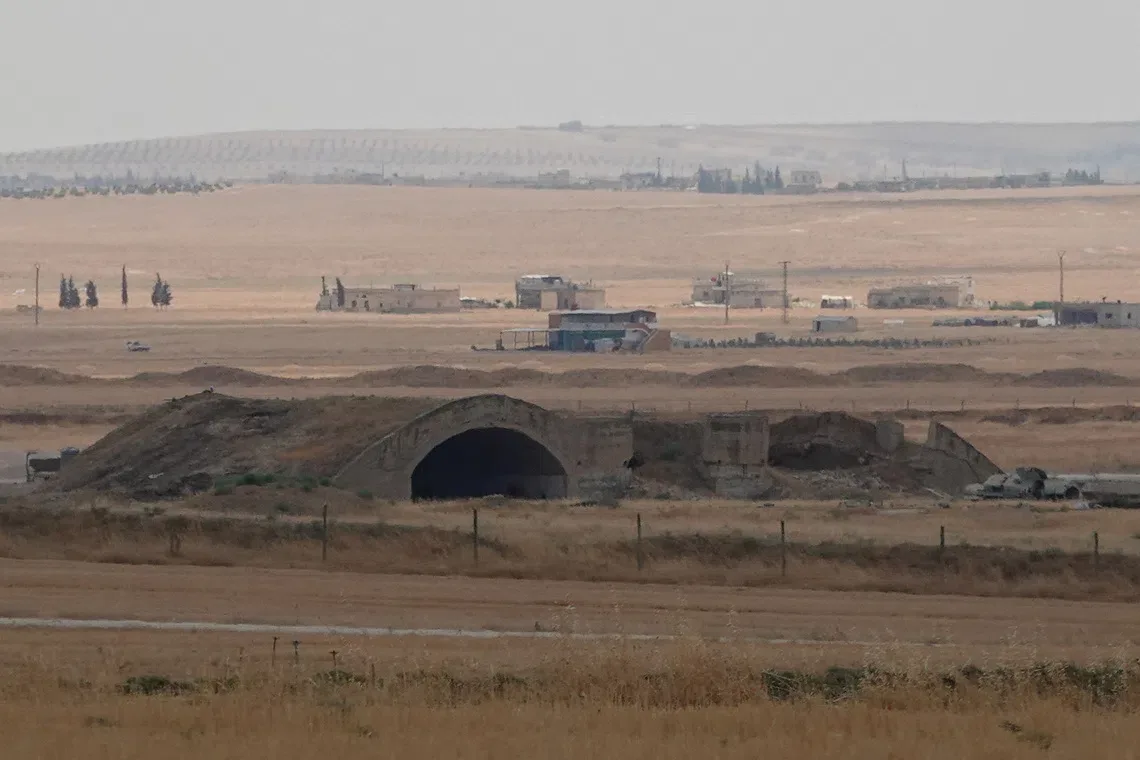
Israel conducted airstrikes on the Abu al-Duhur airbase near Aleppo, Syria, on August 18, 2026, citing concerns over Turkish troop deployment that it said threatened its security [1, 2, 3]. Israeli Prime Minister Netanyahu's office said Syria allowing Turkish forces to deploy at the base risks violating a security status quo agreement between Israel and Syria, a warning that Israel said Syria ignored [2, 3].
Turkey firmly rejected the allegations on August 19, calling them "untenable" and accusing Israel of using the claims to justify "unlawful airstrikes targeting Syria’s sovereignty and territorial integrity" [1]. Turkey denied any intention to deploy troops at the airbase or threaten Israel [1, 2, 3].
The United States confirmed Israel was behind the airstrikes and condemned the attacks as an "unnecessary escalation". U.S. envoy Tom Barrack said, "these attacks constitute an unnecessary escalation, unhelpful to advancing regional stability... we encourage all parties to prioritize reasoned dialogue rather than further military conflict" [2].
Syria's Foreign Ministry strongly denounced the strikes, calling the attacks "unjustified aggression" and urged the UN Security Council to act [2, 3]. Syria’s government is supported militarily and diplomatically by Turkey, which backs the new Syrian administration led by former jihadist Ahmed al-Sharaa [1, 2, 3].
Despite tensions, Israel and Syria have engaged in direct talks in recent months, agreeing to intelligence sharing mechanisms [2, 3]. UN Secretary-General Antonio Guterres visited Damascus in July, emphasizing the need to respect Syrian sovereignty and reaffirming the Golan Heights as Syrian territory. He said, "Violations of Syrian sovereignty and territorial integrity are unacceptable and must stop" [2, 3].
Turkey is a NATO member and was the first Muslim-majority country to recognize Israel, but relations between Turkey’s President Erdogan and Israeli leadership remain tense [2, 3].
The situation remains tense after the August 18 airstrikes, and international actors continue to call for dialogue. The next immediate development may hinge on the UN Security Council’s response to Syria’s appeal over the strikes [1, 2, 3].