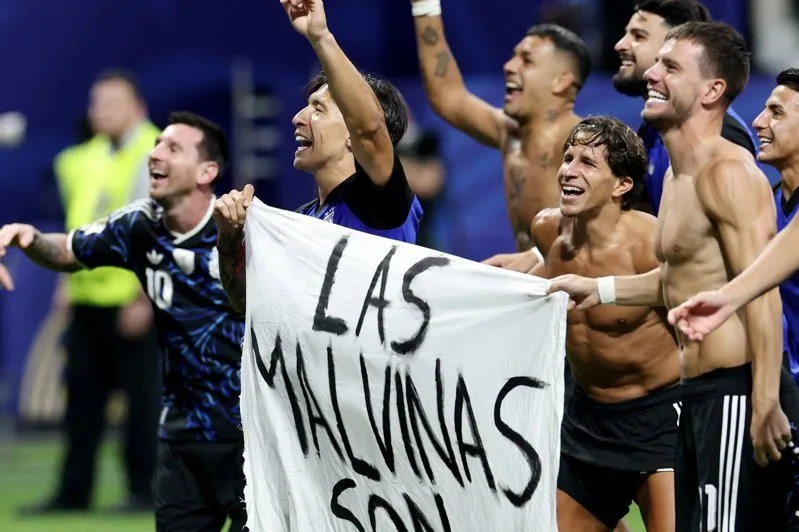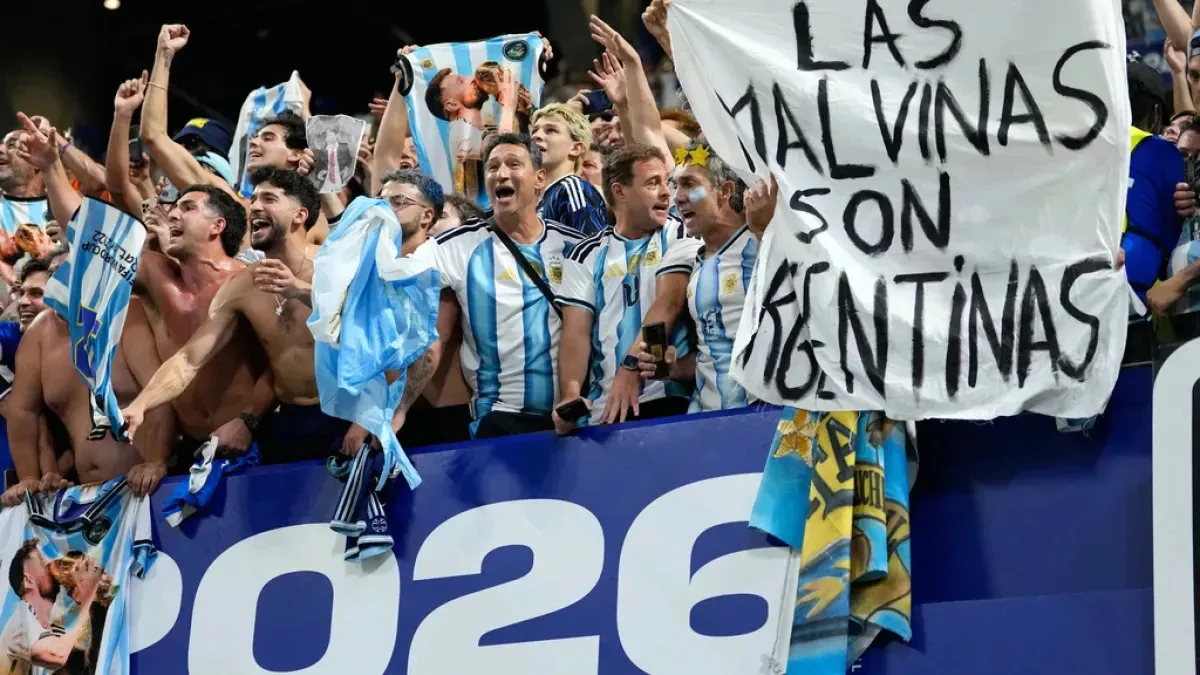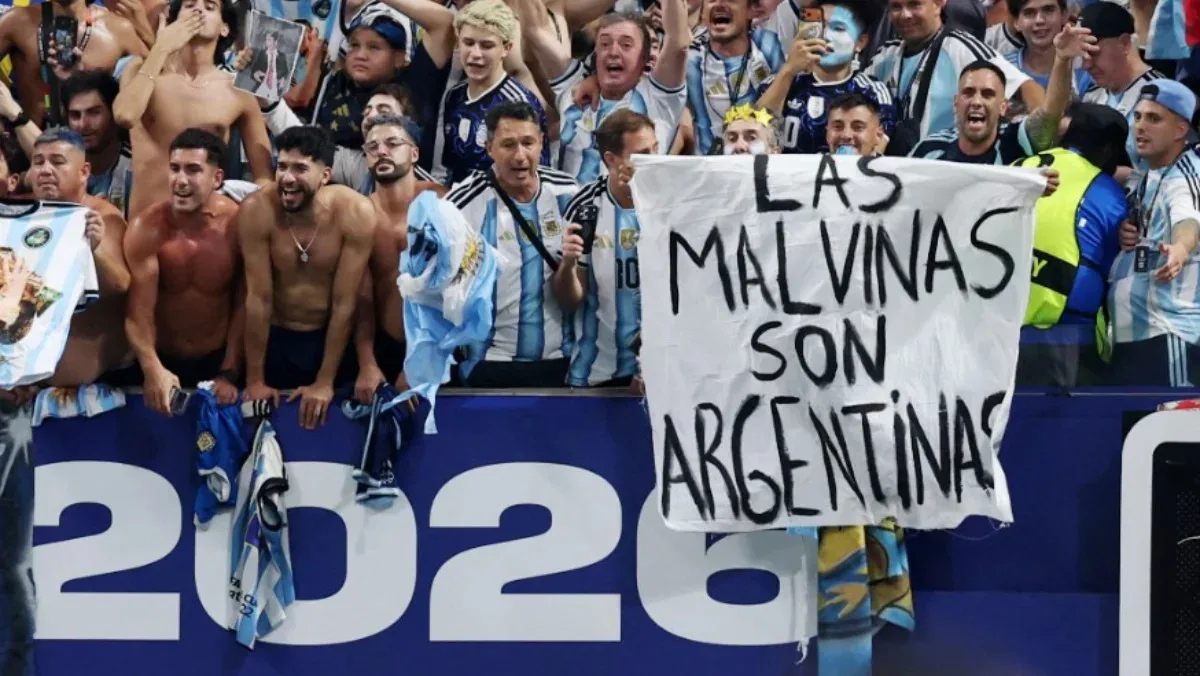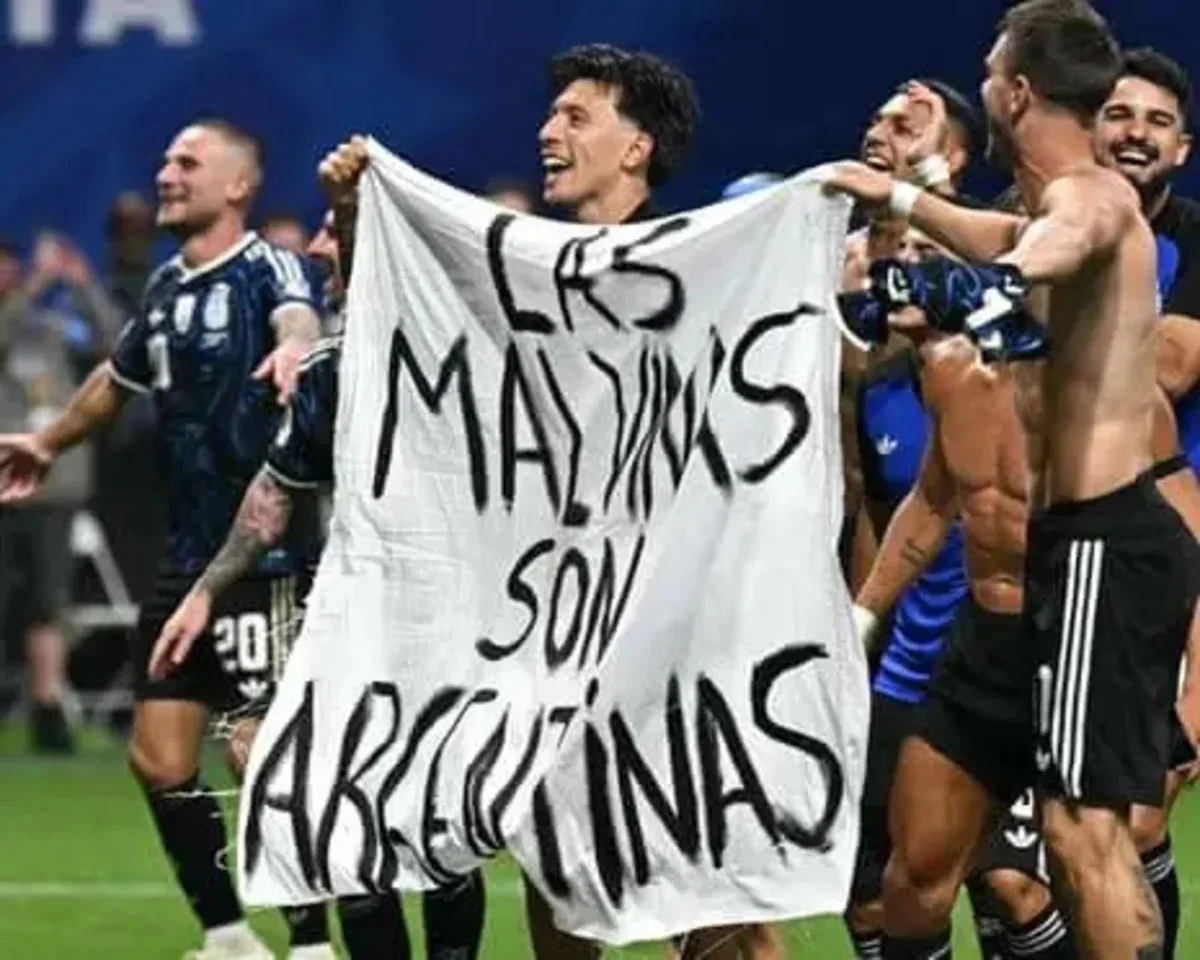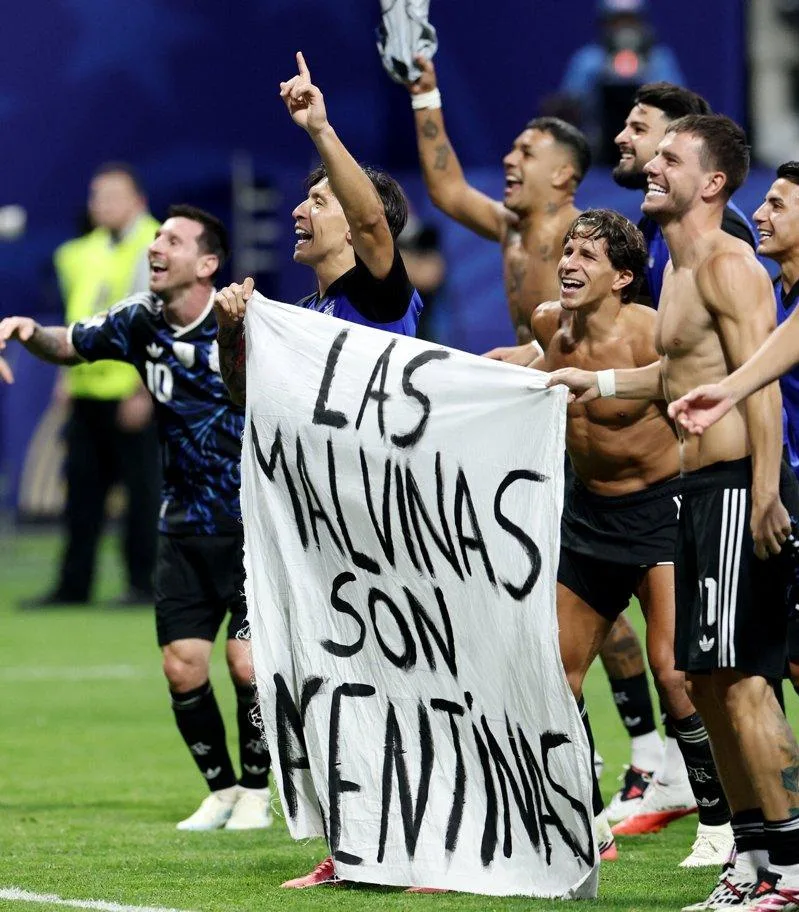
Argentina defeated England 2-1 on July 15, 2026, in the FIFA World Cup semi-final held in the United States [1, 2, 3, 4]. Following the match, several Argentina players displayed a banner stating "Las Malvinas son Argentinas" (the Falkland Islands belong to Argentina), a political message claiming sovereignty over the disputed islands [1, 5, 6, 2, 7, 3, 8, 4, 9, 10].
FIFA rules explicitly ban political statements before, during, or after matches [1, 2, 7, 3, 8, 4, 9, 10]. FIFA confirmed it is reviewing the match report and considering disciplinary action against Argentina for violating those rules [1, 3, 8, 4, 9, 10]. A FIFA spokesperson said, "The independent disciplinary committee is currently evaluating the match report and may decide on further measures according to FIFA regulations" [8].
The United Kingdom government strongly condemned the banner and reiterated its sovereignty claim over the Falkland Islands. A UK Prime Minister spokesperson said, "The World Cup may not be ours, but the Falkland Islands definitely are. Our commitment to the Falkland Islands will never waver" [1]. UK Secretary of State Peter Kyle added, "Politics should be separated from football. We expect FIFA to investigate thoroughly. Argentina blatantly violated the rules" [2]. Officials emphasized the 2013 Falkland Islands referendum, when 99.8% of islanders voted to remain a British Overseas Territory [2, 7, 11].
The Falkland Islands government expressed disappointment but was not surprised by the banner and urged FIFA to enforce the ban on politics in sports [1, 10].
The White House defended the Argentina players’ actions based on US free speech protections. Andrew Giuliani, White House FIFA World Cup Task Force Director, said, "In America, we believe in our constitutional First Amendment rights. The Argentina team had the opportunity and ability to make these statements here" [1].
Argentina Vice President Victoria Villarruel posted on social media, "Las Malvinas son Argentinas! They forbid us from bringing banners into stadiums, but forgot that we carry them in our blood and hearts" [1, 5, 6, 3]. President Javier Milei said the players’ behavior was understandable but may result in fines. He stated, "The players' behavior is understandable; they acted out of emotion and impulse. This may lead to fines, but diplomacy remains our path for sovereignty" [11, 3, 4, 10]. FIFA fined Argentina £20,000 in 2014 for a similar banner and may impose fines up to $20,000 this time [3, 8, 4].
There is speculation that FIFA is unlikely to ban the Argentina players from the World Cup final set for July 20, 2026, although sanctions could still follow [3, 8, 4, 9]. Some UK political figures have called for bans on certain Argentina players and revocation of their UK work permits, but that remains disputed [9].
Several English football officials and former players criticized England’s tactics and expressed disappointment over the loss [7, 3, 4, 9, 10].
The World Cup final between Argentina and Spain is scheduled for July 20, 2026. FIFA’s disciplinary decisions regarding the banner controversy are expected before or after that match [8, 4, 9].