The 2026 FIFA World Cup officially began on June 12 with the opening match between host Mexico and South Africa, which Chinese AI model Qwen accurately predicted as a 2-0 win, including the exact half-time and full-time scores as well as goal scorers [1]. Multiple Chinese AI platforms, including Kimi, Qwen, DeepSeek, Doubao, Yuanbao, Wenxin Yiyan, and Zhipu Qingyan, have released forecasts for the tournament's matches, with many models favoring Spain to win the World Cup [1].
Among these models, DeepSeek predicts France as the champion with an 18-20% probability, while Kimi forecasts Argentina with a similar 18-20% win chance. Other AI models such as Qwen and Zhipu Qingyan favor Spain, basing their predictions on consistent endorsements from authoritative data models and institutions [1]. This highlights a divergence among AI forecasts on the eventual champion.
Kimi has also engaged its user base by launching a campaign on June 8 with 300 sub-agents predicting all 104 World Cup matches publicly. By June 11 evening, Argentina led user support on the Kimi app at 43.33%. The app has incentivized participation with a 1 trillion token prize pool to encourage users to predict match outcomes [1].
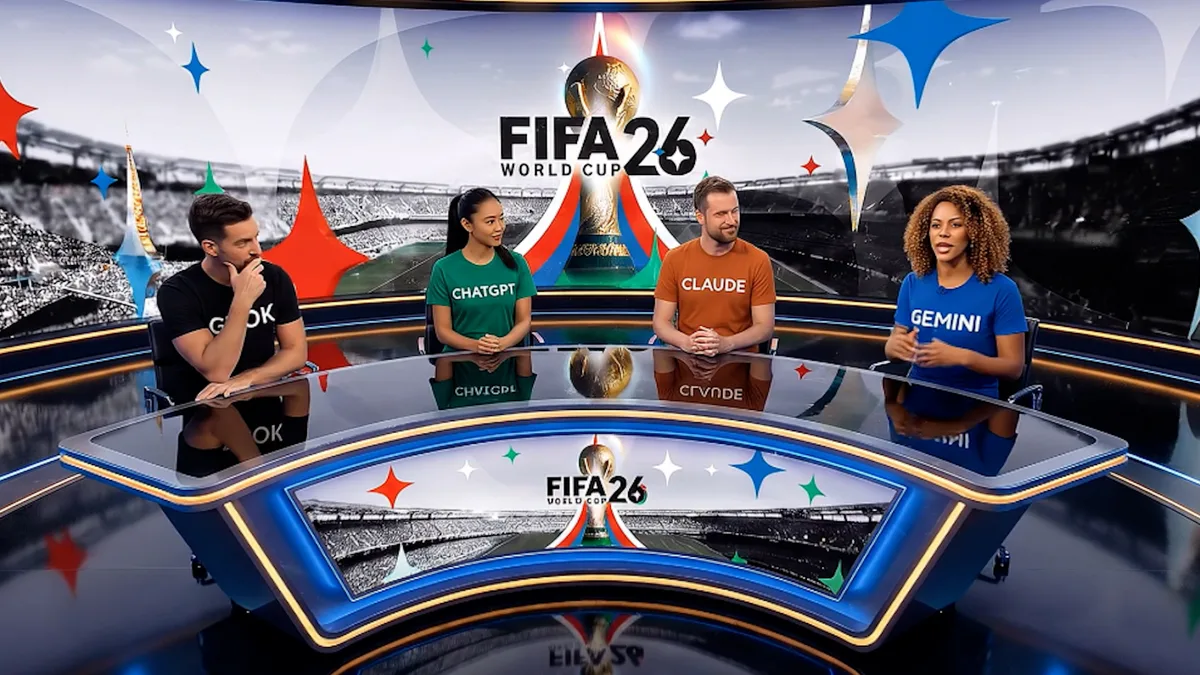
Besides Chinese AI models, Al Jazeera asked global AI systems including Grok, ChatGPT, Claude, and Gemini to predict the World Cup winner, reflecting AI’s growing role in sports analytics [2].
AI tools have become key in analyzing World Cup data and fueling fan engagement. The next phase will see how these predictions hold as the tournament progresses, with matches unfolding after the June 12 start [1].