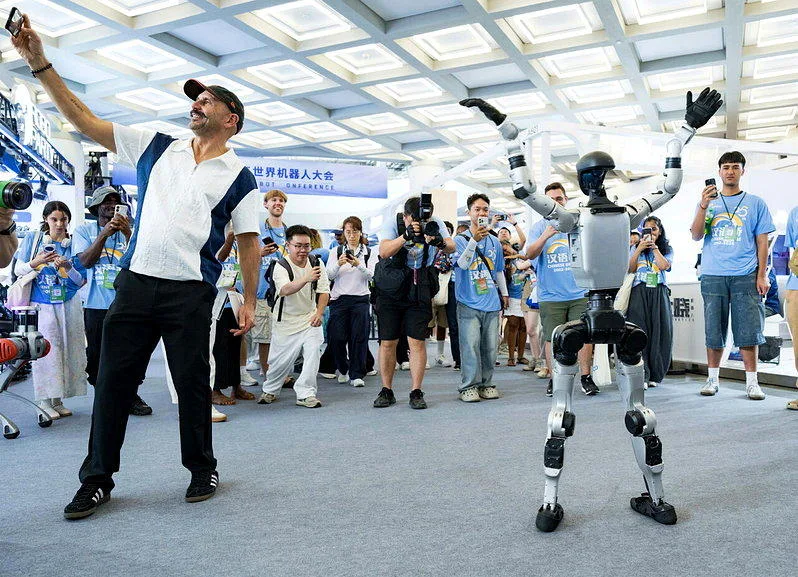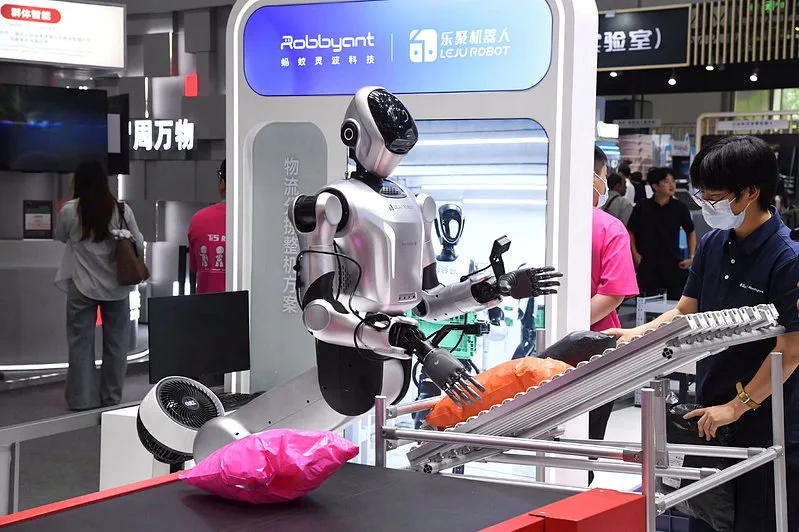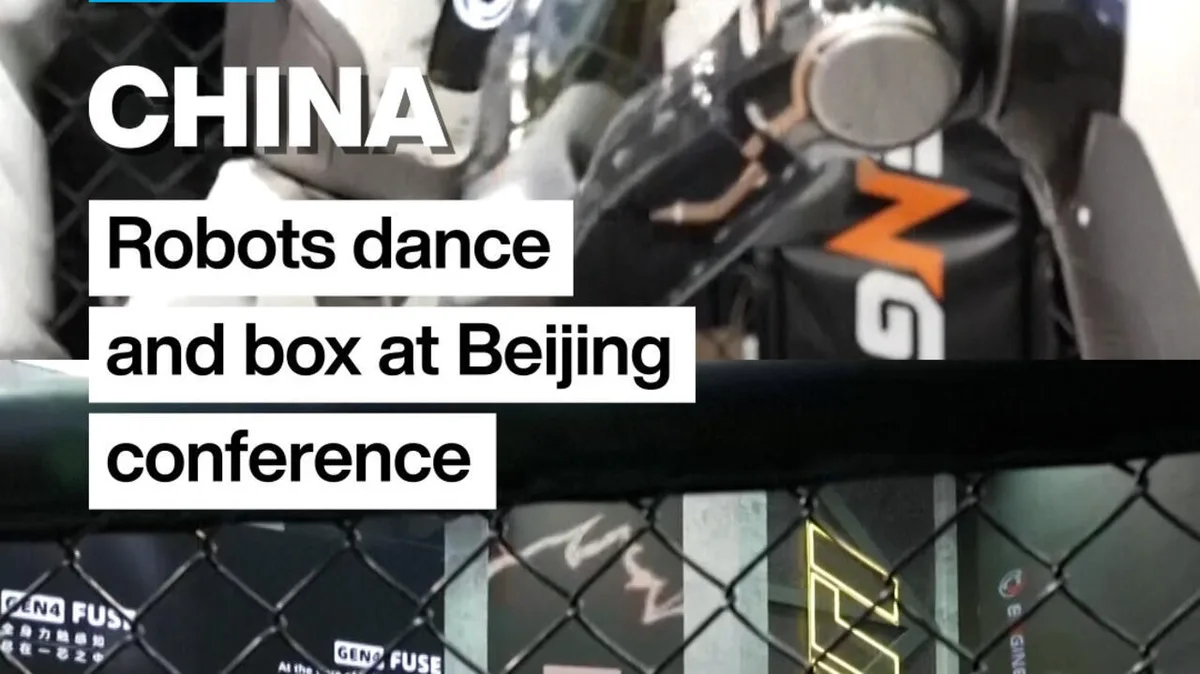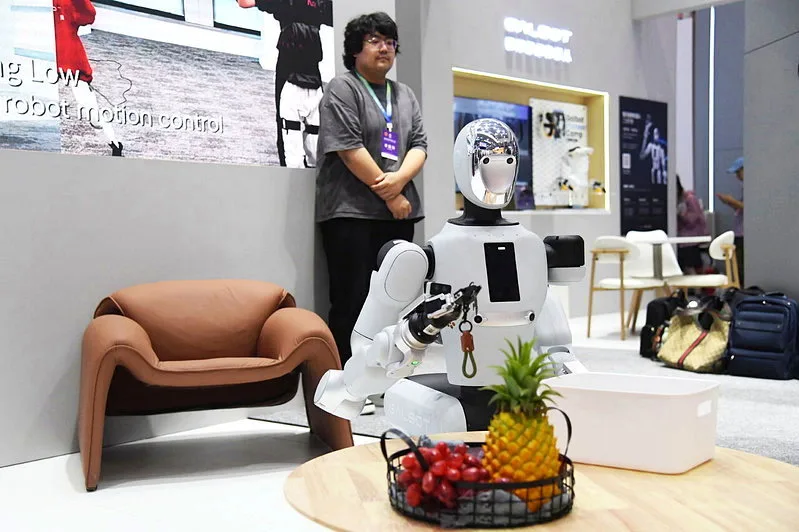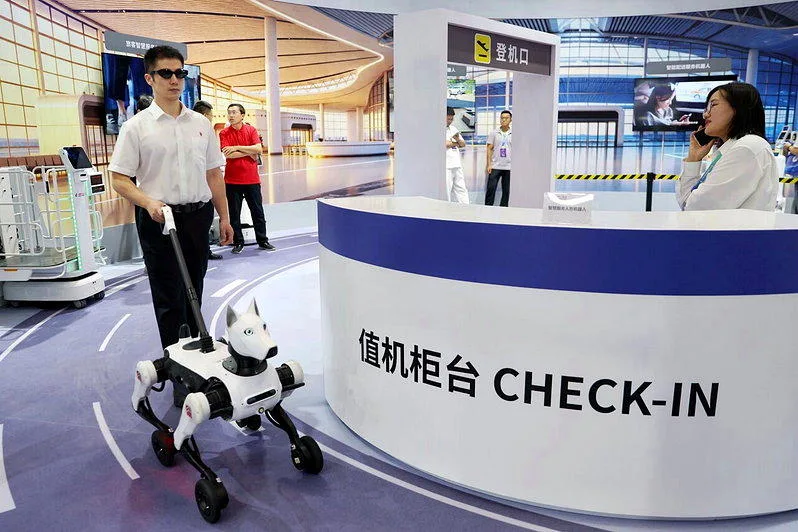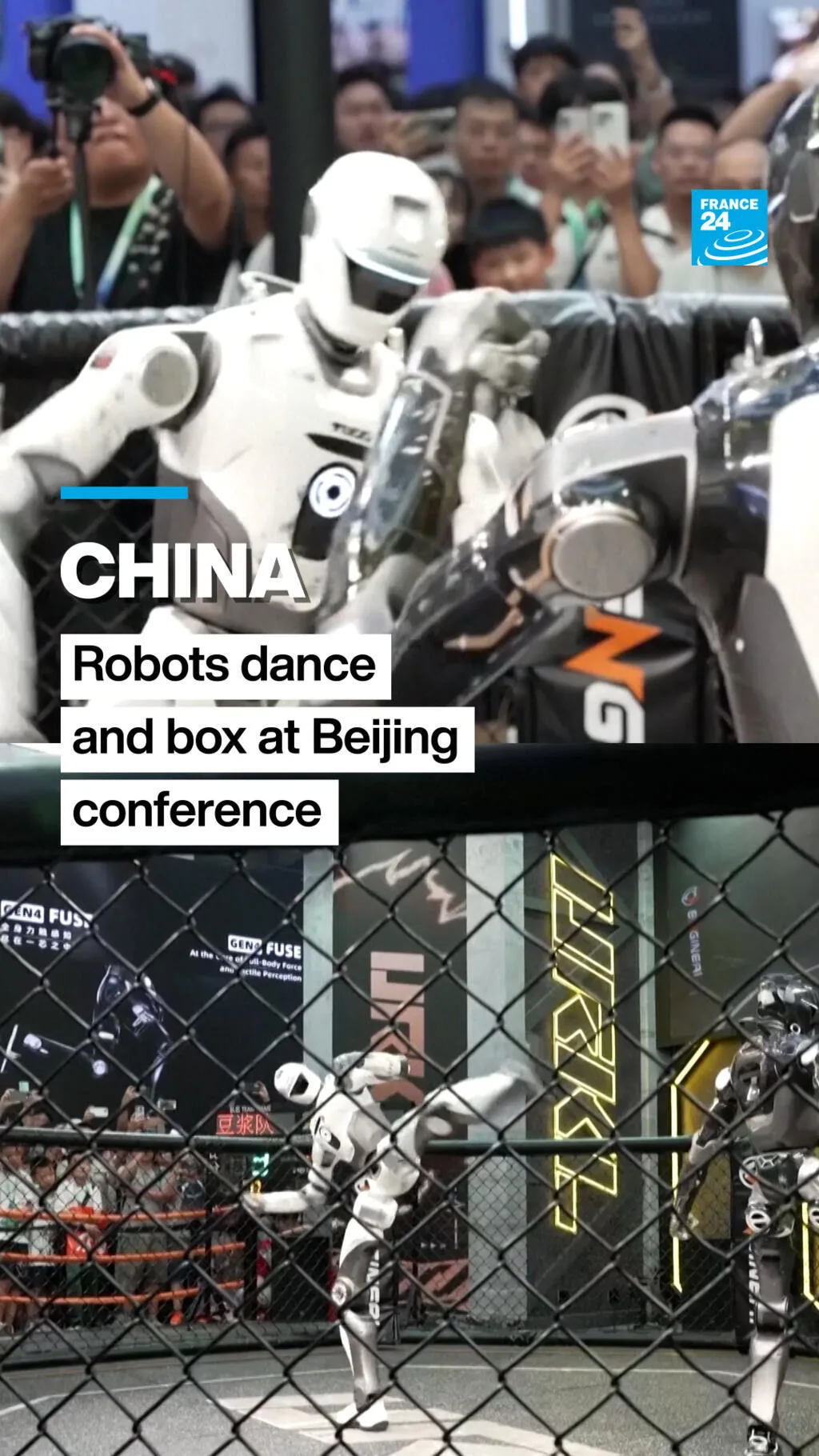
The 2026 World Robot Conference opened August 19 at the Beijing Yichuang International Convention and Exhibition Center. The event drew participation from over 300 companies exhibiting more than 2,000 robotic products, marking a record scale for the event [1, 2, 3]. The conference theme was “Human-Machine Symbiosis, Integration of Production and Demand,” with humanoid robots emerging as the fastest growing and most emphasized segment [1, 2, 3, 4].
Leading Chinese robotics firms demonstrated a wide range of advanced robots. Unitree Technology presented its H2 and R1 humanoid robots, while Galaxy General showcased its Galbot G1 dual-arm wheeled robot. Shenzhen Zhongqing Robotics unveiled models PM01 and T800 [1, 2]. A notable highlight was Unitree’s U1 series, which has received over 13,000 orders and plans to start deliveries in September 2026 [1, 2, 5]. Zhiyuan Technology has produced more than 15,000 embodied intelligent robots, reflecting strong domestic capabilities [1, 2, 5].
Robots catered to various real-world applications were demonstrated, including household cleaning, cat litter management, cooking with automatic seasoning and cleaning, and continuous delivery robots capable of handling up to 200 orders daily [1, 2]. Military and specialized robots occupied a dedicated zone featuring 49 central enterprises. These robots, such as the humanoid "Fuxi" and quadruped "Tianlang" series, operate in high-risk environments [1, 2].
China now produces over 300 robot products, which make up more than half of the global market [1, 2, 5]. The industry manufactured over 40,000 units in the first half of 2026 and is expected to exceed 100,000 units by year-end [1, 2, 5]. According to Counterpoint Research, global humanoid robot shipments surpassed 22,000 units in the first half of 2026, nearly tripling shipments from 2025. Top five global manufacturers are all Chinese, accounting for 86% of global shipments [5].
China’s domestic humanoid robot shipments exceeded 40,000 units in the first half of 2026, capturing 97% of the global market. Leading manufacturers include Zhiyuan, with about 9,700 units (43% global share), and Unitree, with more than 7,000 units (31% global share). Galaxy General, UBTech, and Leju complete the top five [5, 6, 7, 8].
Application areas with the largest shipments globally are entertainment, education, and data collection, accounting for over 60%. Guidance and retail make up 19%, smart manufacturing 13%, and logistics 5% of shipments [5]. TrendForce estimates China’s humanoid robot market at 15 billion RMB for 2026, forecasting more than 60% growth in 2027 driven by expanded production and new applications [9, 10, 6, 11, 7, 8].
The conference introduced a “Procurement Day” focused on commercial negotiations and industry matchmaking, signaling a shift toward market demand and business orders [9, 10, 6, 11, 7, 8]. On the same day, Unitree Technology went public on the Shanghai Sci-Tech Innovation Board, with its share price surging over 600% and a market valuation briefly surpassing 444.9 billion RMB (approximately 2.1 trillion NTD) [10, 6, 11, 7, 8]. Despite strong revenue growth—16.99 billion RMB in 2025 with 36-45% growth expected in H1 2026—Unitree faces profit decline challenges, with net profits estimated to drop 6-22% in 2026 and a 52.55% year-on-year first-quarter profit fall [10, 6, 11, 7, 8].
Industry challenges have shifted from competing on robot performance to focusing on commercial deployment, repeat orders, cost control, and profitability [10, 6, 11, 7, 8]. Among the showcased robots was "Jingling Xuan" by Shou Xing Technology, a humanoid with high appearance value, dressed in traditional Chinese qipao. It can chat and sing, with realistic skin lasting seven years though with immobile hand joints. Visitors praised its lifelike face and friendly design [3, 4], with Unitree’s founder noting their robots have “more bionic, natural, and friendly” expressions that even have temperature when touched [3].
China’s humanoid robot market and production continue to expand rapidly. Unitree plans to start delivering the highly ordered U1 series units in September 2026 [1, 2, 5].