Alibaba Group announced on August 23, 2026, a proposed share placement in Hong Kong to raise HK$80 billion (about US$10.2 billion) from investors outside the U.S. to fund its artificial intelligence efforts [1, 2, 3, 4, 5, 6]. The company plans to issue 710 million new ordinary shares at HK$112.70 each, representing an 8.4% discount to the closing price before the announcement [7, 5, 8]. This offering is the largest-ever primary follow-on share placement by a Hong Kong-listed company and the third-largest globally for 2026, behind Alphabet and Intel [1, 7, 4, 5].
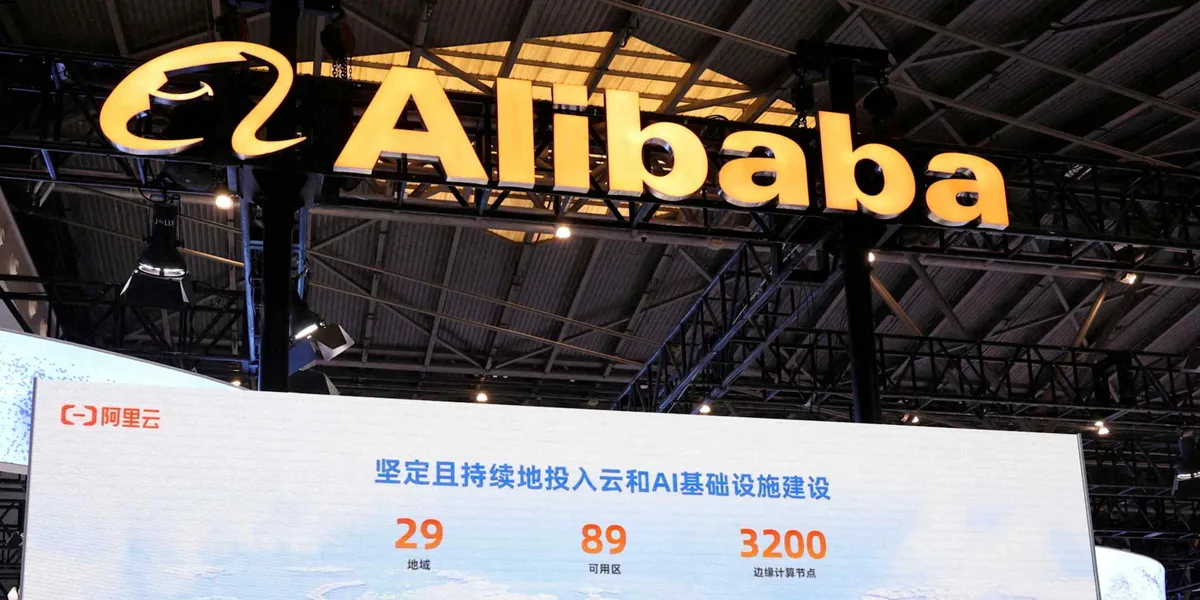
Alibaba said 100% of the net proceeds will be used to invest in its full-stack AI capabilities, including expanding and enhancing AI infrastructure [1, 2, 4, 5, 6]. The firm recently announced plans to invest 380 billion yuan (about S$71.7 billion) over three years in AI infrastructure. It has opened a third data center in South Korea and expanded its global availability zones to 104 across 30 regions [7]. CEO Eddie Wu said demand for AI is surging and the payback period on AI investments is expected to shorten to 2.5 years from an earlier estimate of 3 years [7, 5]. He added, "In order to be able to capture that future growth, we first need to make these capex investments to build out the necessary compute capacity" [5].
Alibaba’s Hong Kong-listed shares fell by up to 10% on August 24, 2026, following the placement announcement [9, 7, 8]. Chairman Joseph Tsai and CEO Eddie Wu bought about HK$120 million (US$15.3 million) of the company’s shares on the same day after the share price slump [10]. Charles Wang, chairman of Shenzhen Dragon Pacific Capital Management, said the share placement is "negative news in the short-term... as the share placement dilutes shareholders’ interest," though he noted the investments are "beneficial in the long term" [7]. Senior equity advisor Vey-Sern Ling said Alibaba "clearly is well positioned to chase that growth" despite expected near-term profit weakness and higher capital expenditures [8].
Alibaba reported a 75% year-on-year decline in net profit for the second quarter of 2026, mainly due to increased AI-related spending and capital expenditures. Revenue in the quarter grew 9% to 269 billion yuan, partly driven by AI demand [7, 5, 8, 6]. The company described the share placement as "being undertaken to extend the Company’s global AI leadership" [6].
Following strong investor demand, Alibaba increased the size of the share placement after it was oversubscribed, with participation from sovereign wealth funds [5].