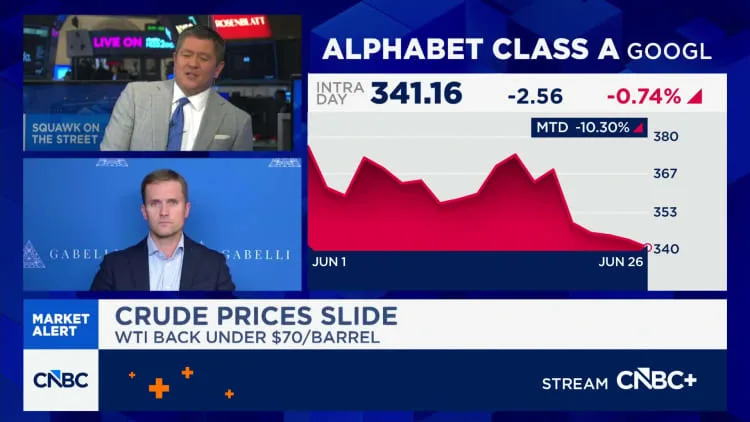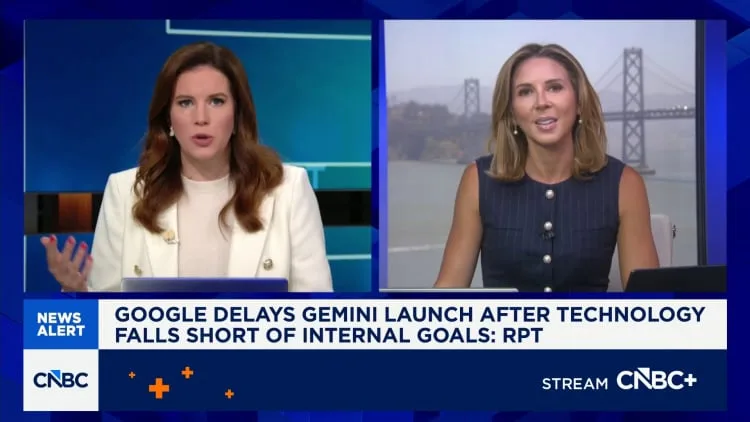
Alphabet delayed the release of its flagship AI model Gemini 3.5 Pro by several months beyond the original schedule, citing coding performance shortfalls after updating training data [1, 2, 3, 4, 5, 6, 7, 8, 9]. The delay caused the company's shares to fall about 4% on July 16, 2026 [1, 3, 4, 5, 6, 7, 8].
Gemini 3.5 Pro was first announced internally at Google's annual developer conference in May 2026, with a planned broader rollout in June that did not take place due to the delay [1, 5, 6, 8]. Google is currently testing Gemini 3.5 Pro alongside an upgraded Flash model and other AI systems with partners including the U.S. government [1, 3, 5, 6, 7, 8]. An Alphabet spokesperson said, "We're currently testing 3.5 Pro, an upgraded Flash model, and other models with partners, and we're productively engaged with the U.S. government" [1].
The main technical reason for the delay is that Gemini 3.5 Pro's coding generation performance fell short of internal expectations after recent training data updates [1, 2, 3, 4, 5, 6, 7, 8]. Dissatisfaction has grown among Google engineers, AI researchers, and management over the delay and concerns about losing competitive ground to rivals such as OpenAI, Anthropic, and Meta [2, 3, 5, 6, 7]. Competitors have launched models with superior coding abilities, including OpenAI's GPT-5.6 Sol, which reportedly improved token efficiency on coding tasks by 54%, and Meta's Muse Spark 1.1, described as their "strongest model for agentic and coding work yet" by Meta AI chief Alexandr Wang [1, 6, 7, 8].
Google's complex organizational structure, with AI efforts spread across Google Cloud, DeepMind, and Android teams, has contributed to slower AI product rollouts [3, 5, 6, 7]. Some Google AI researchers frustrated by internal delays have left for other AI labs such as Anthropic [5, 6]. About 75% of Google's internal code is now AI-generated but undergoes employee review before production use, part of the effort under DeepMind-led Google Antigravity project to unify AI coding tools [5].
The broader market also reacted negatively to the delay on July 16, with sharp declines in AI and semiconductor stocks [4, 5, 6, 7, 8, 9]. An Alphabet spokesperson said the company continues "shipping quickly across a wide range of models while keeping them highly cost-effective for customers" [3].
Google remains engaged in extensive testing of Gemini 3.5 Pro and related AI models with partners and the U.S. government as it works to resolve the coding performance issues [1, 3, 5, 6, 7].