Amazon Web Services (AWS) announced plans to deploy an additional 2 million Nvidia GPUs across its global infrastructure during 2027-2028, building on a prior commitment to add over 1 million GPUs starting in 2026 for a total exceeding 3 million by 2028 [1, 2, 3, 4, 5, 6, 7, 8]. The GPU models include Nvidia Blackwell Ultra, Rubin, and Rubin Ultra variants.
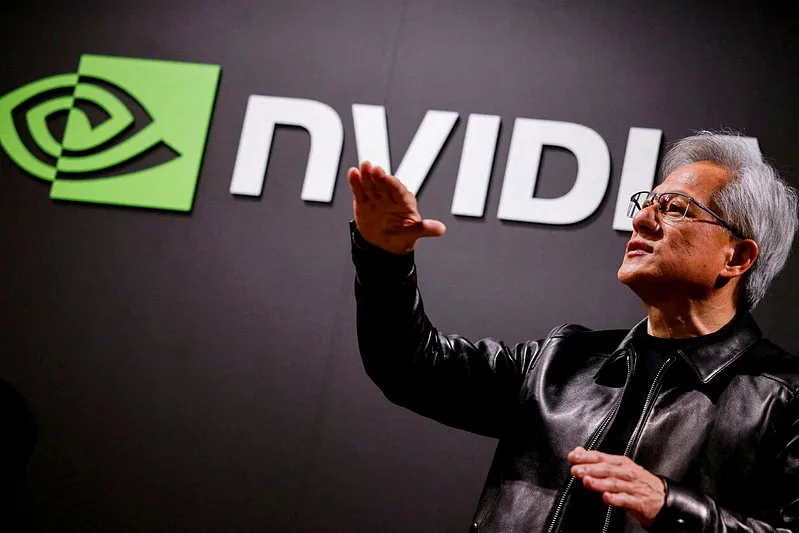
AWS and Nvidia are also expanding their partnership beyond GPUs to integrate Nvidia’s Vera CPUs into AWS infrastructure. This aims to support agentic AI workloads requiring both CPU and accelerated computing power [1, 2, 3, 4, 5, 6, 7, 8]. Nvidia CEO Jensen Huang said, “We are now extending cooperation across GPU, CPU, networking, open models, and software with unprecedented speed and scale only AWS and Nvidia can achieve, driving agentic and physical AI adoption” [5].
To improve performance and energy efficiency, AWS and Nvidia are jointly working with Annapurna Labs and memory suppliers to deploy Nvidia’s new custom high-bandwidth memory (NVHBM). This technology promises up to 30% better memory bandwidth, 15% lower power consumption, and frees 25% of chip die area compared to standard HBM4E memory, benefiting both AWS’s Trainium chips and Nvidia GPUs [1, 2, 4, 6, 7, 8].
The expanded GPU deployment includes the construction of a secure AI factory serving the US government. AWS will deploy 100,000 GPUs dedicated to federal and national security workloads, reinforcing the company’s role in critical infrastructure [3, 4, 5, 8]. AWS CEO Matt Garman said, “Customers want freedom to choose the best tools for their AI workloads and trust all technologies to work seamlessly together. That drives our deep collaboration with Nvidia to make AWS the best platform for running Nvidia AI technologies” [3].
Nvidia’s collaboration with AWS dates back 16 years, originally scaling Nvidia GPU computing in the cloud. Now, the partnership adopts a full-stack approach, including custom CPU, GPU, networking, and open AI models to meet escalating AI demand [1, 2, 3, 6, 7]. Nvidia disclosed plans to sell hundreds of millions of Vera CPUs to AWS in coming years, signaling Nvidia’s expansion beyond GPUs into AI data center CPUs [4].
The expanded AWS deployment signals strong ongoing capital expenditure in AI infrastructure by major cloud providers, defying concerns about a slowdown in tech spending [1, 2, 3, 5, 8]. Taiwan’s semiconductor and server ecosystem companies such as TSMC, ASE, Foxconn, and others are expected to reap significant benefits from the expanded Nvidia-AWS orders and AI data center build-out [7, 8, 9].
On August 26, Nvidia announced it expects about 70% revenue growth by its 2028 fiscal year, reflecting the booming AI market [9]. Meanwhile, AWS’s GPU expansion will continue through 2027 and 2028 with the deployment of new CPUs and NVHBM memory technology. The US government AI factory is also expected to be operational within that period [1, 2, 3, 4, 5, 6, 7, 8].