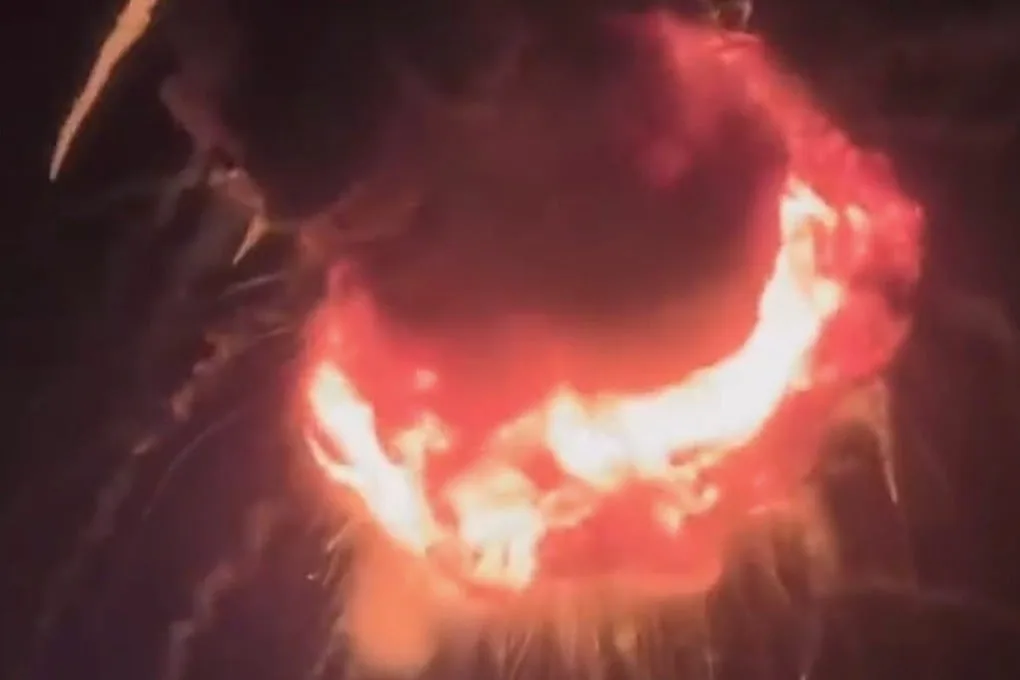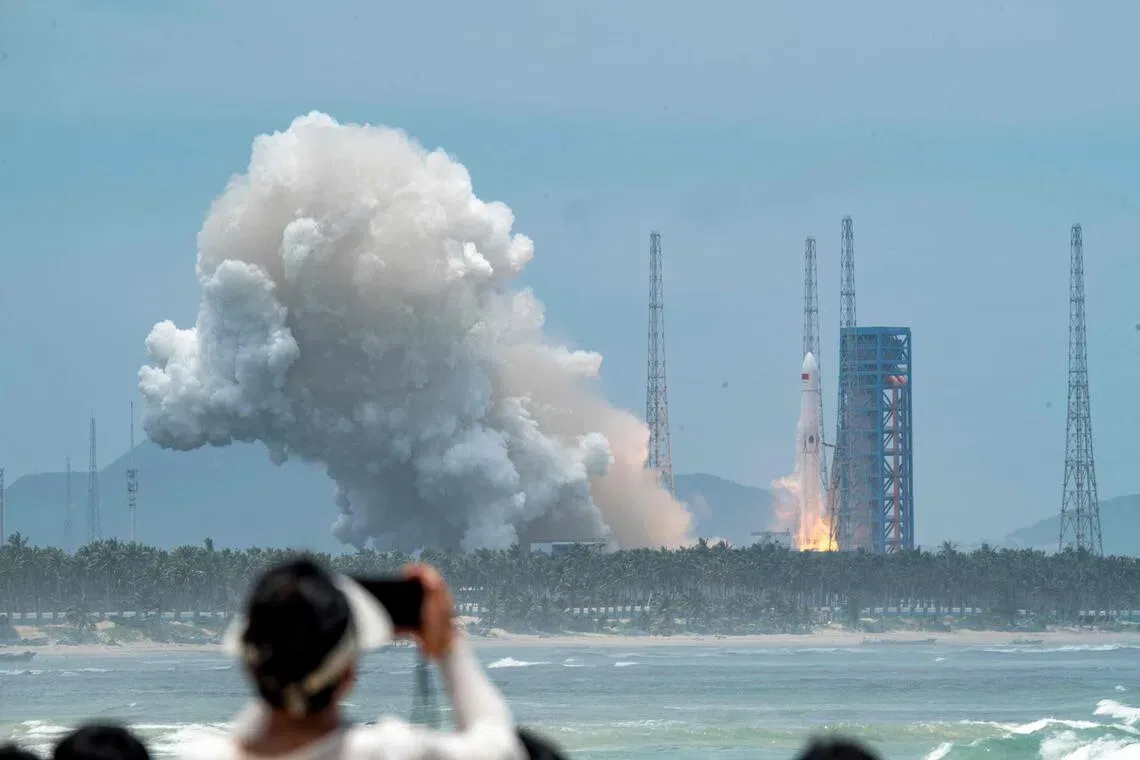
China's Long March 7A rocket exploded less than 90 seconds after launching ChinaSat-4B, destroying the satellite before it reached orbit. The launch took place on August 10, 2026, at about 8:00 p.m. Beijing time from the Wenchang Space Launch Site in Hainan province [1, 2, 3, 4].
The rocket was completely destroyed at a relatively low altitude and velocity, according to Jonathan McDowell, an astronomer at the Center for Astrophysics. He said video footage confirmed that neither the satellite nor debris managed to reach orbit [2].
ChinaSat-4B is a high-orbit communications satellite, part of the ChinaSat-4 series following ChinaSat-4A launched in 2024 [2, 3]. The Long March 7A is a medium-lift rocket specifically designed for deploying payloads to higher orbits [2, 3].
This was the first failure of the Long March 7A rocket since its maiden flight in March 2020. After returning to service in 2021, the rocket had completed over a dozen successful launches before this incident [2, 3].
State news agency Xinhua confirmed the failed launch and said the rocket "experienced an anomaly during flight and the launch mission failed. The specific cause is under further investigation" [1]. Authorities have not yet determined the cause of the explosion [1, 2, 3].
The failure has raised concerns about other upcoming Chinese launches that may share components or procedures from the Wenchang site. If similarities are found, reviews of those missions could follow [2, 3].
Preparations for China’s Chang’e-7 lunar mission, planned for the second half of 2026 and also launching from Wenchang, could be affected by the failure [2, 3].
The rocket measured some 60 meters in height [1]. The next steps include the ongoing investigation by Chinese authorities and monitoring of upcoming launches for any potential impact from this incident.