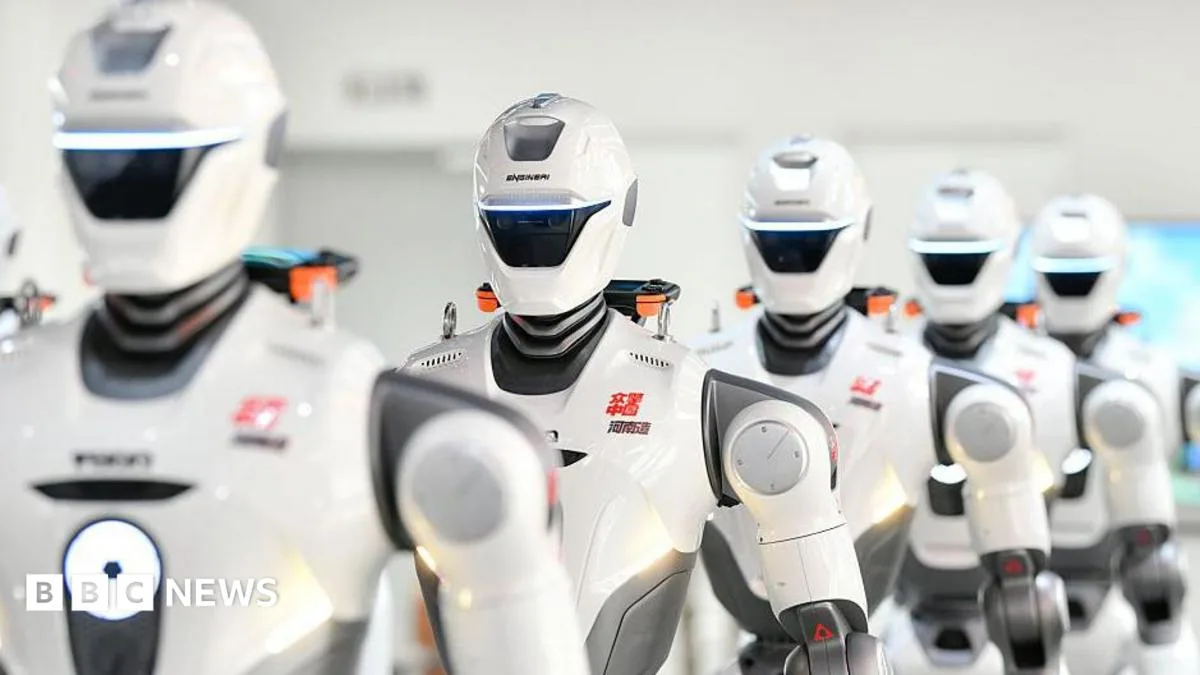
The US Federal Communications Commission (FCC) announced on July 28, 2026, an immediate ban on imports of new advanced robotic devices including humanoid and quadruped robots, as well as connected power inverters used in data centers and renewable energy grids [1, 2, 3, 4, 5]. The ban targets devices not yet introduced to the US market and does not affect previously authorized or purchased products [1, 6, 2, 3, 5].
The FCC said foreign-made robots could be exploited to surveil Americans, bolster foreign intelligence, or be remotely commandeered by malicious actors [1, 6, 3, 5]. Connected power inverters were banned due to their remote connectivity features, which pose risks of cyberattacks on US critical infrastructure [1, 6, 3, 5].
While the FCC did not explicitly name China in its announcement, experts and observers widely attribute the ban to Chinese products given China's dominance—producing 80% of global humanoid robots and 91% of power inverters in 2025 [1, 7, 5]. Chinese companies like UBTech and Unitree rapidly expanded shipments of AI-enabled robots, including about 5,500 humanoid units in 2025, mainly to US research and education markets [1, 5, 8]. Sungrow, a major Chinese inverter maker, derives 60% of its revenue from outside China and saw stock declines after the ban [7, 5].
The ban stems from findings by a White House interagency task force warning of unacceptable national security risks from foreign-built robots and connected power devices [3, 9, 5, 8]. An unnamed Trump administration official said, "The President has made clear that the United States must have independent and secure supply chains for critical and emerging technologies like robotic devices and power inverters" [3]. FCC chairman Brendan Carr added, "The FCC will continue to do our part to secure America's critical supply chains" [1].
China sharply criticized the ban. Foreign Ministry spokesperson Mao Ning said, "China has always firmly opposed the US overstretching the concept of national security to suppress Chinese companies. Protectionism cannot enhance US competitiveness. It will only harm the interests of American companies and consumers" [9]. The Ministry of Commerce warned, "If the US insists on unilateral actions, China will firmly retaliate to safeguard its legitimate rights and interests" [10].
Council on Foreign Relations expert Chris McGuire said the ban is "a very, very big deal" that could transform the US robotics industry by encouraging reshoring supply chains [7]. The ban took effect immediately upon publication on July 28, 2026, restricting entry of new imported Chinese humanoid robots and connected power inverters into the US market [2, 5, 8].