US companies have significantly increased their use of Chinese AI models due to much lower costs, reaching a weekly peak of 46% of tokens consumed since February 2026, according to OpenRouter data [1, 2, 3]. Models like DeepSeek V4 Flash cost as little as $0.18 per million tokens compared to $25 for US models like Anthropic Claude Opus 4.7—less than 1% of the price [1, 2, 3]. This price gap has driven startups such as Lindy to switch from US models to Chinese alternatives, reporting multimillion-dollar savings since June 2026 [1, 2, 3].
Major US AI providers have also launched more cost-efficient models this year, including OpenAI’s GPT-5.6, SpaceXAI’s Grok 4.5, and Meta’s Muse Spark 1.1, emphasizing reduced token costs to compete with lower-priced Chinese models [4, 5, 6]. Meta CEO Mark Zuckerberg said, "The pricing from some of the other labs is very extreme and has very high margins. We think that there’s a real ability to be able to offer frontier or very high-level intelligence at a much more affordable cost" [4].
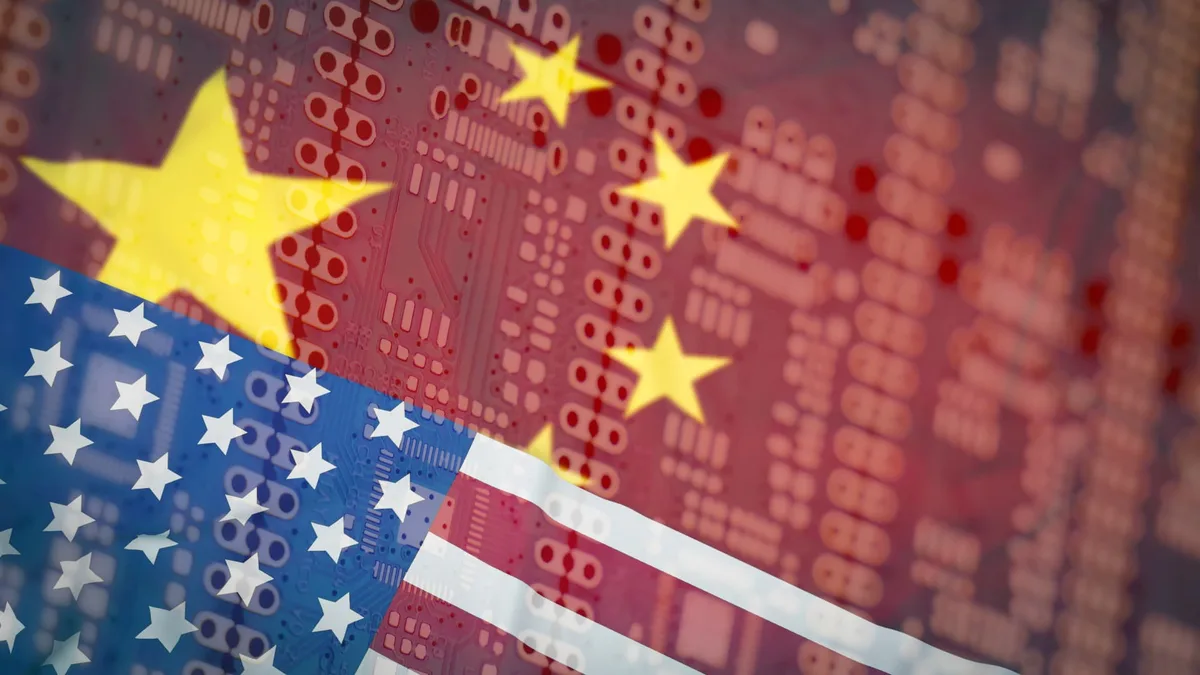
Despite the growing adoption, US lawmakers have expressed security concerns. Since April 2026, the House Homeland Security Committee and the Select Committee on China have jointly investigated US companies’ use of Chinese AI [7, 8, 9, 3]. Committee Chairman Andrew Garbarino warned, "The Chinese Communist Party is no longer just nipping at our heels in artificial intelligence; it is racing to close the gap in some of the exact capabilities that will shape the future of cybersecurity," and said reports that Chinese open-weight models match leading US AI in cybersecurity tasks are "highly alarming" [7].
Some US agencies have banned the use of specific Chinese AI models such as DeepSeek, but no broad prohibition exists for companies overall [7, 8, 9, 3]. Lawmakers are split: some push for federal procurement bans on Chinese AI, while others caution that such bans could face constitutional challenges and harm startups, advocating for less sweeping measures instead [8, 3]. Brookings researcher Kyle Chan said, "Government may consider federal procurement bans to restrict use of Chinese AI models, but open source nature and First Amendment issues make outright bans difficult" [3].
Chinese AI models generally lag behind top US models in performance but offer "good enough" capability at far lower prices, appealing to cost-conscious US firms [10, 11, 8, 12]. US export controls and political uncertainty have also increased interest in stable, open-source Chinese AI deployments on US servers [1, 2, 3]. Meanwhile, the Chinese government is reviewing tighter domestic controls on AI models like DeepSeek and Moonshot AI to protect technology and prevent misuse, including possible restrictions on foreign user access starting mid-2026 [10, 11, 12]. A Chinese government spokesperson rejected US allegations, saying China's AI sector is "built on self-reliance and strength in science and technology" [7].
OpenAI's recent release of GPT-5.6, Meta's Muse Spark 1.1, and SpaceXAI's Grok 4.5 in July 2026 all emphasize cost efficiency in response to the competitive landscape [4, 5, 6]. The US congressional investigation into Chinese AI model use by American firms remains active, focusing on security risks and future policy options [7, 8, 9, 3].