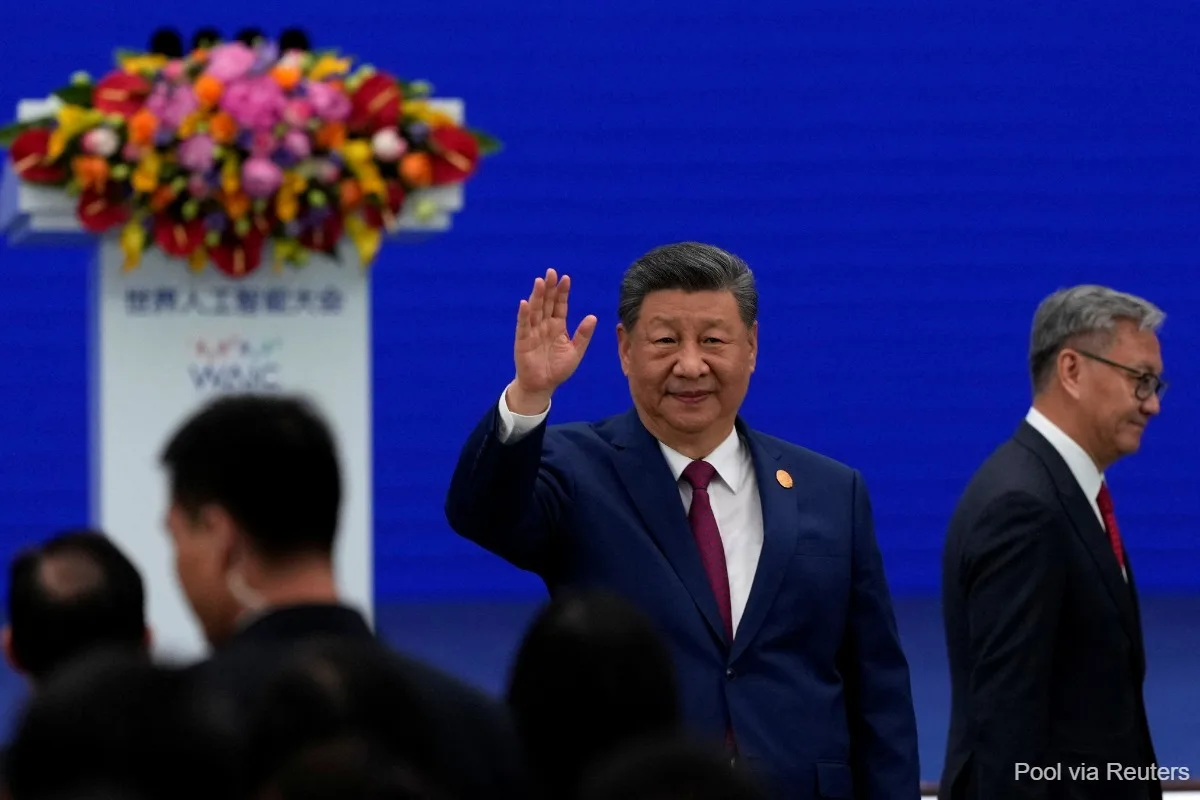
Chinese President Xi Jinping delivered his first speech at the World Artificial Intelligence Conference (WAIC) in Shanghai on July 17, 2026, urging global cooperation on AI development and governance [1, 2, 3]. Xi called AI a "symphony of international cooperation," stating that AI development "should not be a solo performance by a single country" but a shared endeavor among nations [1, 4]. He emphasized opposing attempts to overstretch national security concepts in AI or place one country’s security above others’, implicitly criticizing US tech restrictions [1, 3].
The day before Xi’s speech, on July 16, 29 countries including Russia, Pakistan, Indonesia, Brazil, and Kazakhstan signed an agreement to establish the World Artificial Intelligence Cooperation Organisation in Shanghai [1, 3, 4]. China plans to provide 5,000 AI training and seminar opportunities to developing countries over the next five years and build AI cooperation centers with ASEAN, BRICS, and other regional groups [4, 5]. Xi highlighted the need to help Global South countries bridge AI and digital divides and prevent "new historical injustice" in AI development [4].
China’s AI strategy promotes an open source and public good approach, aiming for low-cost, high-performance, and controllable AI models, contrasting with Western closed models [2, 6]. However, there are debates within China over mixing open and closed source AI models [6]. Scholars say China is positioning AI within multilateral diplomacy to boost its technological leadership and global influence [5].
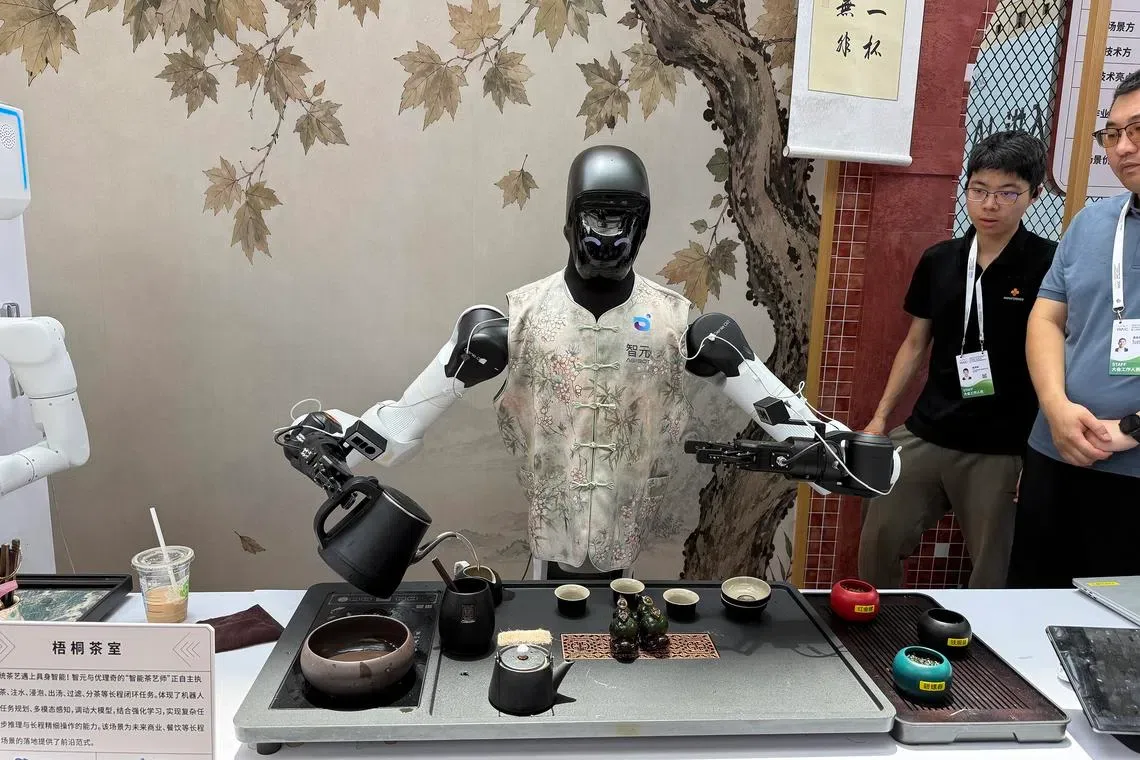
At WAIC, over 1,000 Chinese tech firms, officials, and experts showcased about 3,000 AI-related products covering semiconductors to autonomous software [1, 7, 8]. Amid the innovation, concerns remain over political censorship and government regulations limiting Chinese AI models, with studies showing higher refusal rates on sensitive topics compared to Western models [6].
During the conference, Xi met with UN Secretary-General António Guterres, underscoring China’s support for multilateralism and the UN’s role in emerging tech governance [9]. Xi stressed a "people-centric" AI approach with laws, monitoring, early warnings, and emergency systems to keep AI under human control [1, 7].
The WAIC conference and establishment of the new cooperation organization mark concrete steps toward multilateral AI governance frameworks anchored by China and its partners. The AI cooperation group is expected to further develop programs and collaboration mechanisms in the coming months [1, 4].