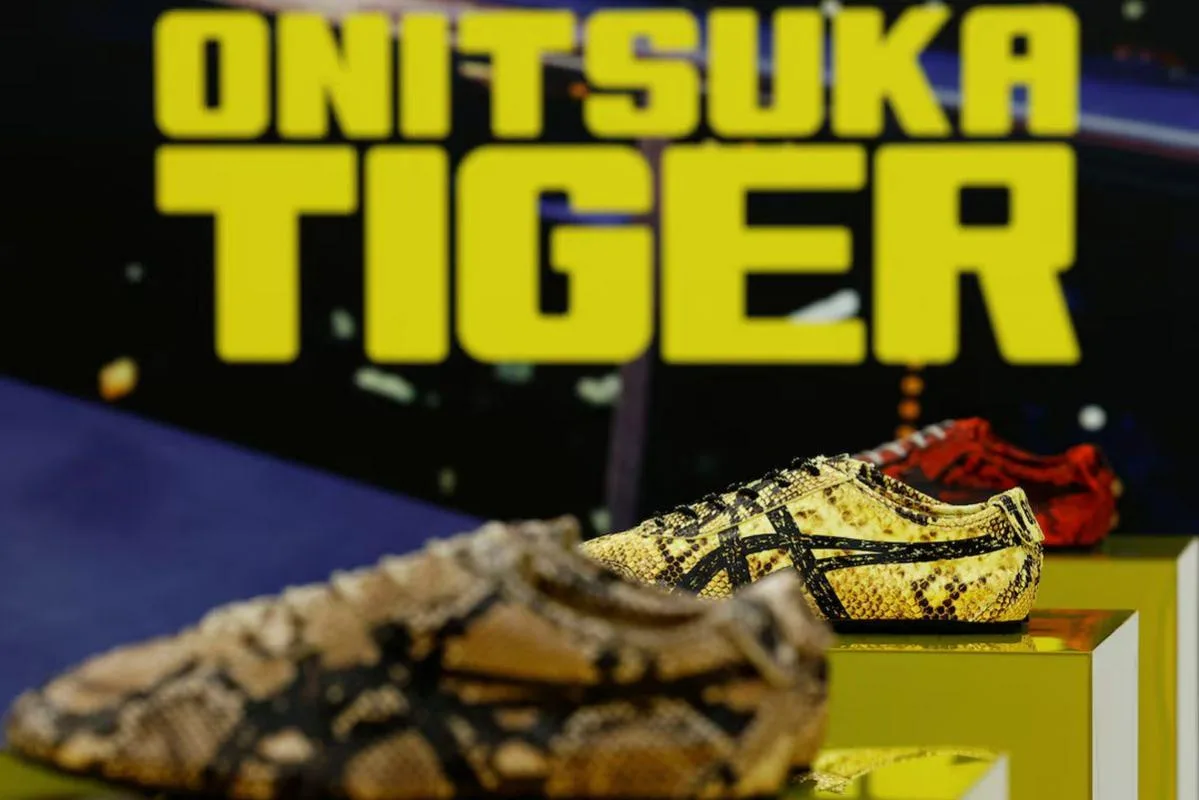
Asics' Onitsuka Tiger brand is expanding its global footprint by opening flagship stores in Europe and the United States to tap growing demand for retro fashion sneakers [1, 2]. Onitsuka Tiger's signature yellow and black sneakers gained fame in the 2003 film Kill Bill and for a version linked to Bruce Lee [1, 2].
Sales for Onitsuka Tiger rose about one third in the first quarter of 2026, with profit margins around 40%—the highest among Asics businesses [1, 2]. Analyst Mark Chadwick noted that such margins are "at a level far closer to luxury brands than traditional sporting goods companies" but warned they may be hard to maintain. Becoming a standalone business and pursuing a capital-intensive strategy of flagship store openings could threaten its "exceptional margins" due to increased costs and execution risks, Chadwick said [2].
Onitsuka Tiger traces back to 1949 when founder Kihachiro Onitsuka started a shoe business in Kobe, Japan. The Mexico line with iconic stripes debuted in 1966. In the 1960s, Nike co-founder Phil Knight began importing their running shoes into the U.S. market [1, 2]. The brand was relaunched in Europe in 2002 as a fashion label to revive its classic designs [1, 2].
Consumer tastes have shifted from maximalist shoes with heavy cushioning to minimalist styles, benefiting Onitsuka Tiger’s appeal, Ivan Su explained [2]. The brand also named K-pop idol Momo from the group TWICE as its ambassador in 2022 to boost its youth appeal [1, 2].
On June 10, Asics announced it would transfer Onitsuka Tiger to OT Group, a wholly owned subsidiary, without plans for a public listing [2]. Asics itself has a market value around US$20 billion [1, 2].
The brand’s next steps include managing global flagship store openings while sustaining profitability amid a more capital-heavy operating structure.