Hyundai Motor's South Korean union launched its first full-day strike in a decade on August 21, halting production nationwide due to stalled wage talks and demands for a 50% bonus increase and a two-year extension of the retirement age [1, 2, 3, 4, 5, 6, 7, 8].
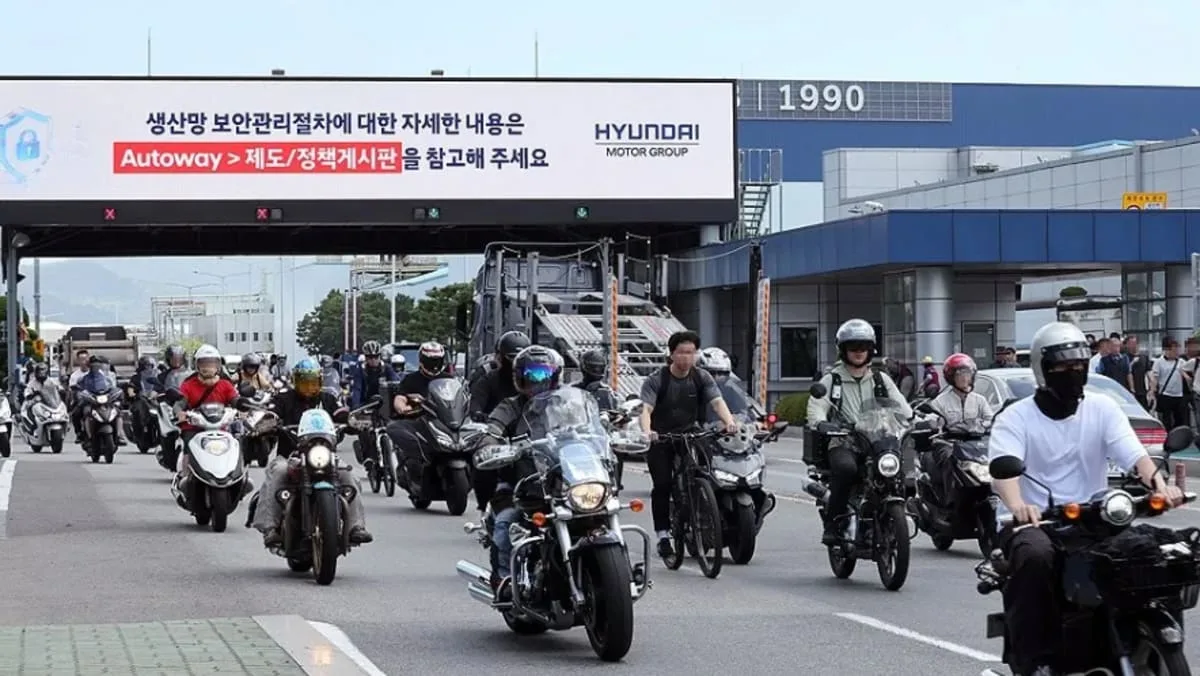
About 39,000 to 40,000 union members from Hyundai and its affiliates participated in the strike across multiple plants including Ulsan, Jeonju, and Asan [1, 2, 3, 4, 5, 6, 7, 8]. Workers on the morning shift starting at 6:45 a.m. and afternoon shift at 3:30 p.m. did not show up, bringing production to a halt nationwide [3, 4, 5, 6, 7].
Partial strikes since July had already caused production losses exceeding 55,000 vehicles and sales losses over 2.3 trillion won (about US$1.67 billion) [1, 2, 8].
The union demands include increasing bonuses from 750% to 800% of monthly base salary and protecting jobs from the impact of automation and artificial intelligence [1, 8]. The union argued Hyundai Motor’s strong financial position supports their demands. It cited the company's 101 trillion won in retained earnings and 13 trillion won annual net profit from the previous year, saying a 50% bonus increase and retirement age extension are reasonable [3, 4, 5, 6, 7]. As the union put it, "The company's retained earnings stood at 101 trillion won last year, so a 50-per cent increase in bonuses is not an excessive demand" and "There is no reason Hyundai Motor, which generates 13 trillion won in annual net profit, cannot bear this (the additional cost of extending the retirement age)" [4].
Hyundai Motor rejected the demands, stating, "We cannot accept the union's demands without a solid legal or rational basis" [3].
Approximately 1,200 to 1,300 Hyundai union members joined a rally in Seoul, with around 3,000 total attendees including other union members [1].
The strike underscores growing unrest amid concerns over job security in South Korea's auto sector as companies plan to expand automation. Hyundai announced plans to deploy humanoid robots at its Georgia, US plant starting in 2028 and to expand robot usage to other plants [1].
The union’s full-day strike follows a three-day partial strike in July. Negotiations remain ongoing with no date set yet for a resolution or further action [1, 3, 4, 7].