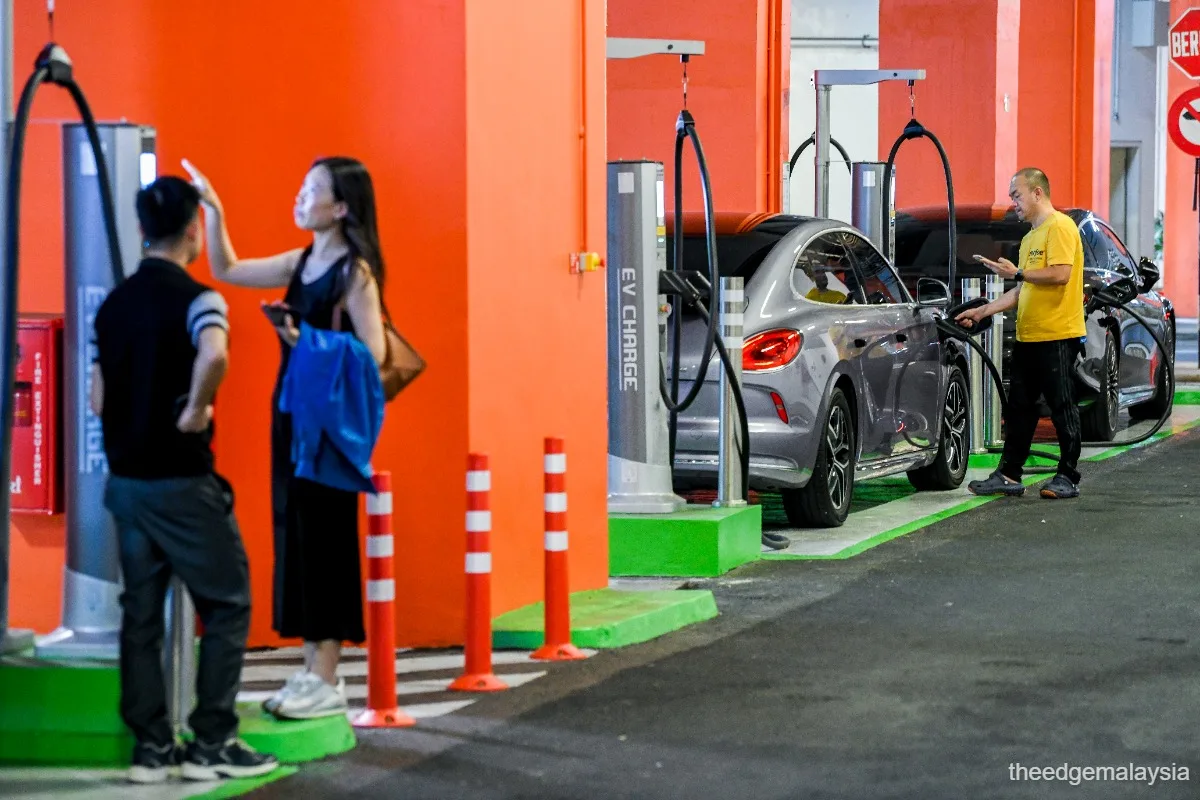
Malaysia had 5,624 electric vehicle (EV) charging points at the end of 2025, falling short of its initial 10,000 target for that year [1]. The government now aims to expand the network to 30,000 charging points by 2030 [1, 2, 3].
Deputy Minister Sim Tze Tzin said the government is refining EV policies and incentives to encourage operators to accelerate installation [1, 4, 5, 2, 3]. Current incentives include 100% tax exemption under the Green Investment Tax Allowance for charging point operators, and full income tax exemption until 2032 for EV charging equipment manufacturers [1]. EVs also enjoy a relatively low 10% excise duty compared to internal combustion engine vehicles [4, 5, 2].
To support fast charging, Malaysia is collaborating with Tenaga Nasional Berhad (TNB) to build more power substations supplying sufficient direct current power, Deputy Minister Sim explained in Dewan Rakyat on July 8. "Without substations, no one can build charging points because the electricity supply would be insufficient. This requires incentives, policy, and we need to create the entire ecosystem," he said [1]. He added, "We need substations to supply sufficient direct current power, so we must construct more of these substations" [2].
There is recognition that EV charging points are insufficient nationwide, especially outside major cities, with calls to expand infrastructure to smaller towns such as Sungai Petani and Alor Setar [5, 2, 3]. Suggestions include mandating EV charging infrastructure in new residential developments like apartments and condominiums [4, 5, 2, 3].
The government acknowledges the EV ecosystem in Malaysia is still new and evolving, requiring continuous policy refinement and ecosystem development [1, 5, 3]. Deputy Minister Sim noted, "All of this requires incentives and the development of a complete ecosystem. It will take some time, but the government has taken note of the proposals put forward and will work to improve the availability of EV charging facilities." [3]
The next milestone for Malaysia’s EV charging network is the 2030 target to reach 30,000 charging points nationwide [1, 2, 3].