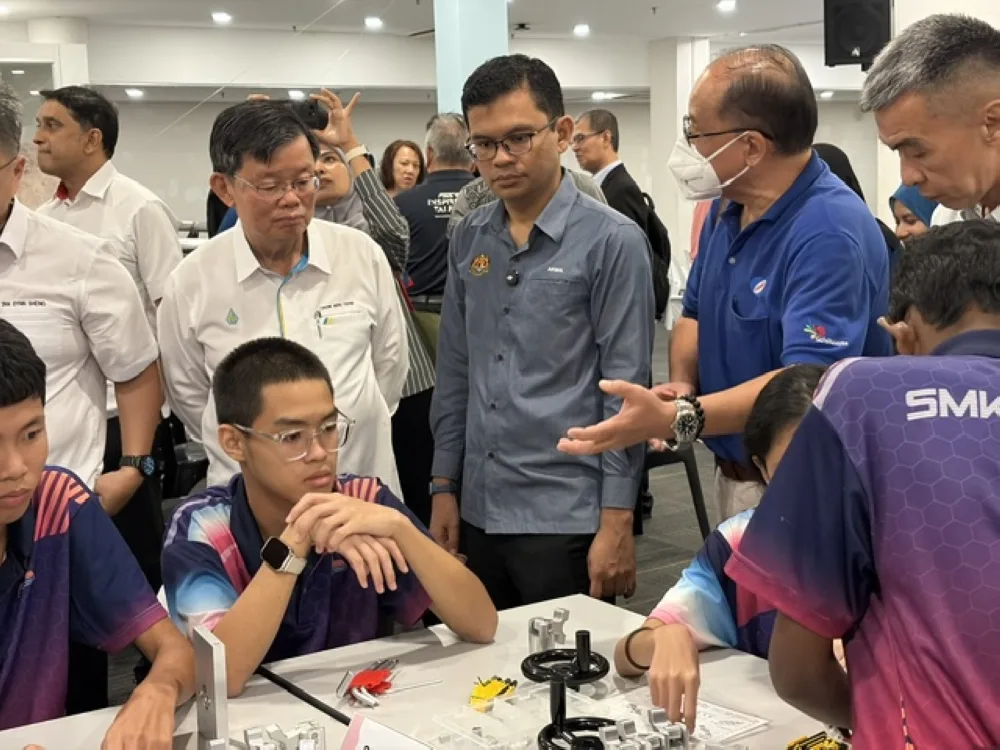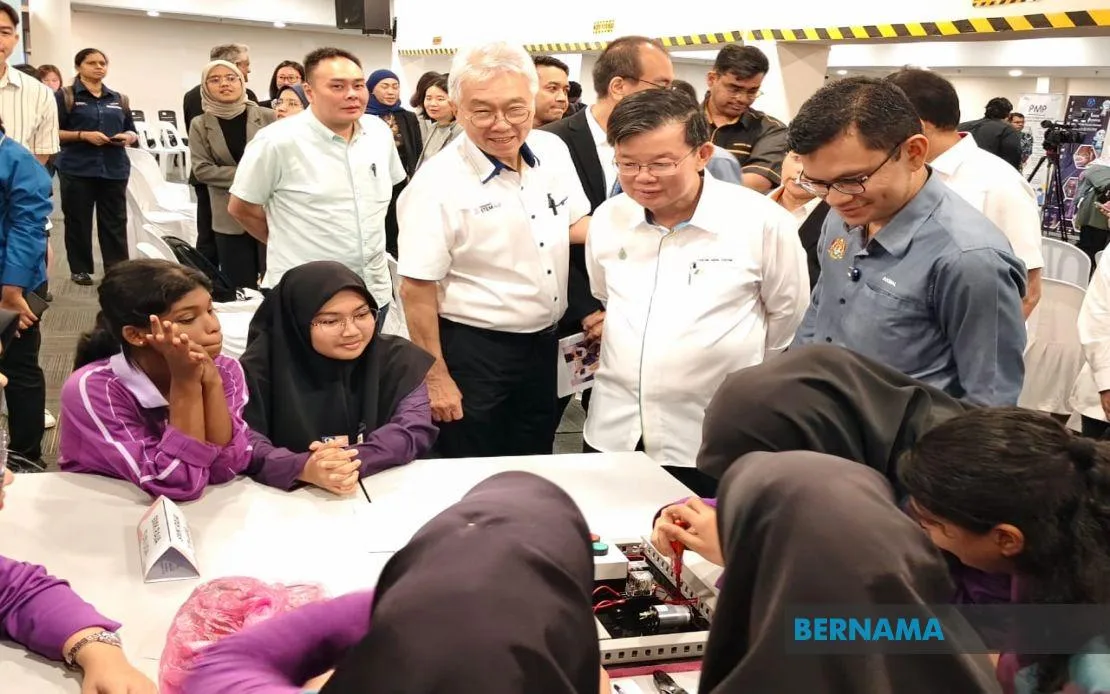
The Malaysian Economy Ministry has allocated between RM12 million and RM12.3 million over four years to implement the STEM Talent Pilot Project in Penang, targeting the training of 100,000 students by 2030 [1, 2, 3]. Economy Minister Akmal Nasrullah Mohd Nasir launched the project on August 10 at Tech Dome Penang [1, 2, 3].
The pilot is a collaboration between the Economy Ministry, the Penang state government, and industry partners under Penang's STEM Talent Blueprint introduced in 2024 by Chief Minister Chow Kon Yeow [1, 2, 3]. Nasir said the project is "important to expand opportunities, develop practical, hands-on skills in emerging technologies such as artificial intelligence (AI), data science, robotics and digital technology, while opening pathways to high-value careers" [1, 3].
The project includes four main programmes catering to different school levels: Ignite: STEM Education and Ignite: MathQuest for primary students; Embed: AI on Wheels for lower secondary students; and Embed: Technical Skill Learning for upper secondary students [1, 2, 3]. These programmes were created by Tech Dome Penang, Penang Math Platform, Penang Science Cluster, and Penang STEM [2, 3].
A key focus is on students from rural and low-income backgrounds to broaden access and build practical skills in emerging tech sectors like AI and robotics [1, 3]. Penang was selected due to its robust industrial base in electrical and electronics, semiconductors, and high-tech manufacturing [1, 2, 3]. Penang’s manufacturing sector grew about 10% in 2025, with a GDP of RM130.3 billion, supporting nearly half of Malaysia’s total exports as of June 2026 [2, 3].
The pilot project aims to develop a replicable talent model for other Malaysian states to support the country’s economic growth [1, 2, 3]. Malaysia requires close to 60,000 highly skilled engineers to help upgrade the semiconductor industry from back-end to front-end activities [1, 3].
The Economy Ministry encourages industry involvement through mentorship, industrial visits, and project-based learning to enhance student exposure and engagement [1, 3]. Nasir expressed appreciation for Penang’s efforts: "We agreed to collaborate with the target of training 100,000 students by 2030 as part of our efforts to promote interest in STEM" [2].
The project runs through 2030, with programmes set to roll out progressively to reach the training target by then.