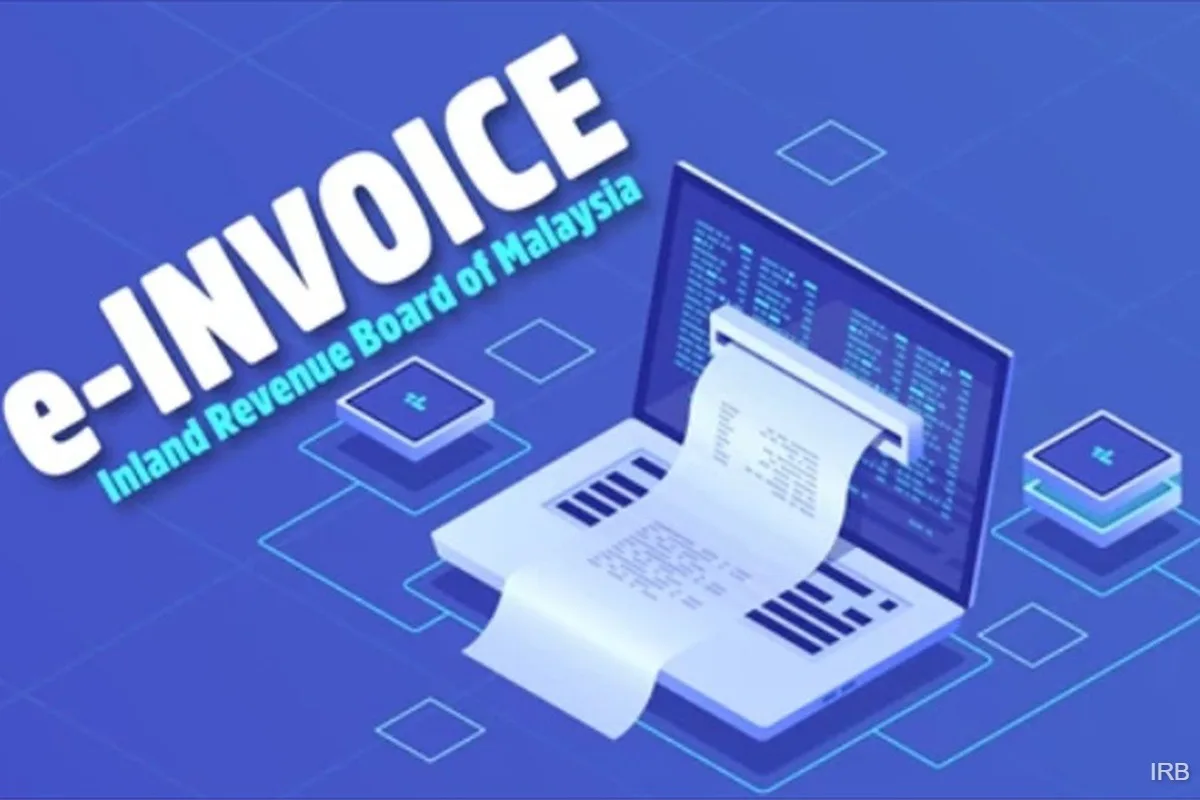
The Malaysian government announced an e-Invoice Special Voluntary Disclosure programme allowing businesses to amend submitted e-invoices without penalties until December 31, 2027. Prime Minister Datuk Seri Anwar Ibrahim said, "During this period, any updates, reviews and corrections submitted voluntarily will not be subject to penalties by the Inland Revenue Board" [1, 2, 3].
The mandatory e-invoice rollout began on August 1, 2024, initially covering larger businesses. The scope expanded from January 1, 2026, to include businesses with annual revenue up to RM5 million, while those below RM1 million remain exempt [1, 4]. More than 50,000 taxpayers have paid additional taxes totaling RM1 billion through the e-invoice implementation [1, 4].
To support costs linked to e-invoice adoption, the government agreed to accelerate tax incentives, allowing full capital allowance claims within one year on qualifying expenses such as computer equipment and software development [1, 2, 4, 3]. Businesses, especially micro, small and medium enterprises (MSMEs), raised concerns about compliance costs and financing difficulties. The government has provided over RM15 billion in loan facilities and guarantees amid the West Asia crisis to address working capital needs [1, 4, 3].
Prime Minister Anwar also noted that about 200,000 Malaysians have been approved for an additional 100 litres of Budi Madani diesel allocation as of early July 2026 [4, 3]. SME digitalisation grants up to RM5,000 are available to encourage adoption of digital and AI tools by small MSMEs [4, 3].
On July 8, the Cabinet agreed to review the e-invoice system and the mandatory 2% Employees Provident Fund (EPF) contribution for foreign workers following concerns about burdens on traders and employers. The 2% EPF contribution, in effect since October 2025, applies to all non-Malaysian workers except domestic helpers [5, 6]. Deputy Prime Minister Datuk Seri Ahmad Zahid Hamidi explained, "The review was undertaken as the implementation of the e-invoice faced numerous problems and difficulties, causing stress and additional burden on businesses across the country." He added, "At BN’s request, the Cabinet also decided to review and examine the two per cent contribution. The two per cent contribution amount is said to burden the business community." [6]
The next concrete step is the ongoing review of the e-invoice system and foreign worker EPF contributions initiated by the Cabinet in July 2026 [5, 6].