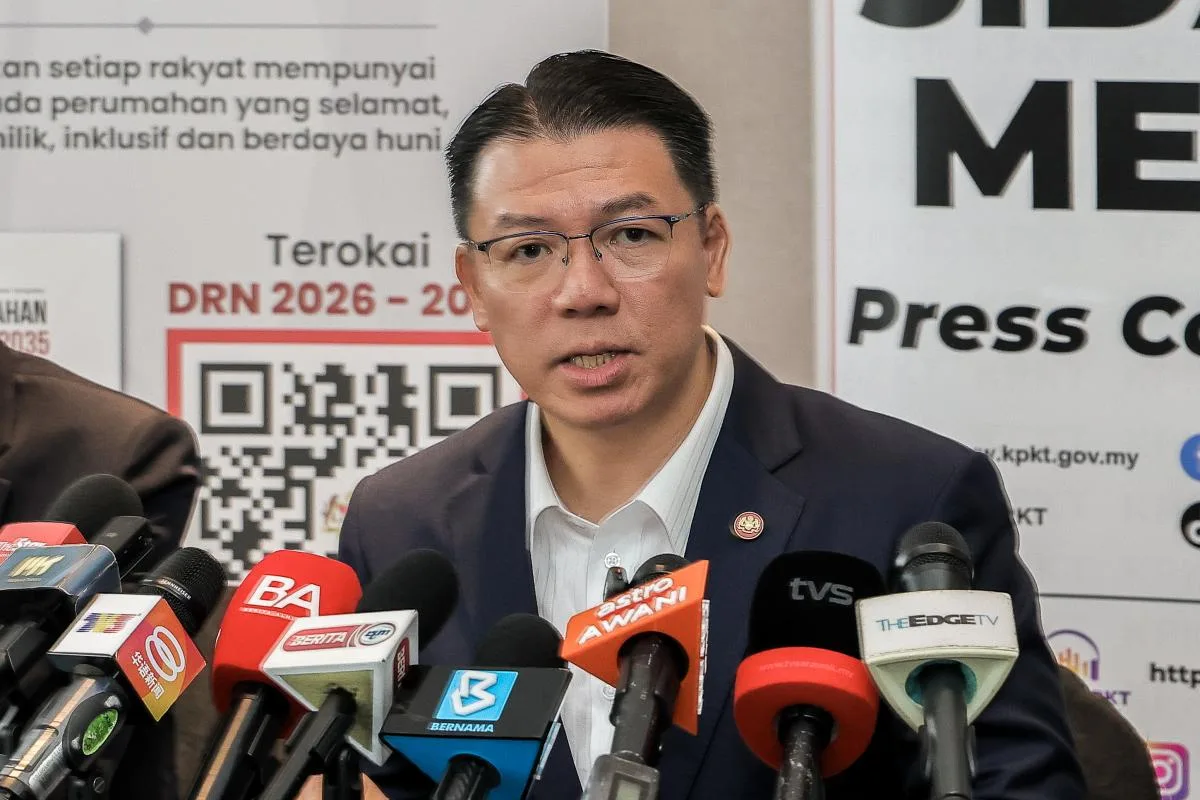
Malaysia's Ministry of Housing and Local Government (KPKT) announced the National Housing Policy 2026–2035 today, unveiling key legal reforms and a shift to data-driven housing planning [1, 2, 3]. Housing Minister Nga Kor Ming said the policy focuses on addressing mismatches between housing supply and local demand, aiming to deliver one million affordable homes by 2035 [2, 4, 5, 6].
The ministry will draft and amend four key laws. Three new laws—the Property Development Act, the Building Managers Act, and the Rent Tenancy Act—will be introduced alongside amendments to the Strata Management Act 2013 [1, 3, 7, 8].
The Property Development Act, now in its final review stage, will expand coverage beyond residential projects to include commercial properties such as shop lots, broadening regulatory scope [1, 3, 7, 8]. The Building Managers Act will regulate nearly 3 million strata units across more than 27,000 schemes including condominiums and SOHO units, aiming to ensure proper maintenance and safety [1, 3, 7, 8]. Meanwhile, the Rent Tenancy Act aims to balance tenant and owner rights, offering protections against arbitrary rent hikes and unfair repossession, with Nga stressing "Tenants have rights, and owners have rights. This Act will protect everyone's interests" [1, 3, 7, 8].
The policy shifts housing development to a data-driven approach using big data analytics and AI to better align supply with demand. A new nationwide big data system will launch by 2027, integrating data from federal, state, and local levels to guide developers on housing types, prices, and locations [1, 5, 7, 6, 8]. Nga explained, "Imagine having an affordable home in Kuala Krai, Kelantan, at the same price as one in Bukit Bintang, Kuala Lumpur. That is not scientific. That is why we need big data analytics" [6].
Malaysia's urbanisation rate stands at 78% in 2026 and is projected to reach 85% by 2040, increasing housing demand in urban centres [1, 2, 3, 7, 8]. The policy also includes reforms such as the Build-Then-Sell system, Option to Purchase (OTP) mechanisms, and Sunset Clauses to protect buyers and prevent project abandonment [4, 9]. The OTP mechanism, expected by the end of this year, allows developers or buyers to withdraw from unviable projects early. The government aims for zero abandoned housing projects by 2030, with Nga noting, "Prevention is better than cure. That is why I have implemented housing reforms so that our mission is to ensure that by 2030, Malaysia has no more abandoned projects" [9].
The policy, themed "Humanising Housing," shifts focus from housing as a commodity to a fundamental right, emphasizing safe, inclusive, and sustainable communities. It includes ten strategic pillars, six focus areas, 17 strategies, and 59 action plans targeting affordability, sustainability, urbanisation challenges, and climate impact [2, 4, 6]. It also supports transit-oriented development to boost public transport access and help Malaysia reach carbon neutrality by 2050 [4].
The Ministry will work closely with state governments, local authorities, and industry to ensure effective implementation [4]. The big data analytics system rollout in 2027 will be a key tool to reduce housing supply mismatches and property overhangs by tailoring affordability to local incomes and prices [5, 6].