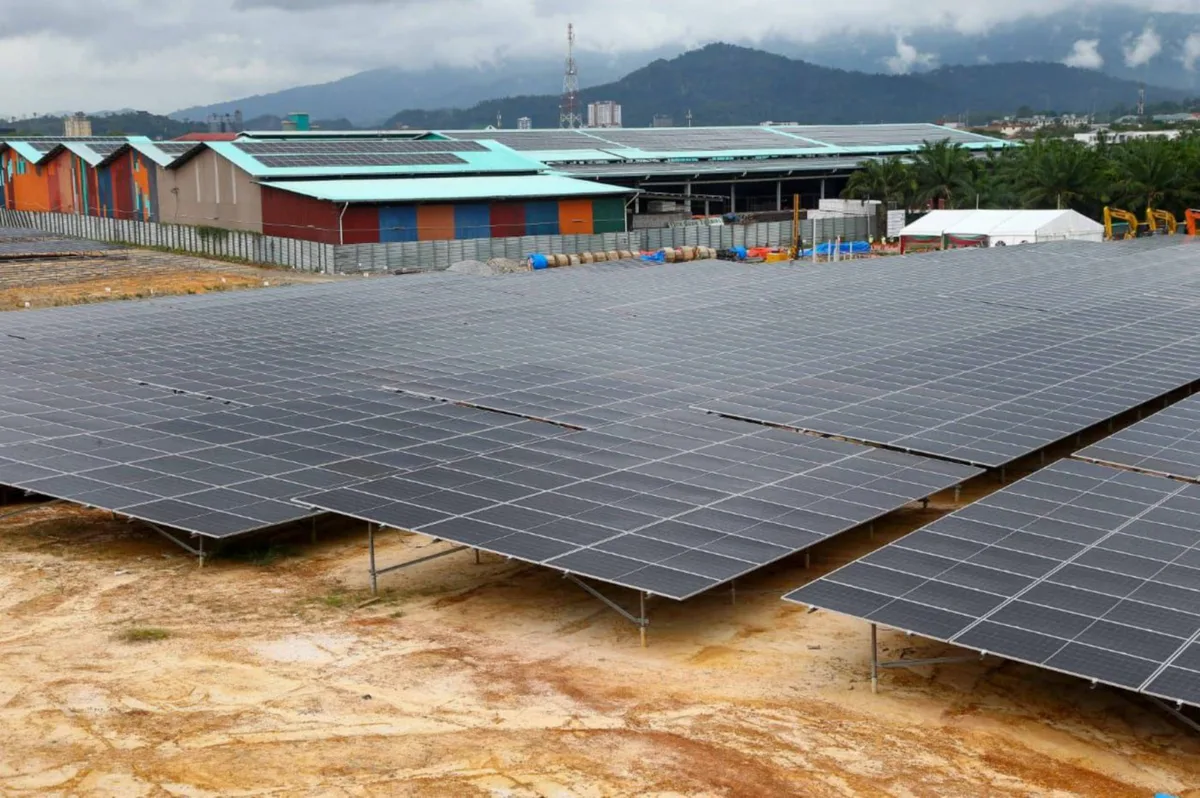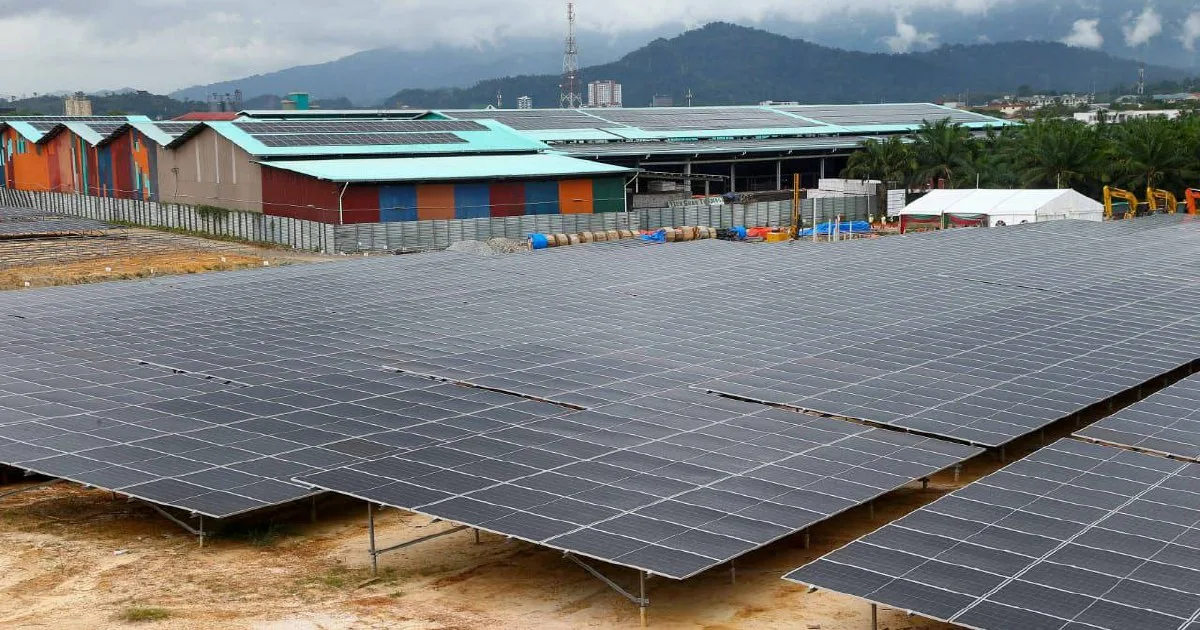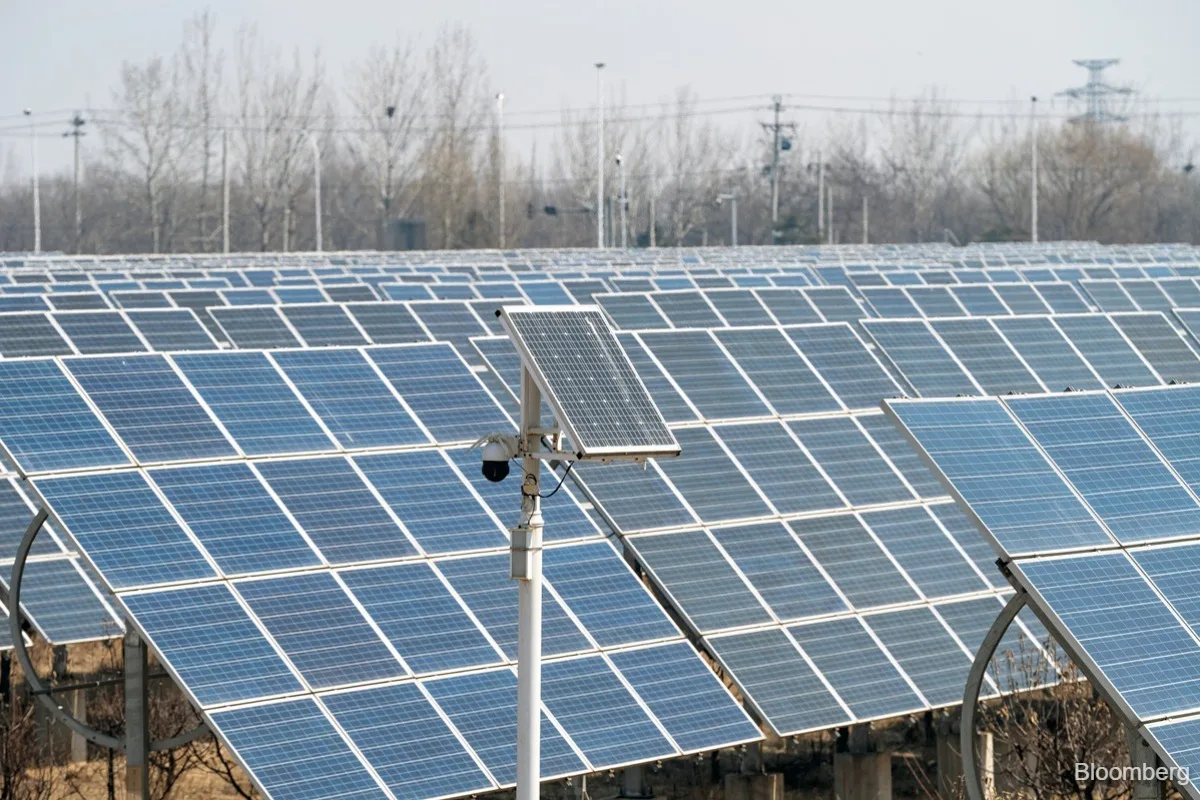
Malaysia’s government has launched the Large Scale Solar 6 (LSS6) programme to boost renewable energy capacity and speed up the country's energy transition [1, 2, 3]. The programme aims for full commercial operation by December 31, 2029, with projects commissioned in phases [1, 2, 3].
LSS6 targets a total solar capacity quota of 2,500 MW and 1,250 MW of Battery Energy Storage System (BESS) capacity. It also reserves 150 MW of solar capacity for Bumiputera companies [1, 2, 3]. The programme is divided into three packages: Package 1 offers an open tender for 2,200 MW solar and 1,100 MW BESS; Package 2 is an open tender for Bumiputera companies with 300 MW solar and 150 MW BESS; Package 3 covers smaller Bumiputera solar projects of 150 MW without BESS [1, 2, 3].
New policies prioritize bidders using domestically manufactured photovoltaic solar modules and require integrating BESS to improve grid stability, flexibility and reliability [1, 2, 3]. Project development will concentrate on strategic areas with strong electricity demand growth, especially in southern Peninsular Malaysia [1, 2, 3].
The government expects the programme to attract private investment of between RM13 billion and RM15 billion. It is also projected to create 15,000 to 20,000 jobs during development and construction phases [1, 2, 3]. Annually, LSS6 may reduce CO2 emissions by approximately 2.6 million tonnes [1, 2, 3].
Package 3’s Bumiputera solar projects will be smaller scale, at 10 to 30 MW each, with nearly RM500 million investment opportunity dedicated to Bumiputera companies [3].
Request for Proposal (RFP) documents for Package 1 and 2 were available from July 27 to August 7, 2026. Package 3’s RFP will be open from August 17 to 28, 2026 [3].
On June 3, 2026, Deputy Prime Minister and Energy Minister Datuk Seri Fadillah said the government expects to launch LSS6 this year and all new solar projects must include BESS, stating, “政府预计于今年启动LSS6,届时所有新的太阳能计划都必须配备BESS,以加强国家电网的稳定性,从而加快向可再生能源的转型。” [3].