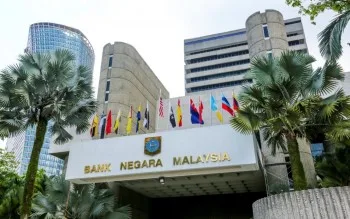
Malaysia's international reserve assets amounted to US$132.07 billion as of the end of July 2026, according to official data [1, 2]. Other foreign currency assets stood at US$368.5 million in the same period [1, 2].
The country faces predetermined short-term outflows totaling US$8.31 billion over the next 12 months. These include scheduled repayments of government external borrowings and maturing foreign currency Bank Negara Interbank Bills [1, 2]. Net short forward positions, a reflection of ringgit liquidity management in the money market, amounted to US$26.9 billion as of end-July 2026 [1, 2]. Projected foreign currency inflows, primarily from interest income and project loans, are expected to total US$3.06 billion over the coming year [1, 2].
Government guarantees of foreign currency debt due within one year amount to US$1.23 billion, noted as the only contingent short-term net drain on foreign currency assets [1, 2]. Malaysia holds no foreign currency loans with embedded options, no undrawn unconditional credit lines with other central banks or financial institutions, and has no engagements in foreign currency options on the ringgit [1, 2].
Trade figures for July 2026 show Malaysia's exports increased by RM53.5 billion or 38.2% compared to July 2025 [3]. Penang led exports, contributing nearly half (48.4%) of the total export value [3]. Johor and Selangor added RM10.1 billion and RM3.7 billion respectively to the export gains [3].
Malaysia's total trade for July 2026 amounted to RM364.7 billion, comprising RM193.6 billion in exports and RM171.1 billion in imports [3]. Imports rose by RM45.7 billion or 36.4% compared to July 2025 [3]. Penang also recorded the highest increase in imports (RM21.8 billion), followed by Selangor (RM7.8 billion) and both Kuala Lumpur and Johor (RM7.3 billion each) [3].