Malaysia will continue to lead ASEAN's green jobs agenda through 2026-2030, building on initiatives established under the ASEAN Labour Ministers' Work Programme for the same period [1, 2]. The country developed two key documents during its 2025 ASEAN Chairmanship: the ASEAN Framework and Action Plan (FAP) for a Just and Inclusive Transition to Green Jobs 2025-2030, and the Joint Statement on an Actionable Plan for Green Jobs Towards a Sustainable and Inclusive ASEAN Workforce [1, 2].
Malaysia hosted the ASEAN Green Jobs Forum 2025 in Putrajaya, drawing over 450 delegates under the theme "AI, Digitalisation and Green Jobs" [1, 2]. Human Resources Minister Datuk Seri R. Ramanan said, "The transition to a green economy cannot be viewed solely from an environmental or investment perspective. We must ensure the ASEAN workforce has the skills needed to fill new jobs. At the same time, the transition must be fair and inclusive so economic changes leave behind no workers or groups." The ASEAN Green Jobs Forum will rotate hosting duties, with the Philippines set to hold the 2026 forum in Manila in October [1].
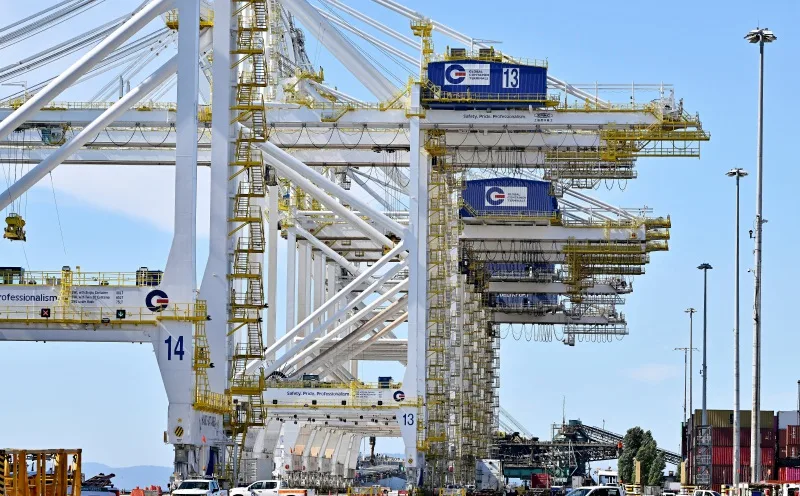
In the logistics sector, Shipping Association Malaysia chairman Ooi Lean Hin warned of mounting risks due to insufficient investment, shrinking trucking capacity, driver shortages, and congestion despite cargo growth. He described it as a "ticking time bomb," noting, "You have a growth, a compounded growth this year in the gateway cargo, but you have an industry with a shrinking capacity. Unless it is addressed, it is a ticking time bomb." Maritime expert Nazery Khalid added that port competitiveness also faces pressures from geopolitical and regulatory uncertainties [3].
Malaysia’s automotive industry continues to grow. Proton announced sales of around 100,000 vehicles in the first half of 2026 and expects total 2026 sales to reach 200,000 units, its best performance in 15 years [4]. Proton deputy CEO Datuk Abdul Rashid Musa said, "We have registered quite a strong 1H performance, and I believe with the strong support from Malaysians, Proton will continue to register good numbers for 2026." About 17% of Proton’s 2026 sales are projected to come from electrified vehicles (xEV), supporting Malaysia’s goal of 20% EV share by 2030 [4]. Proton emphasized making advanced automotive technology like HEV powertrains, integrated electronics, and ADAS accessible to a broad market [4].
Malaysia leads ASEAN in domestic auto industry volume with 820,000 units in 2025 and in vehicle safety through the ASEAN New Car Assessment Programme (ASEAN NCAP) [5]. The sector employs about 700,000 workers and benefits from government-driven technical and vocational training and collaboration with the country’s strong electrical and electronics ecosystem as vehicles shift toward increasing electronic content [5].
The ASEAN Green Jobs Forum 2026 will be held in Manila in October 2026, continuing efforts to create a sustainable and inclusive workforce across the region [1].